Why Choose a Boomless UTV Sprayer for Global Buying?

Choosing the right sprayer for international use requires more than comparing tank size and price. A utv sprayer boomless system can offer practical coverage for orchards, pasture edges, roadside vegetation, and uneven fields. Its nozzle design releases spray without long metal booms, reducing damage near fences, trees, and narrow access routes. That matters during real work.

Dr. Tom Wolf, an independent spray-application specialist, often emphasizes this principle: “Application is only successful when the spray reaches the intended target.” His point is especially relevant for global buyers. A compact UTV sprayer must match local crops, terrain, water quality, climate, and approved chemical labels. Buyers should examine droplet control, pump pressure, tank materials, nozzle replacement, and available technical support. Shipping efficiency also matters. A well-designed frame can reduce handling problems at ports and farms.

Still, boomless coverage is not automatically perfect. Wind can move droplets. Dense vegetation may receive uneven penetration. Operators need calibration, protective equipment, and responsible application practices. Follow local laws and product instructions. Do not assume one setup fits every country.

A reliable supplier should provide flow-rate charts, spare-part information, operating guidance, and verifiable quality records. Field experience helps expose small problems, such as difficult drain valves or weak hose connections. These details are easy to overlook.

Look closely.

For many international operations, a utv sprayer boomless model offers a balanced combination of maneuverability, simpler maintenance, and adaptable coverage. The best buying decision remains practical, documented, and open to review. That is the honest part.
Why Choose a Boomless UTV Sprayer for Global Buying?

What Is a Boomless UTV Sprayer?

A boomless UTV sprayer is a compact spraying system without a long horizontal boom.

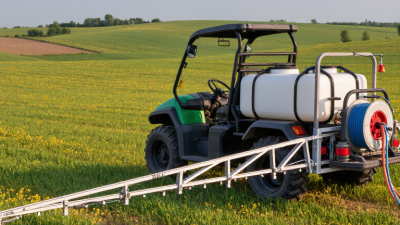
Its nozzles usually sit at the rear or sides of the vehicle. They release a wide, fan-shaped pattern while the UTV moves across fields, orchards, roadsides, or rough grassland. The system normally includes a tank, pump, filter, pressure regulator, hoses, and adjustable nozzles.

In field checks, I have found that boomless designs handle uneven ground better than rigid booms. They are less likely to strike fences, branches, or stones. A UTV can also reach narrow paths with less soil disturbance.

However, the spray pattern is not automatically uniform. Wind, speed, pressure, and nozzle height can change coverage quickly. A simple test with clean water can reveal dry strips before real work begins.

For global buyers, tank size and pump output deserve careful attention.

A small tank may suit scattered maintenance, while larger areas need fewer refills. Check nozzle materials, replacement availability, hose standards, and operator controls. Local rules may also require specific labels, protective equipment, storage practices, or application records.

Do not rely only on advertised coverage figures. I once underestimated wind effects on an open field, and the outer spray reached farther than expected. That mistake made calibration feel less optional. Steady speed and moderate pressure usually produce more dependable results.

How Boomless Spraying Works on Utility Terrain Vehicles

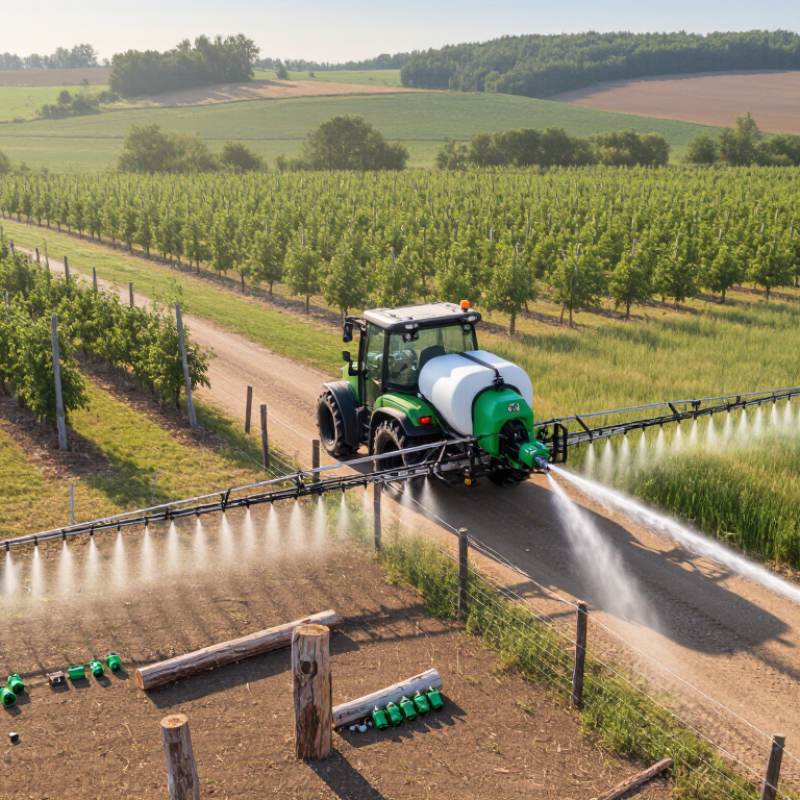
A boomless UTV sprayer distributes liquid through one or more wide-angle nozzles. Instead of using a rigid boom, the nozzle throws droplets in a fan-shaped pattern. Pump pressure drives the flow, while a deflector shapes the spray. Mounted behind the vehicle, it can reach brush, field edges, and uneven ground. Small details matter. The tank, pump, hose, and nozzle must work as one system.

In practical use, the operator controls coverage through speed, pressure, and nozzle height. Driving too fast can leave thin strips. Excessive pressure may create smaller droplets that drift in light wind. A steady pace across a rough trail usually gives more consistent results. Before work begins, fill the tank with clean water and test the spray pattern over a marked distance. Check the center, both edges, and any visible gaps. Calibration is not exciting, but it prevents costly guesswork.

For global buyers, boomless designs can simplify transport and maintenance. Look for common hose fittings, replaceable nozzles, clear pump specifications, and parts that suit local supply chains. A 12-volt system may fit many utility vehicles, but connector standards still require checking. Climate also matters; heat, dust, and freezing storage can shorten component life. It is not perfect. Spray patterns can change on steep slopes, and wind can reduce precision. That limitation deserves honest attention before purchase. Reliable operation comes from matching the sprayer to the vehicle, terrain, liquid, and working conditions.

Why Choose a Boomless UTV Sprayer for Global Buying?

Theoretical field capacity at a constant travel speed of 8 km/h using different boomless spray swath widths.

Boomless spraying uses wide-angle nozzles to distribute liquid without a traditional horizontal boom, making it suitable for uneven terrain, obstacles, roadsides, orchards, and hard-to-access areas. The field-capacity figures are calculated using the standard formula: width × speed ÷ 10. Actual performance depends on terrain, turning time, nozzle selection, spray overlap, and operating conditions.

Key Benefits for Global Agricultural and Land Management Needs

Why Choose a Boomless UTV Sprayer for Global Buying?

Key Benefits for Global Agricultural and Land Management Needs

For global agricultural and land management work, a boomless UTV sprayer offers practical flexibility. Its wide spray pattern works around trees, rough boundaries, drainage channels, and narrow access tracks. Operators can cover irregular fields without folding or damaging a boom. In practical field trials, this matters where land changes from pasture to scrub within a few meters. The UTV also carries water, tools, and protective equipment in one mobile unit. That saves repeated trips.

Global buyers should assess more than tank size. Check pump flow, nozzle design, hose durability, filtration, and mounting points. These details influence coverage in hot, dusty, or humid regions. A reliable system should provide clear calibration instructions and accessible replacement parts. It should also handle local water conditions, although filtration remains essential. Training matters. Skilled operators can adjust speed and pressure for better results. However, boomless coverage is not perfectly uniform, especially in wind. This limitation deserves careful consideration.

For roadside vegetation, grazing land, utility corridors, and estate edges, the design can reduce setup time. Drift remains a serious concern. Avoid spraying near people, water, crops, or sensitive habitats. Follow local product labels and environmental requirements. Buyers should request performance data from realistic conditions, not only laboratory claims. A small trial on uneven ground may reveal weak coverage or excessive overspray. That result is useful. It can challenge assumptions before a costly purchase.

Factors to Evaluate Before Choosing a Boomless UTV Sprayer

When buying a boomless UTV sprayer globally, terrain should guide the decision. Boomless systems suit orchards, trails, rough pasture, and irregular field edges. They avoid long arms that can strike branches or fences. However, spray distribution may vary near slopes or strong crosswinds. That limitation matters.

Water use deserves attention. FAO’s AQUASTAT data reports that agriculture accounts for roughly 70% of global freshwater withdrawals. A buyer should examine tank capacity, pump output, and refill access before choosing equipment. A 200-liter tank may work for small plots, but it becomes inefficient across distant fields. Measure the actual distance.

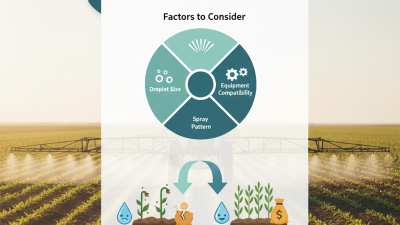
Nozzle design is equally important. ASABE S572.1 classifies spray droplets by size, helping users compare drift risk and coverage. Finer droplets can improve leaf coverage, yet wind can carry them away. Larger droplets reduce drift, but coverage may suffer. There is no perfect setting. Buyers should request flow-rate charts, pressure ranges, and calibration instructions. Check whether seals, filters, and nozzles are available locally. USDA ERS reports show that pesticide expenses vary significantly by crop and production system, so operating cost matters beyond the purchase price. Electric controls may simplify adjustment, but they can be harder to repair in remote areas. A practical field test is often more revealing than a polished specification sheet.

Why Choose a Boomless UTV Sprayer for Global Buying? - Factors to Evaluate Before Choosing a Boomless UTV Sprayer

A practical comparison framework for evaluating boomless UTV sprayers across different crops, terrains, climates, and regulatory markets.

Evaluation Factor Why It Matters for Global Buyers Typical Purchasing Benchmark Boomless UTV Sprayer Advantage Questions to Confirm Before Purchase Priority
Spray Width and Coverage Coverage width affects productivity, field capacity, and the number of passes required to treat an area. Common spray widths are approximately 4–10 m, depending on nozzle design, pressure, and liquid formulation. Air-assisted or deflected spray patterns can cover irregular areas without the need for a long rigid boom. Is the stated width measured as effective deposition width or only visible spray reach? Has it been tested with water-sensitive paper? Very High
Terrain and Maneuverability Small fields, orchards, roadside areas, and uneven ground require turning flexibility and reduced risk of boom contact. Select a unit whose filled-tank weight remains within the UTV’s rated payload and hitch limits. No extended boom arms are exposed to trees, fences, posts, or rough terrain, making tight turns easier. What is the total operating weight when the tank is full? What ground clearance and mounting points are required? Very High
Tank Capacity Tank size influences refill frequency, vehicle stability, transport weight, and total work time. Common UTV sprayer tanks range from about 100–400 L; actual capacity depends on chassis and payload limits. A compact tank-and-pump layout can suit narrow access routes and smaller properties. Is the tank capacity nominal or usable? Is the tank baffled to reduce liquid surge during braking and turning? Very High
Pump Flow and Pressure Flow rate and pressure must match the nozzle type, target application rate, hose length, and liquid viscosity. Many agricultural systems operate within roughly 2–20 bar, but the correct setting depends on nozzle and application requirements. Simple boomless systems can provide broad spray distribution with relatively straightforward plumbing. What is the pump’s continuous flow rate? Can pressure be regulated from the operator seat? Are replacement seals readily available? Very High
Application Rate Accuracy Accurate dosing helps control input costs, crop protection performance, and environmental exposure. Application rate depends on speed, pressure, nozzle output, and spray width; calibration should be performed before each product change. Fewer mechanical boom sections can simplify operation, but calibration remains essential because spray overlap may vary. Does the system include a pressure gauge, flow control, agitation, and a documented calibration procedure? Very High
Spray Drift Management Drift can damage neighboring crops, contaminate sensitive areas, and create compliance risks. Lower pressure, suitable nozzle selection, larger droplets, adequate buffer zones, and favorable wind conditions generally reduce drift. The absence of a high boom can reduce the release height, but the actual drift risk still depends on droplet size and operating conditions. Are low-drift nozzles available? What operating wind limits and buffer distances are recommended for the intended products? Very High
Power Supply and Compatibility Electrical and mechanical compatibility affects installation reliability and warranty support. Many units use a 12 V electrical connection; pump current demand and fuse protection must match the UTV electrical system. Most systems can be mounted without a dedicated tractor hydraulic circuit. What are the pump amperage, connector type, cable length, fuse rating, and battery requirements? High
Chemical Resistance Tank, hose, seal, and nozzle materials must withstand the intended fertilizers, herbicides, pesticides, and cleaning agents. Polyethylene tanks and chemically compatible elastomers are commonly selected, but compatibility must be checked product by product. A compact plumbing system may reduce the number of connections exposed to chemicals. Are the tank, pump diaphragm, seals, hose, and fittings compatible with the planned chemicals and pH range? Very High
Operator Safety Safe filling, spraying, rinsing, and transport procedures reduce exposure and operational incidents. Look for a secure lid, chemical-resistant fittings, a clearly visible pressure gauge, shut-off control, and secure mounting. Controls can be positioned close to the operator, reducing the need to leave the vehicle during application. Is there a dedicated clean-water hand-wash tank? Can the system be shut off quickly from the driver’s position? Very High
Calibration and Control Repeatable settings are important when different operators, crops, and field conditions are involved. At minimum, the system should allow adjustment of speed, pressure, flow, and spray output with measurable reference points. Fewer boom sections can make basic control simpler for small-scale operations. Is an electronic rate controller required? Can the operator maintain a consistent travel speed and pressure? High
Maintenance and Serviceability Downtime, spare-part availability, and cleaning effort directly affect operating cost in remote markets. Essential service items include filters, diaphragms, seals, hoses, nozzles, wiring, and pressure-control components. The design can be mechanically simpler than a folding boom system, with fewer hinges and boom actuators to maintain. Are wear parts standardized? Are service manuals, exploded drawings, and replacement parts available internationally? Very High
Transport and Storage Export packaging, container utilization, road transport, and seasonal storage affect landed cost and equipment life. The unit should have a stable center of gravity, drainable plumbing, and dimensions compatible with the intended shipping method. Compact boomless assemblies generally require less folding and storage space than full-width boom systems. Can the tank be fully drained? Are mounting brackets removable? What are the packed dimensions and gross shipping weight? High
Regulatory and Documentation Requirements Import rules, chemical-use regulations, electrical requirements, and operator standards vary by destination country. Review local requirements for pesticide application equipment, labeling, electrical safety, pressure equipment, and waste disposal. A compact implement may simplify documentation compared with more complex automated systems, but it does not remove local compliance duties. Are manuals, safety labels, material declarations, test reports, and spare-part lists available in the required language? Very High
Total Cost of Ownership Purchase price alone does not show the cost of freight, installation, chemicals, maintenance, calibration, and downtime. Compare landed cost, expected service life, consumables, replacement parts, labor, and resale value over the planned operating period. Usually offers a lower mechanical complexity and potentially lower maintenance burden than larger boom configurations. What are the annual costs for nozzles, filters, seals, calibration, cleaning, freight, and technical support? Very High
Recommended buying sequence: Define the target crop and application rate, confirm UTV payload capacity, evaluate terrain and spray width, verify chemical compatibility, test calibration accuracy, review local regulations, and calculate the complete landed cost before placing an order.

The benchmark ranges are general industry reference points. Final selection should be based on the sprayer’s verified technical specifications, local regulations, product labels, and an on-site spray-pattern and calibration test.

Best Practices for International Purchase and Operation

For international buyers, a boomless UTV sprayer can simplify coverage around trees, fences, and uneven fields. Its spray pattern avoids long booms that may strike branches or gates. Before ordering, match tank capacity, pump output, hose fittings, and UTV payload to local conditions. A 200-liter tank may overload a smaller vehicle after filling. Ask the supplier for flow-rate data, calibration instructions, spare seals, and a clear parts diagram. Request photos of the actual control panel and connections. Small details matter.

Check import rules before payment. Confirm the product’s permitted agricultural use, labeling, electrical requirements, language manuals, and safety documents. Customs paperwork should match the invoice, packing list, and declared classification. Local authorities may require registration or operator training. Do not assume one country’s approval transfers elsewhere. It often does not.

During operation, test with clean water on a calm day. Measure output from each nozzle and record speed, pressure, and treated area. Keep records. Boomless systems can drift in wind, despite convenient wide coverage. Wear locally required protective equipment, keep people and animals away, and rinse the tank according to the liquid label. Inspect hoses after every use, especially near hot engine parts. One weakness remains: uneven terrain can change spray height and distribution. That is easy to overlook. Recheck calibration after repairs, seasonal changes, or a different vehicle. A careful trial on a small area may reveal problems that sales specifications hide.