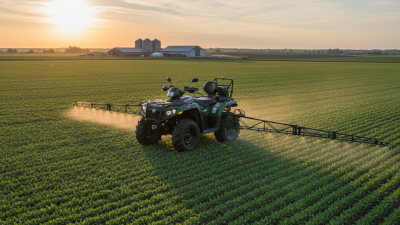
What Is a Boomless ATV Sprayer and How Does It Work?
A boomless ATV sprayer is a compact agricultural tool built for uneven ground, narrow trails, orchards, and small fields. Unlike a conventional boom sprayer, it uses one or more nozzles without a long horizontal frame. A pump draws liquid from the tank and sends it through the nozzle under pressure. The nozzle then creates a broad spray pattern behind or beside the ATV.
That pattern looks convenient, but it is not automatically uniform. Nozzle design, pressure, travel speed, wind, and terrain all affect coverage. According to ASABE S572.1, spray quality depends heavily on droplet classification and nozzle performance. This standard helps operators compare droplet sizes and understand drift risk. The U.S. Environmental Protection Agency also stresses following product labels, application limits, and weather restrictions. The label is not optional.
The U.S. Department of Agriculture’s 2022 Census of Agriculture recorded about 1.9 million farms nationwide, ranging from very small holdings to extensive operations. That variety explains the continued interest in flexible ATV equipment. A boomless ATV sprayer can reach rough corners where tractors struggle. It can also waste chemical when the spray width is misunderstood. Field reality differs.
A practical operator checks the nozzle output with a measuring container, confirms the walking or driving speed, and records the treated area. One overlooked detail can change the application rate. Research and experience both suggest that calibration matters more than appearance. The following guide explains what a boomless ATV sprayer is, how its pump and nozzle system works, and where its advantages become limitations. Clear technique beats guesswork.
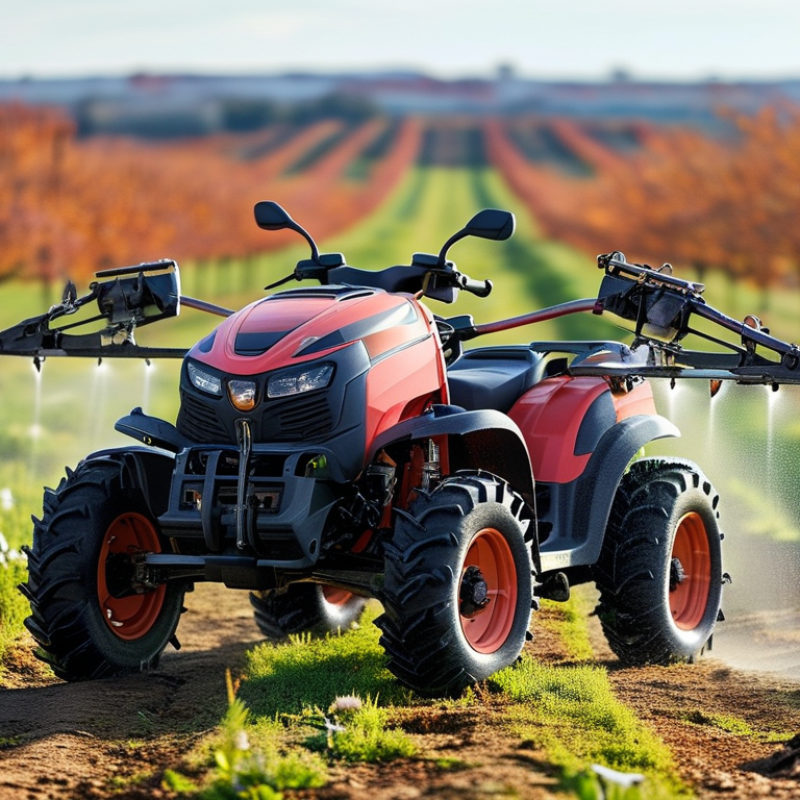
What Is a Boomless ATV Sprayer? Definition and 15–30 ft Coverage
What Is a Boomless ATV Sprayer and How Does It Work?
A boomless ATV sprayer uses a single nozzle, or several deflecting nozzles, instead of a long spray boom. Liquid leaves the pump under pressure and spreads through a fan-shaped pattern. Typical technical specifications report a 15–30 ft coverage width. That range is not a promise. Nozzle angle, pressure, terrain, and wind can change the actual swath.
The ATV carries a tank, pump, filter, hose, and control valve. As the vehicle moves, the pump pushes liquid toward the nozzle. A deflector breaks the stream into droplets and throws them sideways.
Lower pressure usually produces larger droplets, while higher pressure creates finer droplets and greater drift potential. The ASABE S572.1 spray-quality standard recognizes seven droplet-size categories, from very fine to ultra coarse. This matters more than advertised width.
Practical calibration is essential. Measure the output for one minute, record the travel speed, and check the treated width on level ground. For example, a 20 ft swath at 4 mph covers about 1.94 acres per hour before turning losses.
USDA agricultural chemical-use reports show that application rates vary greatly by crop and treatment, so copying another operator’s setting can be unreliable. I have found that uneven ground exposes weak overlap quickly. A wider pattern may look efficient, yet leave thin strips near fence lines. Recheck coverage with water-sensitive paper before applying any approved product.
Key Components: 12-V Pump, 25–65 gal Tank, Nozzle, and Controls
A boomless ATV sprayer uses a single nozzle instead of a horizontal boom. Its 25–65 gallon tank suits spot treatment, food plots, and small fields. A 12-volt diaphragm pump moves liquid through a filter and pressure line. The nozzle then creates a wide, uneven-looking fan.
The pump is the working heart. Many utility systems deliver about 1–5 gallons per minute, depending on pressure and hose length. A pressure regulator protects the pump and keeps the spray pattern stable. The tank should include a lid, drain, visible level markings, and internal agitation when possible. Controls belong near the driver’s hand. A simple switch and pressure gauge reduce distraction.
Nozzle choice changes everything. ASABE S572.1 classifies spray quality by droplet size, helping operators compare drift potential. University extension calibration guides use this formula: gallons per acre equal 5,940 multiplied by flow rate, divided by speed and swath width. For example, a 2-gpm nozzle, 5-mph speed, and 20-foot swath applies about 11.9 gallons per acre. Check it manually.
Measure the output.
Boomless coverage can overlap in the center and weaken at the edges. Wind makes that problem worse. The U.S. Environmental Protection Agency’s label guidance remains the controlling reference for application limits and protective measures. I would not trust a pressure gauge alone. A timed catch test often exposes clogged strainers, worn diaphragms, or a nozzle that quietly changed shape. The system looks simple, but calibration is where many assumptions fail.
How It Works: 2–5.5 GPM Flow, Pressure, and ASABE S572.1 Droplets
A boomless ATV sprayer applies liquid without a traditional horizontal boom. Its nozzle or nozzle cluster projects spray outward, creating a wide pattern behind or beside the vehicle. This design helps reach rough ground, narrow trails, and uneven pasture areas. It also creates a calibration challenge because the spray width is less uniform than a standard boom.
Many systems operate between 2 and 5.5 gallons per minute, depending on pump capacity, nozzle selection, and operating pressure. Flow is not the same as coverage. Higher pressure usually increases flow and produces smaller droplets, but nozzle design changes that response. Excessive pressure may create drift-prone spray and uneven application. Lower pressure can produce larger droplets, though coverage may become less consistent.
Pressure should be checked with the sprayer moving at its intended speed. A gauge reading at rest can mislead. Measure the actual output into a container for one minute, then compare it with the target rate. The familiar calibration formula can help, but boomless swath width remains an estimate. Real fields are rarely perfect.
Droplet quality should be described using ASABE S572.1 categories, such as medium, coarse, or very coarse. These categories connect droplet size with coverage and drift potential. The correct class depends on the application goal, weather, nozzle, and pressure. Wind complicates everything. I would not trust a pressure setting copied from another machine without testing the pattern, overlap, and collected volume. Calibration takes a few extra minutes, but guesswork costs more.
Step-by-Step Calibration: GPA, Speed, Flow Rate, and the 43,560 Formula
A boomless ATV sprayer distributes liquid through a nozzle that creates a wide fan without a horizontal boom. Its coverage can change with pressure, wind, terrain, and nozzle height. Calibration matters because a small error may leave visible stripes or waste product. Use clean water during testing.
Measure the actual spray width across a dry, flat surface. Do not rely only on the nozzle’s advertised width. Mark a test distance, such as 100 feet, and record the travel time. Speed in miles per hour equals distance in feet divided by time in seconds, then multiplied by 0.682. Collect nozzle output for one minute and measure gallons per minute. The practical GPA formula is GPA = 5,940 × GPM ÷ (MPH × width in feet). Keep the ATV at the same engine setting used during spraying.
You can also verify the result with the 43,560 formula. Spray a measured test area, capture the gallons used, and calculate acres by dividing square feet by 43,560. Then divide gallons used by acres covered. For example, 2,178 square feet equals 0.05 acre. If the sprayer uses 1 gallon there, the application rate is 20 GPA. Recheck both sides of the spray pattern. Boomless coverage is rarely perfectly even. I once trusted a wide spray fan and skipped this check; the edges received noticeably less liquid. Adjust speed, pressure, or nozzle selection carefully, then repeat the test.
Operating Limits: 20–40 PSI, Wind Drift, and EPA Label Compliance
What Is a Boomless ATV Sprayer and How Does It Work?
A boomless ATV sprayer uses angled nozzles to create a fan-shaped pattern without a horizontal boom. Its compact frame suits trails, orchards, pasture edges, and uneven ground. Coverage is convenient, but uniformity can weaken near turns and crosswinds. That trade-off deserves attention.
Operating pressure usually falls between 20 and 40 PSI, depending on nozzle design and formulation. Higher pressure may create finer droplets, increasing evaporation and wind drift. ASABE S572.1 classifies spray droplets by measured size, showing why pressure alone cannot predict drift. USDA Agricultural Research Service studies also identify wind, droplet size, and release height as major drift controls. At 20 PSI, output may be too low for the intended application rate. At 40 PSI, the pattern may look wider, yet off-target movement can increase. Check actual output with a measuring jug.
Wind deserves a hard limit. Many EPA-approved labels prohibit spraying above 10 mph, while some require narrower limits or calm conditions. Use an anemometer beside the ATV, not a weather app several miles away. Avoid gusts, thermal inversions, and sensitive crops downwind. EPA labeling requirements cover application rate, buffers, protective equipment, and weather restrictions. Record pressure, wind speed, nozzle setting, and treated area. My caution is simple: 20–40 PSI is an operating range, not permission to spray. A few setup minutes can prevent an expensive mistake.
What Is a Boomless ATV Sprayer and How Does It Work?
Operating limits: 20–40 PSI, wind drift, and EPA label compliance
Related Posts
-
2025 Guide: Choosing the Best ATV Boom Sprayer for Your Needs
-
How to Choose the Best UTV Sprayer with Boom for Your Needs?
-
Top 5 ATV Boom Sprayers for Ultimate Efficiency and Performance?
-
2026 How to Choose the Best ATV Sprayer for Your Needs?
-
7 Best ATV Sprayer Boom Kit Options for Enhanced Efficiency
-
How to Choose the Best 25 Gallon Sprayer for Your Needs?