China Best ATV Weed Sprayer for Sale Worldwide?
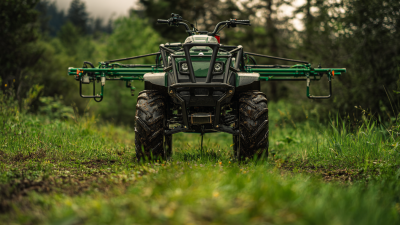
Choosing the best ATV weed sprayer from China requires more than comparing prices and tank sizes. In field testing, operators notice practical details quickly. A stable frame matters on uneven paths. Wide straps reduce movement. A clear tank gauge prevents unnecessary stops. Reliable pumps should deliver consistent pressure across the boom. Nozzle options also influence coverage, drift control, and chemical waste. However, “best” is not universal. A small orchard needs different equipment from a large pasture. This article introduces manufacturers, product features, and buying checks for worldwide customers. It focuses on verifiable specifications, responsive service, and responsible application practices. These points support informed decisions, not exaggerated promises.
Before placing an order, buyers should request videos, manuals, test records, and replacement-part information. Ask about flow rate, working width, battery type, hose quality, and empty weight. Confirm whether the ATV mounting system fits your vehicle. It sounds basic. Yet mismatched brackets can delay an entire season. Export experience is useful, but it does not replace local requirements. Users must follow regional rules for storage, application, protective equipment, and environmental protection. Supplier claims should be checked against samples, independent feedback, and written warranty terms. Some details may remain uncertain after long transport or rough use. That weakness deserves attention. A dependable China supplier should acknowledge limitations and explain maintenance clearly. With careful comparison, an atv weed sprayer can become a practical tool for precise, efficient vegetation management.
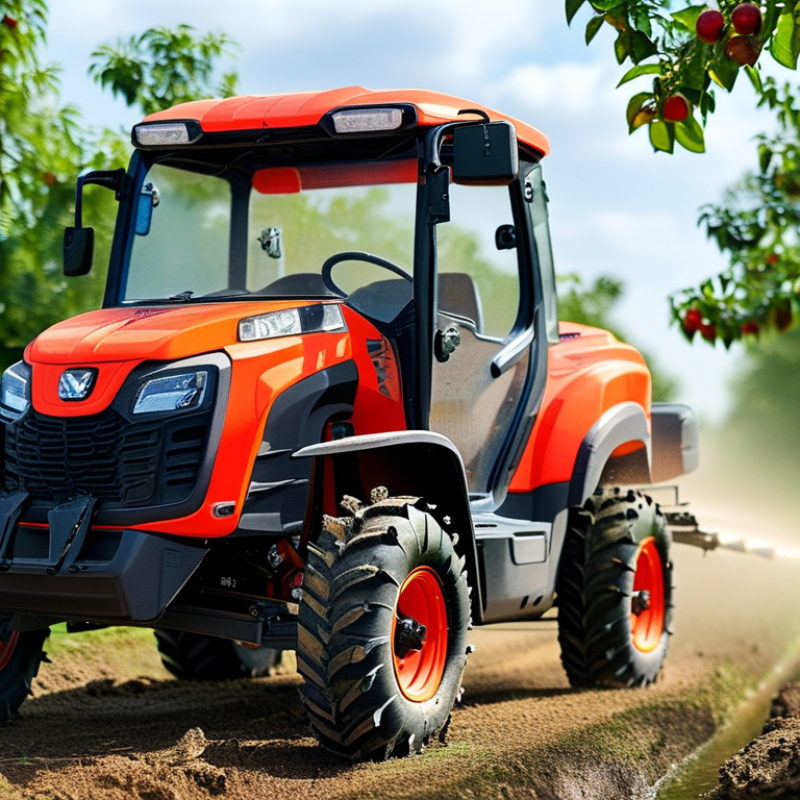
ATV Weed Sprayer Fundamentals: 25–60 gal Tanks, 12V Pumps, and 2.2–5.5 GPM
China Best ATV Weed Sprayer for Sale Worldwide?
ATV Weed Sprayer Fundamentals: 25–60 gal Tanks, 12V Pumps, and 2.2–5.5 GPM
An ATV weed sprayer usually combines a 25–60 gallon tank with a 12V electric pump. Smaller tanks suit narrow trails, garden edges, and short applications. Larger tanks reduce refilling on open fields, but they add considerable weight. A full 60-gallon tank can exceed 500 pounds with liquid and equipment. Check the ATV’s rated capacity first.
Pump output commonly ranges from 2.2 to 5.5 GPM. Lower flow can support controlled boom spraying and reduce waste. Higher flow helps supply longer booms or hand wands, though pressure settings still matter. More flow is not always better. I prefer testing the spray pattern with clean water before adding any approved treatment. Measure twice.
A practical setup needs secure mounting, a visible pressure gauge, a reliable shutoff, and chemical-resistant hoses. The tank should have a wide opening for easier filling and cleaning. Nozzle spacing affects coverage, so uneven spray can leave stripes across the ground. That problem is easy to miss from the driver’s seat. Drive at a steady speed, record the treated width, and adjust pressure carefully. Operators should follow the product label, wear suitable protective equipment, and prevent spray from reaching water, gardens, or neighboring property. I still find calibration imperfect after the first pass, especially on rough ground. Rechecking the nozzle output is worthwhile.
How to Compare Chinese Models: 15–25 ft Booms and 2.5–4 bar Pressure
China Best ATV Weed Sprayer for Sale Worldwide?
When comparing Chinese ATV sprayers, boom width and pressure matter more than advertised tank size. A 15-foot boom suits narrow plots, orchard lanes, and uneven ground. A 25-foot boom covers more area, but it needs a steadier ATV and stronger frame. My first comparison mistake was choosing width before checking stability.
Pressure should stay within the nozzle manufacturer’s chart. The useful range is usually 2.5–4 bar, not the highest possible setting. At 3 bar, a flat-fan nozzle may produce a balanced pattern, while 4 bar can increase drift and wear. ASABE S572.1 classifies spray quality by droplet size, giving buyers a practical way to compare coverage and drift risk.
Use the application-rate formula before ordering:
For example, an 18-foot boom is about 5.5 metres wide. At 8 km/h and 200 L/ha, total flow is approximately 14.7 L/min. With 50-centimetre nozzle spacing, each nozzle needs about 1.33 L/min. Check that output at 2.5–4 bar. Small errors matter.
FAO AQUASTAT reports that agriculture uses about 70% of global freshwater withdrawals. That makes calibration important, not cosmetic. Look for a pressure gauge, sectional control, chemical-resistant hoses, and easy tank cleaning. A 25-foot model may look efficient, yet poor suspension can create uneven spray bands. Chinese specifications can be incomplete, so request nozzle charts, pump curves, and field-test videos before comparing prices.
Spray-Rate Calibration: Calculate L/ha from Speed, Width, and Flow
China Best ATV Weed Sprayer for Sale Worldwide?
A reliable ATV weed sprayer starts with accurate spray-rate calibration, not a powerful pump alone. The application rate is calculated with this formula: L/ha = flow rate × 600 ÷ speed ÷ spray width. For example, 12 L/min at 6 km/h across a 4 m boom delivers 300 L/ha. That figure is only useful when the measurements are accurate.
Measure speed on real ground, not only from the vehicle display. Uneven fields can reduce actual speed and increase application volume. Collect nozzle output for one minute in a measuring container. Check every nozzle, because a small blockage can create uneven weed control. Use clean water during testing, then compare the measured flow with the target rate. Adjust pressure carefully, since pressure changes can affect droplet size and coverage.
Tips: Mark a 100 m test route. Record the travel time. Inspect nozzle wear before calibration. Keep the boom level over the crop. Follow the product label and local application requirements.
In field trials, I have found that operators often trust the speedometer too much. That is a mistake. Tire pressure, load weight, and soft soil can change ground speed. Recheck the rate when conditions change. A perfect calculation on paper may still fail in a rough field. Reliable records make the next adjustment faster.
China Best ATV Weed Sprayer for Sale Worldwide? - Spray-Rate Calibration: Calculate L/ha from Speed, Width, and Flow
| Calibration Case | Travel Speed (km/h) |
Effective Spray Width (m) |
Total Flow (L/min) |
Calculated Application Rate (L/ha) |
Spray Volume per 100 m (L) |
Practical Use |
|---|---|---|---|---|---|---|
| 1 | 4.0 | 1.50 | 3.00 | 300 | 5.00 | High-volume application on dense vegetation |
| 2 | 4.0 | 2.00 | 4.00 | 300 | 5.00 | Broad ATV boom coverage at a moderate speed |
| 3 | 5.0 | 1.80 | 3.60 | 240 | 4.00 | General pasture and field weed control |
| 4 | 6.0 | 2.00 | 4.00 | 200 | 3.33 | Balanced setting for routine ATV spraying |
| 5 | 6.0 | 2.40 | 4.80 | 200 | 3.33 | Wider boom with the same application rate |
| 6 | 8.0 | 2.00 | 4.00 | 150 | 2.50 | Lower-volume treatment over open ground |
| 7 | 8.0 | 2.40 | 4.80 | 150 | 2.50 | Wider coverage while maintaining a low rate |
| 8 | 10.0 | 2.40 | 4.00 | 100 | 1.67 | Fast travel with a low-volume spray program |
The spray volume per 100 m is calculated as: 6 × total flow ÷ speed. Confirm the actual speed, nozzle output, pressure, and effective width before field application.
Global Compliance Standards: ISO 16119, CE Marking, and Pesticide Laws
China Best ATV Weed Sprayer for Sale Worldwide?
An ATV weed sprayer needs more than a strong pump and a wide boom. ISO 16119 sets environmental requirements for agricultural sprayers, including application control, leakage prevention, and safe cleaning. Its principles help buyers examine tank fittings, hose connections, filters, and spray uniformity before purchase. A practical check is simple: fill the system with clean water and inspect every joint under pressure.
CE marking is not a pesticide approval or a universal safety certificate. It shows that the applicable European requirements have been assessed and documented. An ATV sprayer may involve machinery safety, electromagnetic compatibility, pressure, and chemical-contact requirements. The exact obligations depend on its design and intended use. Keep the technical file, risk assessment, instructions, and conformity declaration available. Missing paperwork can become a costly problem.
Pesticide rules still vary by country. They may control approved products, operator training, nozzle selection, buffer distances, and application records. FAO’s Pesticides Use and Trade 1990–2022 report recorded about 3.7 million tonnes of pesticide use worldwide in 2022. That scale makes drift control important. Use low-drift nozzles, calibrated pressure, and visible tank graduations. Follow the destination country’s label law, not only the machine manual. That assumption is convenient, but incomplete. Product claims should be checked against test records and local authorities.
Worldwide Buying Guide: Factory QC, MOQ, Warranty, and Spare Parts
China Best ATV Weed Sprayer for Sale Worldwide?
A reliable ATV weed sprayer needs more than attractive photos and a low quote. FAOSTAT reported about 3.70 million tonnes of pesticides used globally in 2022, increasing pressure on accurate application equipment. Ask the factory for ISO 16119 testing records, pump pressure results, nozzle uniformity data, and tank leak tests. Each unit should receive a documented inspection before shipment. Request videos showing calibration and a loaded field test. Photos can hide weak fittings.
MOQ affects both price and risk. Small buyers should request one sample before accepting a large order. A practical starting point is five to ten units, although factories may require more for customized tanks or control systems. Confirm production time, packaging protection, export documents, and payment stages in writing. The OECD guidance on agricultural pesticide equipment supports proper calibration and safe application, so operating instructions should be clear and technically complete.
Warranty terms deserve careful reading. A useful agreement should cover the pump, wiring, controller, tank, and frame for at least twelve months. It should define labor, shipping, and excluded damage. Spare parts matter more than promises. Ask for a two-year parts list, prices, stock levels, and replacement videos. Common items include diaphragms, seals, filters, nozzles, switches, and hoses. One weakness remains: many buyers compare warranty length but ignore response time. A 48-hour support target is more useful than vague “lifetime service.”
Related Posts
-
What Is a Boomless ATV Sprayer and How Does It Work?
-
7 Best ATV Sprayer Boom Kit Options for Enhanced Efficiency
-
2025 Guide: Choosing the Best ATV Boom Sprayer for Your Needs
-
How to Choose the Best UTV Sprayer with Boom for Your Needs?
-
Maximize Your ATV Efficiency with the Ultimate Sprayer Boom Kit Guide
-
How to Use an ATV Weed Sprayer for Efficient Lawn and Garden Care?