Top ATV Weed Sprayers for Sale to Global Buyers
Choosing an atv weed sprayer involves more than comparing tank sizes or sale prices. Buyers need equipment that suits their terrain, treatment area, and ATV setup. A compact tank may work well around orchard rows, fence lines, or uneven ground. Larger tanks can reduce refill stops across broad fields, but they also add weight. Check the ATV’s carrying capacity before choosing. It is an easy detail to overlook.
Look closely at the pump, hose, nozzle options, and boom width. A steady spray pattern matters. So does a hose that reaches the intended work area without dragging near tires or hot components. Compare rated flow and pressure with the applications described in the product manual. Confirm that the mounting frame fits your ATV, and ask whether common replacement parts are available. Small details matter.
For global buyers, clear specifications and dependable support can be as important as the machine itself. Review shipping terms, spare-part access, warranty coverage, and instructions before ordering. A seller’s photographs may show the sprayer clearly, yet dimensions and connection details still deserve written confirmation. No single model fits every farm. That is worth remembering. This guide introduces popular options and practical checks, helping buyers compare features with care. Product listings can change, and advertised performance may depend on setup, maintenance, and operating conditions. Verify the details with the supplier before purchase.
What ATV Weed Sprayers Are and How They Work
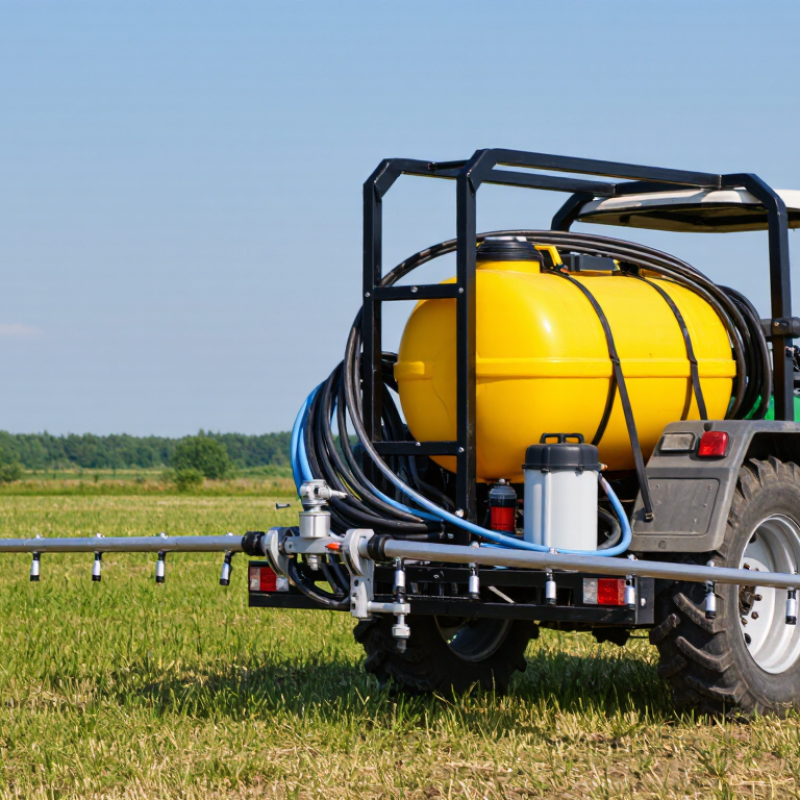
An ATV weed sprayer is a compact tank-and-pump system mounted on an all-terrain vehicle. It lets an operator cover field edges, fence lines, orchards, and uneven ground more efficiently than carrying a hand sprayer. Typical parts include a tank, filter, pump, pressure regulator, hose, and spray wand or boom. Some setups use several nozzles across a short boom.
Here’s how it works. The pump draws liquid from the tank and pushes it through the hose to the wand or nozzles. A regulator helps maintain steady pressure, while the spray pattern determines how the liquid reaches the target area. Before use, check for leaks and confirm that the nozzle produces an even pattern. Uneven coverage can leave untreated strips. It can also waste product.
Good results depend on matching the sprayer to the task, not simply choosing the largest tank. Measure the area and calibrate the output using clean water before filling the tank. A measured test run helps estimate application rate and reveals whether the ATV’s speed changes coverage. Slow down on rough ground. The numbers may still need adjustment. Follow the product label, wear the specified protective equipment, and clean the system as directed after use. No sprayer can compensate for poor calibration or careless handling.
Main Types of ATV-Mounted Weed Sprayers
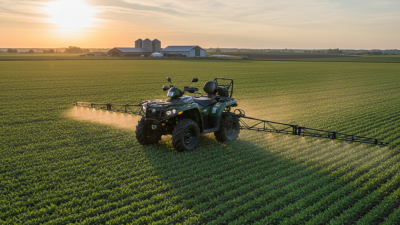
ATV-mounted weed sprayers mainly come in three forms: boom, boomless, and spot-spray systems. Boom models carry several nozzles across a frame, creating even coverage over open ground. Boomless units direct spray outward from one or two nozzles, useful around fence lines and rough edges. Spot sprayers use a handheld wand for isolated weeds. Small details matter: a leaking hose can leave dry stripes, while excess pressure may create drift-prone droplets.
FAOSTAT reported approximately 3.70 million tonnes of agricultural pesticide use worldwide in 2022; this figure covers many uses, not herbicides alone. It still highlights why controlled application matters. The ASABE S572.3 standard classifies spray quality by droplet size, helping buyers compare nozzle performance rather than relying only on tank capacity. University of Nebraska–Lincoln Extension guidance places a typical 110-degree flat-fan boom about 20 inches above the target, though nozzle spacing and terrain affect the setting. Keep that in mind. Boom rigs suit larger, level plots; boomless units can reduce frame-width concerns near obstacles. Spot systems conserve spray on scattered patches, but require more walking and careful aiming. The practical trade-off is easy to miss: a larger tank saves refills, yet adds weight to the ATV and can make uneven ground harder to manage.
Key Features to Compare When Choosing a Sprayer
When comparing ATV weed sprayers, start with tank capacity, but consider your terrain and refill access. A large tank saves trips across open ground, yet it adds weight on slopes and soft soil. Not just capacity. Check the loaded weight against your ATV’s rated limits, including the operator and other equipment.
Pump output and pressure affect coverage. Look for clear specifications, an accessible filter, and controls you can reach from the seat. Pressure that is too low may leave uneven bands; excessive pressure can create fine droplets that drift more easily. Nozzle choice matters, too. Flat-fan tips suit many broadcast jobs, while adjustable patterns can help around irregular edges. Confirm that replacement nozzles and seals are readily available.
Inspect the boom width, hose length, and mounting points before buying. A wide boom covers ground quickly, but trees, gates, and narrow rows may make it awkward. Fit matters. Check the hitch and tank clearance with your ATV, not just the product dimensions on a screen. Calibration is easy to postpone, and that is a mistake: measure output over a known area with clean water before use. Also compare tank material, drainage, and whether the pump can be rinsed easily. Capacity still tempts me as the deciding number; it rarely tells the whole story.
| Feature | Compact Setup | General-Purpose Setup | Higher-Capacity Setup | What Buyers Should Compare |
|---|---|---|---|---|
| Typical tank capacity | 15 gal (about 57 L) | 20 gal (about 76 L) | 25 gal (about 95 L) | Match capacity to the treated area, refill access, and the ATV’s load rating. Water weighs about 8.34 lb per US gallon (1 kg per litre), before adding the sprayer and accessories. |
| Power supply | 12 V DC | 12 V DC | 12 V DC | Check the ATV’s electrical system, connector type, fuse rating, and cable length. Use a suitable fused connection and follow the sprayer and vehicle instructions. |
| Indicative pump flow range | About 2 GPM (7.6 L/min) | About 3 GPM (11.4 L/min) | About 4–5 GPM (15.1–18.9 L/min) | Compare the pump’s rated flow with the nozzles and spray gun being used. Actual output varies with pressure, plumbing, and nozzle selection. |
| Working pressure | Typically adjustable up to about 40 PSI (2.8 bar) | Typically adjustable up to about 60 PSI (4.1 bar) | Typically adjustable up to about 60 PSI (4.1 bar) | Confirm the pump’s pressure range and the pressure ratings of hoses, fittings, and nozzles. Select pressure for the application rather than assuming higher pressure is always better. |
| Boom configuration | Optional; often suited to spot spraying | About 10–12 ft (3.0–3.7 m) working width | About 12–15 ft (3.7–4.6 m) working width | Check boom width, nozzle spacing, folding or breakaway design, and ground clearance. Effective coverage depends on nozzle type, operating height, speed, and conditions. |
| Handheld spray option | Useful for small or irregular areas | Useful for edges and spot treatments | Useful as a complement to boom spraying | Look for a compatible hose, shut-off valve, and spray wand. Confirm whether these are included or sold separately. |
| Tank and chemical compatibility | Often moulded polyethylene | Often moulded polyethylene | Often moulded polyethylene | Verify compatibility with the intended chemicals, seals, hoses, and pump materials. Follow the chemical label and clean the sprayer as directed. |
| Controls and filtration | Basic on/off control and inlet strainer | Pressure regulation and accessible filter | Pressure regulation, filtration, and boom shut-off options | Check whether filters are easy to remove and clean, and whether pressure and boom sections can be controlled independently. |
| Mounting and transport | Compact footprint for smaller racks | Requires a suitable rear rack or mounting frame | Requires adequate rack capacity and boom clearance | Check dimensions, mounting points, filled weight, tie-down provisions, and clearance from tyres, exhaust parts, and moving components. |
| Best suited to | Small plots, spot treatment, and limited storage space | Routine property maintenance and mixed spraying tasks | Larger areas where fewer refills are desirable | Choose based on area, terrain, transport needs, and the ATV manufacturer’s load limits. These are indicative configurations, not specifications for a particular product. |
| Buyer note: Sprayer specifications and included accessories vary by product and market. Confirm the exact pump rating, nozzle set, hose length, dimensions, electrical requirements, chemical compatibility, and applicable safety instructions before purchase. | ||||
How to Match Sprayer Capacity to Terrain and Applications
Choosing an ATV sprayer starts with the ground, not the tank catalog. On narrow wooded trails, a compact 15–25-gallon tank can reduce weight and improve clearance. That matters when turning between trees or crossing soft soil. For open pasture, a larger tank may reduce refill stops, provided the ATV’s rated payload allows it. Check the combined weight of water, sprayer, and operator. Water adds weight quickly.
One gallon weighs about 8.3 pounds, so a 25-gallon load adds roughly 208 pounds before equipment. A larger capacity sounds efficient, but it can make steep climbs and tight turns harder. Measure twice. Compare the loaded setup with the ATV manufacturer’s payload guidance, and consider how far the refill point sits from the work area.
Match the delivery setup to the task, too. A boom can cover broad, even ground, while a hand wand offers more control around fence lines and scattered patches. On uneven terrain, verify that the tank and mounts stay secure, and test the spray pattern at a slow speed. Record the gallons used over a known area; this gives a practical starting point for calibration. Real fields vary, so expect to adjust.
Global Purchasing, Shipping, and Compliance Considerations
Buying an ATV weed sprayer across borders takes more than comparing tank sizes and prices. Check the usable tank capacity, pump specifications, hose fittings, and mounting dimensions against your ATV. Ask the seller for clear product photos and a parts list. Small details matter.
Shipping costs depend on the packed dimensions, destination, and delivery terms. Request a written quote that separates freight, insurance, customs duties, and local handling fees. Confirm whether the unit ships assembled or requires setup, and ask how the pump and battery, if included, are protected. Delays happen. A little buffer helps.
Before ordering, check your country’s import requirements for agricultural spraying equipment and any rules governing the intended products and their application. Requirements can vary by region and may change. Ask the seller for an accurate invoice, country-of-origin details, and available technical documents, then verify requirements with customs officials or a qualified broker. Keep copies of all correspondence. One thing buyers sometimes miss: replacement seals and compatible fittings may be harder to source locally than expected. That can turn a low purchase price into a frustrating season.
ATV Weed Sprayer Tank Capacity: US Gallons to Liters
Metric equivalents are calculated using 1 US gallon = 3.785411784 liters. Confirm tank capacity, package dimensions, and the applicable pesticide and transport rules with suppliers and local authorities before purchasing or shipping internationally.
Related Posts
-
China Best ATV Weed Sprayer for Sale Worldwide?
-
10 Best ATV Sprayers for Farms and Gardens in 2026?
-
Top 10 ATV Weed Sprayers for Every Farm?
-
2025 Guide: Choosing the Best ATV Boom Sprayer for Your Needs
-
What Is a Boomless ATV Sprayer and How Does It Work?
-
Exploring the Benefits of ATV Boom Sprayers for Efficient Agriculture Practices