Top 10 ATV Weed Sprayers for Every Farm?

Choosing an atv weed sprayer is less about buying the largest tank and more about matching equipment to your land. A small orchard, a rough pasture, and a long fence line place different demands on a sprayer. Before comparing models, consider tank capacity, pump output, hose reach, and how securely the unit mounts to your ATV. Check the manufacturer’s stated compatibility and weight limits, too. A full tank can change how an ATV handles, especially on slopes or soft ground.

This guide compares ten options using practical details: spray width, controls, construction, maintenance needs, and the jobs each design may suit. Boom sprayers can provide an even pattern across open rows, while boomless designs may help around obstacles. Neither is ideal everywhere. Fit matters. Look for clear instructions, available replacement parts, and a way to control pressure and flow. Then confirm that the sprayer can apply the product according to its label; coverage depends on setup, speed, nozzle choice, and weather. A list can make that sound simpler than it is. Real fields vary, and advertised capacity does not guarantee useful coverage. Treat the rankings as a starting point, compare specifications with your own ATV and terrain, and verify details with the seller before purchase.
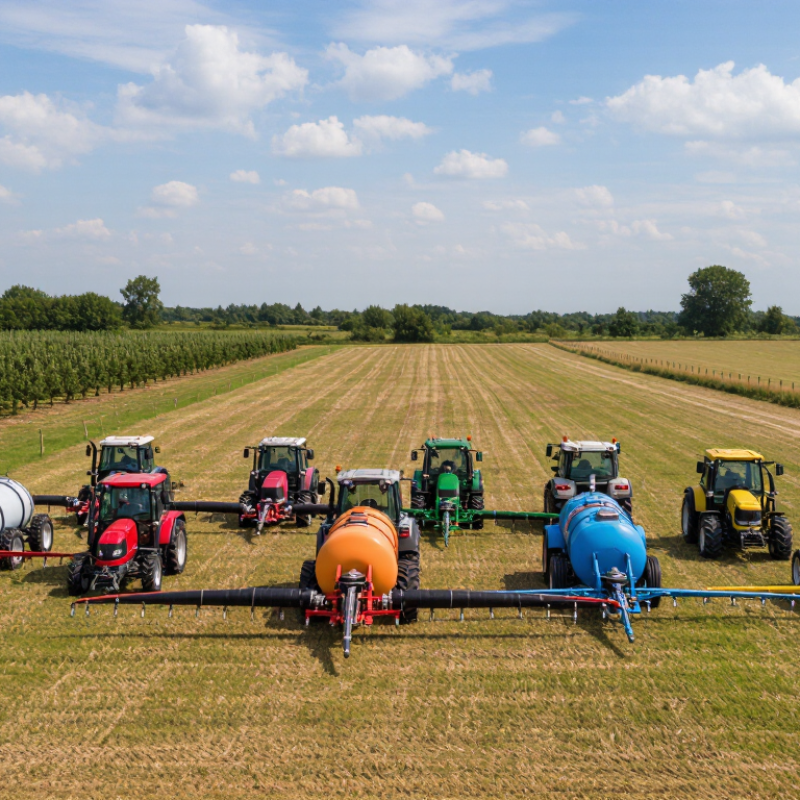
Top 10 ATV Weed Sprayers for Every Farm?

Understanding ATV Weed Sprayers and Their Farm Applications

An ATV weed sprayer is a tank, pump, hose, and spray boom or hand wand carried by an all-terrain vehicle. It helps cover field edges, fence lines, orchards, and rough ground that larger equipment may not reach easily. Tank capacity affects how often you stop to refill, while boom width influences coverage and maneuverability. A narrow boom can be useful around trees and gates. Small details matter.

Farm application depends on the target weeds, crop layout, and ground conditions. Before spraying, check the nozzle pattern with clean water and measure the treated area. Drive at a steady speed, since changing speed can change how much liquid reaches each strip. Keep the boom level where practical, and avoid spraying in gusty wind or near sensitive plants and waterways. Follow the product label for mixing, protective equipment, and application limits.

A sprayer that works well on a flat pasture may perform differently on a sloped, uneven field. Secure the tank, inspect hoses for leaks, and rinse equipment as directed after use. It is easy to overestimate coverage from a single pass; overlapping too much can waste solution, while leaving gaps may miss weeds. No setup is perfect on the first pass. Record nozzle choice, speed, and field conditions, then adjust carefully for the next application.

Key Features That Distinguish ATV Sprayer Models

An ATV sprayer’s useful features matter more than a large tank printed on a listing. Tank capacity should match the area you can treat before refilling; oversized tanks add weight and can affect handling. Keep it practical. Pump flow and working pressure help determine whether the spray pattern stays even at different speeds. Look for accessible filters, a readable pressure gauge, and simple drain points. Small details save time. A boom covers open rows efficiently, while a hand wand helps around fence posts and irregular patches. Check boom width against the ATV’s track width and the space between rows. Too wide can snag brush.

Before choosing a model, inspect the hitch, hose length, and controls from the driver’s seat. The tank should sit securely, with weight distributed sensibly; a full load feels different on a slope. Ask whether replacement nozzles and seals are easy to find. Calibration matters, too: measure the output over a known distance and adjust speed or nozzle choice to match the target rate. Follow the product label and equipment instructions. For uneven ground, steady pressure and a manageable load may matter more than maximum capacity. There is no perfect setup. A wide boom sounds efficient, but it may be awkward in tight corners, and that trade-off is easy to overlook.

How to Choose an ATV Weed Sprayer for Your Farm

Choosing an ATV weed sprayer starts with the size and shape of your fields. Measure the narrowest gate, turning area, and typical row spacing. A wide boom may cover ground quickly, but it can snag on fences or leave uneven coverage around trees. Measure before buying. For small, irregular plots, a hand wand can be more useful than a long boom.

Tank capacity should match the work you can finish comfortably. A full tank adds substantial weight, so check your ATV’s load limits and how the sprayer mounts. On slopes or soft ground, a smaller tank may handle more predictably. That estimate can be wrong. Consider pump flow, pressure control, and nozzle options, too; these affect application rate and droplet pattern. Check that replacement filters and fittings are easy to source.

Before spraying a whole field, test the setup with clean water. Drive at your usual speed and look for missed strips, drift, or excess runoff. Calibrate using the sprayer instructions and follow the product label for approved use, protective equipment, and weather conditions. Keep a simple record of speed, pressure, and coverage. It is easy to rush this part, especially when weeds are already tall. A few minutes of checking can prevent uneven treatment and wasted solution.

Top 10 ATV Weed Sprayers Compared by Capacity and Performance

ATV weed sprayers vary most in tank capacity, pump output, and coverage width. A compact 15-gallon unit suits fence lines and small patches, but frequent refills slow larger jobs. A 25-gallon setup offers a practical middle ground. For broad fields, 40- to 60-gallon tanks reduce refill stops, though added liquid weight can strain an ATV and affect handling. Check the loaded weight, not just the empty sprayer.

Among ten common setups, spot-treatment rigs rank well for precision, while boom-equipped sprayers cover open ground faster. A short boom is easier to maneuver around trees; a wider boom can save passes on level acreage. Nozzle choice matters. Uneven spray patterns can leave missed strips, even with a powerful pump. Look for accessible filters, pressure controls, and a pump rating suited to the intended boom and hose length.

Performance depends on terrain and calibration, not capacity alone. On a bumpy track, a full tank may slosh and make steering less predictable. Test the spray pattern with clean water before applying any product, and follow its label directions. I would not rank the largest tank first for every farm; that assumption often ignores storage, towing limits, and narrow gates. Small details count. Recheck nozzle flow during the season, since wear can quietly change coverage.

Top 10 ATV Weed Sprayer Capacity Classes Compared

Tank capacity and estimated coverage per fill at a fixed application rate of 10 gallons per acre. Coverage is a calculation, not a product guarantee; actual results depend on calibration, nozzle choice, terrain, and application rate.

Safe Operation, Maintenance, and Storage of ATV Weed Sprayers

Before filling an ATV weed sprayer, inspect the tank, hose connections, boom, and tires. Cracked tubing or a loose fitting can leak during a turn. Wear the protective equipment specified on the product label, and keep clean water nearby for accidental splashes. Calibrate with water first, using a measured area and steady ATV speed. Small leaks matter. Spray only in suitable weather; gusts can carry droplets beyond the target area. Avoid spraying near people, animals, drains, or water.

Keep the load balanced and drive slowly, especially on slopes or uneven ground. A full tank can shift the ATV’s handling more than expected. Follow the sprayer and vehicle manuals for mounting and operating limits. Never reach into a moving pump or adjust pressurized fittings. Stop, switch off the pump, and release pressure as directed before repairs. Even experienced operators can rush a rinse; that is worth resisting.

After use, clean the sprayer according to the product label and equipment manual. Manage rinsate carefully, away from drains and waterways. Check filters and nozzles for residue, and let parts dry before storage. Small details get missed. For cold-weather storage, drain or protect the pump using its manufacturer-approved method; trapped water may freeze and crack components. Store the unit secure, dry, and out of children’s reach.

Top 10 ATV Weed Sprayers for Every Farm? - Safe Operation, Maintenance, and Storage of ATV Weed Sprayers
Setup Typical Tank Capacity Approx. Liquid Weight When Full Typical Pump and Pressure Typical Spray Width Best-Suited Application Safe Operation Maintenance and Storage
1. Compact spot sprayer 8–12 US gal 67–100 lb, plus sprayer weight 12-volt diaphragm pump; about 1.0–1.5 GPM; 30–40 PSI Hand wand; no fixed boom Small acreage, fence lines, and isolated weeds Secure the tank to the ATV rack and keep the wand pointed away from people, animals, and desirable plants. Rinse the tank and wand after use. Drain the pump and hoses before freezing temperatures; store clean and dry.
2. Light-duty boom sprayer 15–20 US gal 125–167 lb, plus sprayer weight 12-volt diaphragm pump; about 1.0–2.0 GPM; 30–45 PSI 4–6 ft Gardens, small paddocks, and narrow strips Use a low boom height suited to the nozzle pattern, and travel slowly enough to maintain even coverage. Check nozzle screens for debris and inspect hose connections for leaks. Keep the boom protected from impact during storage.
3. General-purpose 25-gallon sprayer 25 US gal About 209 lb, plus sprayer weight 12-volt diaphragm pump; about 2.0–2.2 GPM; 40–60 PSI 6–8 ft Mixed small-farm work and routine field edges Confirm the ATV’s rack or towing capacity includes the tank, frame, pump, and liquid before filling. Flush the system with clean water as directed by the pesticide label. Inspect straps, wiring, filters, and fittings.
4. Medium-capacity field sprayer 30 US gal About 250 lb, plus sprayer weight 12-volt diaphragm pump; about 2.0–3.0 GPM; 40–60 PSI 8–10 ft Small fields and larger pasture sections Account for liquid weight when crossing slopes; avoid sudden turns and follow the ATV manufacturer’s load limits. Rinse and drain the system after spraying. Store hoses without sharp bends and protect electrical connections from moisture.
5. Larger-capacity boom sprayer 40 US gal About 334 lb, plus sprayer weight 12-volt diaphragm pump; about 3.0–4.0 GPM; 40–60 PSI 10–12 ft Broad, relatively even areas on farms with suitable ATV capacity Verify both payload and towing limits. A full tank raises the center of gravity and can affect stability and braking. Inspect boom hinges and nozzle alignment. Empty the tank before storage and shelter the unit from sun and freezing conditions.
6. Boomless broadcast sprayer 15–25 US gal About 125–209 lb, plus sprayer weight 12-volt diaphragm pump; about 2.0–3.0 GPM; 40–60 PSI Approx. 8–20 ft, depending on nozzle, pressure, and mounting height Rough ground where a projecting boom could be vulnerable Broadcast patterns can drift beyond the target area. Avoid windy conditions and protect nearby crops, water, and people. Clean the nozzle carefully without damaging its opening. Rinse the system and store the nozzle so it cannot be blocked or struck.
7. High-flow spot-and-boom setup 25–40 US gal About 209–334 lb, plus sprayer weight 12-volt diaphragm pump; about 4.0–5.5 GPM; pressure depends on pump and plumbing 6–10 ft, with a separate hand wand Operations needing both boom coverage and targeted treatment Use the pressure regulator and gauge to stay within the nozzle’s rated range; never use a higher pressure to compensate for a clogged nozzle. Check the regulator, gauge, filter, and wand trigger for leaks or wear. Flush all spray paths before putting the unit away.
8. Trailer-mounted ATV sprayer 25–50 US gal About 209–417 lb, plus trailer and sprayer weight 12-volt diaphragm pump; commonly about 2.0–5.5 GPM; 40–60 PSI 6–12 ft, depending on boom configuration Higher-capacity work when the ATV is rated to tow the loaded trailer Check the hitch, safety connection, tire condition, and braking needs. Keep the load balanced and reduce speed on turns and slopes. Rinse the tank and plumbing, drain the pump, and support the trailer securely. Store with tires and hoses protected from damage.
9. Low-profile rack-mounted sprayer 15–25 US gal About 125–209 lb, plus sprayer weight 12-volt diaphragm pump; about 1.5–3.0 GPM; 30–60 PSI 4–8 ft or hand wand Work where a compact footprint and secure rack fit are priorities Use rated mounting points and check rack limits. Do not block the rider’s view, controls, lights, or access to the seat. Inspect mounting hardware before each use. Clean the tank and filter, then store the sprayer with the tank empty.
10. Modular sprayer with interchangeable boom and wand 20–30 US gal About 167–250 lb, plus sprayer weight 12-volt diaphragm pump; about 2.0–4.0 GPM; 40–60 PSI 6–10 ft, plus hand-wand use Farms that alternate between broadcast spraying and spot treatment Shut off the pump before changing accessories. Follow the chemical label and use appropriate protective equipment. Flush each attachment separately. Label clean accessories, check seals and clamps, and store components dry and out of direct sunlight.
Selection and safety note: These are representative configuration ranges, not specifications for a particular product. Liquid weight is estimated using approximately 8.34 lb per US gallon and excludes the sprayer, mounting hardware, and accessories. Check the ATV and sprayer manuals, calibrate the application rate, follow the pesticide label, prevent spray drift, and clean and winterize the equipment according to its manufacturer’s instructions.