What Are the Top ATV Sprayer Types in 2026?
The 2026 ATV sprayer market is becoming more practical, precise, and specialized. Agricultural sprayer industry reports from Grand View Research and MarketsandMarkets forecast continued global growth through the decade. Their findings reflect stronger demand for efficient application, compact equipment, and reduced chemical waste. However, broad market figures rarely explain what happens in a muddy field or on uneven pasture. That gap matters.
An atv sprayer can be a spot sprayer, boom sprayer, broadcast sprayer, or electrically controlled precision unit. Each type serves a different working pattern. Spot sprayers suit fence lines, small plots, and isolated weeds. Boom systems cover wider rows faster. Broadcast models offer simplicity, but they may sacrifice accuracy. Precision systems can improve consistency, although their sensors and controllers add cost and maintenance. The “best” type is not universal.
Dr. Erdal Ozkan, a spray-technology specialist at The Ohio State University, states, “Calibration is the key to successful spraying.” His guidance remains highly relevant for 2026 buyers. Tank capacity, nozzle selection, pressure stability, terrain, and operator visibility all affect real performance. A shiny machine can still produce uneven coverage. A basic unit may work better when calibrated carefully. That is an uncomfortable point, but it deserves attention. This guide compares the leading ATV sprayer types, using published industry research, extension guidance, and practical field considerations. Readers should still verify local label requirements and product instructions before application.
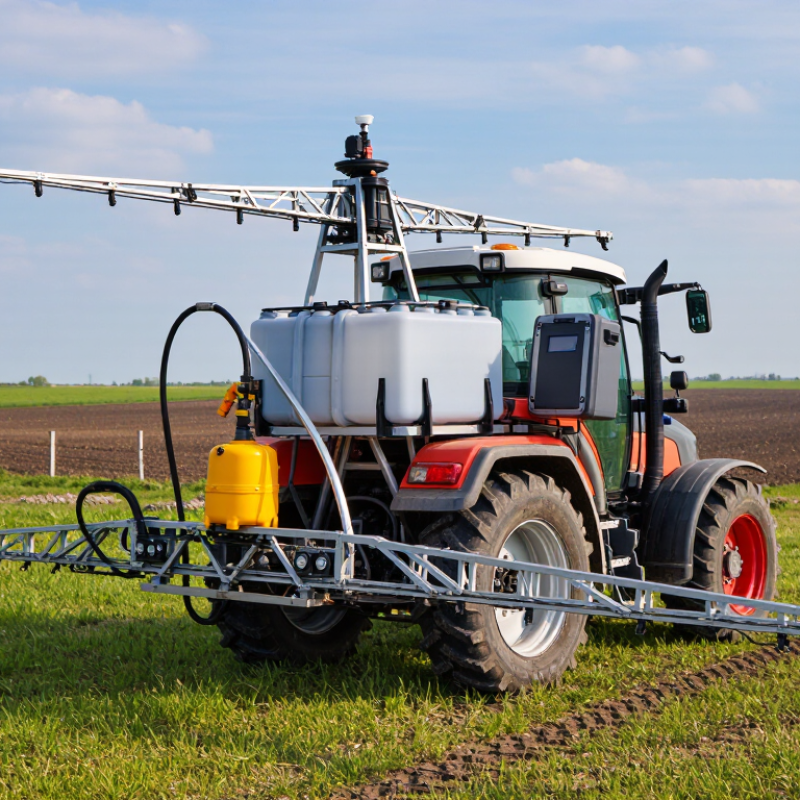
ATV Sprayer Basics and Key Selection Criteria in 2026
What Are the Top ATV Sprayer Types in 2026?
ATV sprayers generally fall into four practical types: spot sprayers, boom sprayers, boomless sprayers, and tow-behind broadcast units. Spot sprayers use a handheld wand for weeds, fence lines, and small patches. Boom models cover wider, even strips. Boomless systems suit uneven ground, although wind can reduce accuracy. Tow-behind units carry larger tanks and reduce refilling on broad properties.
ATV Sprayer Basics and Key Selection Criteria in 2026
Tank capacity matters, but larger is not always better. A full 60-gallon tank can add substantial weight and affect braking, traction, and hillside control. The U.S. Department of Agriculture reported 1.9 million farms in the 2022 Census of Agriculture, showing why equipment needs vary sharply by acreage and use. Small plots may need 15 to 25 gallons. Larger areas may justify 40 gallons or more.
Check pump flow, nozzle options, filtration, hose length, and pressure control. A reliable sprayer should maintain an even pattern while moving slowly over rough ground. The American Society of Agricultural and Biological Engineers publishes application standards that support consistent calibration practices. Measure output before spraying. Do not trust the pressure gauge alone. Nozzle wear can quietly change application rates. I have seen specifications look impressive while hose fittings felt fragile. That deserves more attention. Choose chemical-resistant seals, a stable frame, and simple cleaning access. The best type is the one you can calibrate, control, and safely transport.
Tank-Mounted ATV Sprayers for General-Purpose Coverage
Tank-mounted ATV sprayers remain a practical choice for general-purpose coverage in 2026. They fit small farms, orchards, trails, and uneven pasture edges. The USDA’s 2022 Census of Agriculture recorded 1.9 million farms across 880.1 million acres in the United States. That scale includes many areas where tractors are inefficient or simply too large.
A balanced tank matters. A 25- to 60-gallon unit can support spot work without overwhelming the ATV. Choose a low center of gravity, a visible pressure gauge, and a diaphragm pump suited to the liquid. A rear boom covers open grass, while a handheld wand reaches fence lines and tree bases. The FAOSTAT Pesticides Use database reported about 3.7 million tonnes of pesticide active ingredients worldwide in 2022. Better calibration can reduce waste, drift, and uneven treatment.
Small details decide real performance. Check nozzle output in a measuring container before entering the field. Keep speed steady. Clean the tank immediately after use. Follow the product label and local application rules. I have found that advertised coverage often assumes perfect terrain and constant speed. That is rarely true. Hills, wind, and operator fatigue change the result. A tank-mounted ATV sprayer is versatile, but it is not automatically precise. Calibration remains the difference.
What Are the Top ATV Sprayer Types in 2026? – Tank-Mounted ATV Sprayers for General-Purpose Coverage
| ATV Sprayer Type | Typical Tank Capacity | Pump and Power | Typical Pressure Range | Coverage Equipment | Typical Spray Width | Best General-Purpose Use | Main Advantages | Important Limitations |
|---|---|---|---|---|---|---|---|---|
| Compact Spot Sprayer | 15–25 gal (57–95 L) |
12-volt diaphragm pump; commonly 1.0–2.2 gal/min | 40–60 psi | Hand wand, trigger gun, or short spray lance | Adjustable stream to approximately 10–15 ft | Fence lines, weeds around buildings, small fields, trails, and targeted treatment | Lightweight, maneuverable, and provides precise spot application with limited chemical waste | Slow for large open areas; coverage depends heavily on operator technique |
| Broadcast Boom Sprayer | 25–40 gal (95–151 L) |
12-volt diaphragm pump; commonly 2.0–3.5 gal/min | 20–60 psi | Three-nozzle or multi-nozzle folding boom | 6–10 ft (1.8–3.0 m) |
Lawns, food plots, pasture edges, and relatively even open ground | More uniform swath coverage and better productivity than a hand wand | Booms can contact brush or uneven ground; uniform speed and height are required |
| Boomless Sprayer | 25–40 gal (95–151 L) |
12-volt diaphragm pump; commonly 2.0–3.5 gal/min | 20–60 psi | Boomless nozzle assembly mounted at the rear or sides | 10–20 ft (3.0–6.1 m), depending on nozzle and pressure |
Rough fields, ditches, brush margins, trails, and areas where a rigid boom may snag | Fewer structural parts, greater ground clearance, and good performance over irregular terrain | Wind drift can be greater; spray distribution is usually less uniform than a properly adjusted boom |
| Dual-Purpose Boom-and-Wand Sprayer | 25–40 gal (95–151 L) |
12-volt diaphragm pump; commonly 2.0–3.5 gal/min | 20–60 psi | Folding boom plus hand wand with a separate control valve | 6–10 ft by boom; adjustable by wand |
Mixed properties requiring both broad coverage and detailed spot treatment | Versatile configuration for switching between broadcast and targeted spraying | Heavier and more complex; hoses, valves, and boom sections require regular inspection |
| Large-Capacity Broadcast Sprayer | 45–60 gal (170–227 L) |
12-volt diaphragm pump; commonly 3.0–5.5 gal/min | 20–60 psi | Wide folding boom or boomless nozzle system | 8–12 ft (2.4–3.7 m) |
Larger pastures, extensive food plots, long fence lines, and repeated property maintenance | Fewer refills and higher field productivity when the ATV has adequate payload capacity | Greater filled weight can affect ATV handling, braking, traction, and mounting stability |
Boomless ATV Sprayers for Uneven and Hard-to-Reach Areas
What Are the Top ATV Sprayer Types in 2026?
Boomless ATV sprayers are practical for uneven and hard-to-reach areas. They direct liquid through side or rear nozzles instead of long horizontal booms. This design reduces the chance of striking fences, branches, rocks, or tall grass. It also fits narrow trails and irregular field edges. Less hardware helps.
From practical field use, boomless coverage depends heavily on speed, pressure, and wind. A reliable setup starts with checking the tank, filter, hoses, and nozzle openings. Before spraying, test the pattern with clean water on a flat surface. The spray should reach both sides evenly without producing excessive mist. Wind changes everything. On sloped ground, coverage can become patchy because the ATV moves at changing speeds. I still miss spots sometimes, especially near sharp turns.
For rough terrain, select a sprayer with secure mounting, stable tank support, and accessible controls. Keep the ATV moving at a steady pace, even around trees or shallow ditches. Lower pressure may reduce drift, but it can also shorten the spray distance. That trade-off needs field testing. Clean filters regularly, and inspect fittings after every outing. My own mistake was ignoring a partly blocked nozzle; one side looked treated while the other remained nearly dry. Measure twice. Operators should also wear suitable protective equipment and follow the product label, local requirements, and safe handling procedures.
Boom-Style ATV Sprayers for Precise Row and Field Treatment
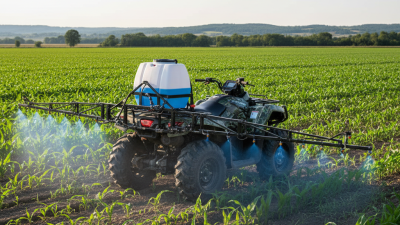
Boom-style ATV sprayers remain a practical choice for precise row and field treatment in 2026. Their horizontal boom carries multiple nozzles across a consistent path. This design can cover several crop rows evenly, reducing untreated strips and unnecessary overlap.
In field use, boom width should match row spacing and the ATV’s turning radius. A narrow boom works better around trees, uneven beds, and tight headlands. Wider booms increase productivity but may flex on rough ground. That small movement matters. I have found that uneven terrain can change spray height quickly, even when the operator drives carefully. Keeping the boom level helps maintain a more uniform pattern.
Nozzle selection, travel speed, and pressure must work together. Flat-fan nozzles often suit broad, even coverage, while drift-reduction options can help in exposed areas. Operators should calibrate with clean water before applying any treatment. Measure output from each nozzle, check the actual travel speed, and replace clogged or damaged parts. Do not rely only on the pressure gauge. It can look normal while one nozzle delivers less than the others. Wind, temperature, and nearby sensitive areas also deserve attention. Follow the product label, local requirements, and protective-equipment guidance. Detailed application records make later adjustments easier, although real fields rarely behave perfectly.
What Are the Top ATV Sprayer Types in 2026?
Boom-Style ATV Sprayers for Precise Row and Field Treatment
Boom width directly affects untreated coverage per pass. The chart shows theoretical field capacity at a constant travel speed of 8 km/h, calculated as: boom width × travel speed ÷ 10. Actual productivity will be lower because of turning, refilling, terrain, overlap, and setup time.
Spot Sprayers for Targeted Weed and Small-Area Applications
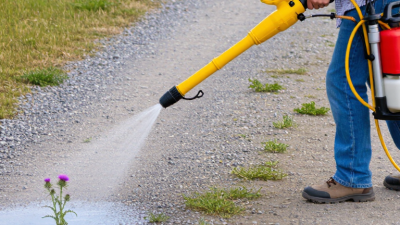
Among the top ATV sprayer types in 2026, spot sprayers remain practical for targeted weed control. A compact tank, 12-volt pump, and hand wand create a flexible setup. Operators can treat thistles beside fences, weeds around trees, or small patches near buildings. The ATV carries the load across rough ground. The wand handles the details. That is the main advantage.
Accurate application depends on calibration, not guesswork. Measure the spray width, walking speed, and output from the nozzle. Mark a small test area before treating the whole site. Use a coarse spray when conditions are breezy. Fine droplets can drift onto garden plants or sensitive areas. Keep the nozzle close to the target, but avoid striking leaves or soil. A clean filter also protects the pump from uneven flow.
Small tanks reduce weight, yet they require more refilling. That trade-off is easy to underestimate. A spot sprayer may look simple, but clogged nozzles quickly ruin consistency. Rinse the tank, wand, and filter after each use. Inspect hoses for soft spots and loose fittings. Personal protective equipment should match the product label and local requirements. Labels also determine mixing, storage, and application limits. One honest limitation remains: spot sprayers are slower for large fields. They excel where precision matters more than coverage speed.
Related Posts
-
What Is a Boomless ATV Sprayer and How Does It Work?
-
China Best ATV Weed Sprayer for Sale Worldwide?
-
7 Best ATV Sprayer Boom Kit Options for Enhanced Efficiency
-
2025 Guide: Choosing the Best ATV Boom Sprayer for Your Needs
-
What Is a Spot Sprayer and How Does It Work?
-
2025 Top ATV Sprayer Boom Kit for Efficient Remote Spraying Solutions