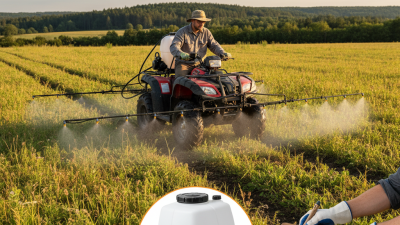
10 Best ATV Sprayers for Farms and Gardens in 2026?
Choosing the best ATV sprayer for a working farm or garden is not simply a tank-size decision. Pump reliability, spray width, pressure control, boom stability, and calibration can change results within a single afternoon. A 25-gallon unit may suit vegetable rows, while larger properties might need 60 gallons or more. Weight matters too. A full tank can make a small ATV feel unstable on wet grass or sloping ground.
Dr. Jason Deveau, a respected spray-application specialist and educator, offers a useful reminder: “The best sprayer is the one that applies the right amount, in the right place, at the right time.” That principle guides this 2026 comparison. We examine practical features, not impressive claims alone. Our review considers tank construction, pump output, nozzle options, hose durability, boom adjustment, mounting security, and cleaning access. Small details count.
Real conditions are rarely perfect. Hoses kink. Nozzles clog. Batteries weaken during cold mornings. We also look at those frustrations. Each atv sprayer is judged for farms, orchards, pasture edges, lawns, and home gardens. Product labels, approved applications, protective equipment, and local requirements must always control use. Never rely on a review instead of the label.
Some models may look powerful but waste spray through poor calibration. Others seem basic yet deliver steady coverage. That difference matters. This guide highlights the strongest choices, explains their trade-offs, and helps readers match equipment to terrain, acreage, crops, and experience. No machine is perfect. The right one is simply safer, easier to maintain, and more predictable for your work.
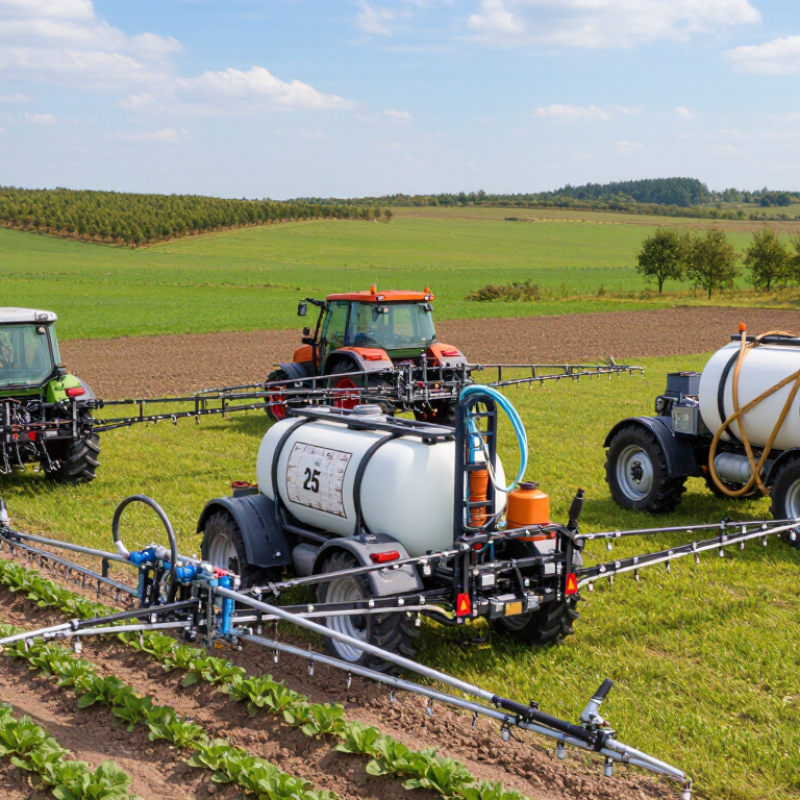
ATV Sprayer Fundamentals: Tank Size, 20–60 PSI, GPM, and Boom Width
When comparing the 10 best ATV sprayers for farms and gardens in 2026, start with tank size.
A 25-gallon tank suits garden rows and smaller plots. Forty gallons offers fewer refills, but water weight quickly changes ATV handling. A full 40-gallon tank weighs over 330 pounds before adding the sprayer. Check the ATV’s payload rating, not just the rack’s physical space. More capacity is not always better.
Pressure controls droplet delivery and spray distance.
For many general applications, 20 to 40 PSI provides a practical working range. Use 50 to 60 PSI only when the nozzle and target require it. Excess pressure can create fine, drift-prone droplets. Pump flow matters too. A pump rated near 2 to 5 GPM can support common ATV boom setups, depending on nozzle count. However, advertised flow is often measured without hose, nozzle, or height losses. That detail is easy to miss.
Boom width determines coverage, turning effort, and uneven-ground performance.
A 4- to 8-foot boom works well around beds, pasture edges, and narrow lanes. Wider booms cover faster, but they flex more and can strike posts or branches. Match nozzle spacing to boom width, then calibrate speed using a measured test area. I once trusted the gauge and skipped calibration; the result was visibly uneven coverage. Real conditions win. Recheck pressure, GPM, and output after replacing nozzles or changing travel speed.
2026 Buying Criteria: Match 15–60 Gallon Tanks to Property Size
10 Best ATV Sprayers for Farms and Gardens in 2026?
Tank size should follow application rate, refill time, and terrain—not acreage alone. The USDA NASS 2022 Census reported an average U.S. farm size of 463 acres, but that figure can mislead small-property owners. A five-acre orchard and a five-acre vegetable garden may require very different spray volumes.
15-gallon tank
For gardens, food plots, and compact orchards, a 15-gallon tank is easier to control and transport. At 20 gallons per treated acre, it covers about 0.75 acre per fill.
25- or 40-gallon tank
A 25- or 40-gallon tank suits properties between roughly one and three acres, depending on canopy density and application rate. Expect more weight. Wet soil exposes poor suspension design quickly.
50- to 60-gallon tanks
Larger 50- to 60-gallon tanks reduce refill stops on broad fields and long fence lines. At the same 20-gallon rate, 60 gallons covers about three acres. Actual coverage changes with nozzle flow, speed, overlap, and pressure. ASABE S572.1 nozzle standards support consistent spray classification, but calibration remains the operator’s responsibility. The EPA’s National Water Quality Inventory reports agriculture as a major source category for impaired waters, reinforcing the need to avoid overapplication and runoff. I would measure one test strip before buying. My first estimate is often too optimistic. A smaller tank can be the wiser choice when slopes, gates, and narrow rows dominate the work.
Compare the 10 Best ATV Sprayers by GPA, Flow Rate, and Coverage
10 Best ATV Sprayers for Farms and Gardens in 2026
The ten best ATV sprayers differ most in GPA, flow rate, and usable coverage. Smaller 15-gallon tanks suit garden beds and narrow paths. Larger 25-gallon tanks reduce refilling across open fields. A useful starting range is 1 to 3 GPA for many liquid treatments. However, crop height and nozzle type can change that target.
Flow rate matters when matching the sprayer to your ATV speed. Low-flow units near 0.5 gallons per minute provide control for delicate garden work. Mid-range systems around 1.0 to 1.5 GPM handle general pasture and fence-line spraying. High-flow models can exceed 2 GPM, but they may empty the tank quickly. More flow is not always better.
Coverage is easy to overestimate. A 20-gallon tank applying 2 GPA theoretically covers 10 acres. Real coverage is lower after overlap, turning, uneven ground, and cleaning losses. Boom widths from 4 to 12 feet balance maneuverability with productivity. Hand wands add precision around trees and raised beds. They slow large jobs. In practical comparisons, I would rank consistent spray patterns above maximum pressure. Pressure can look impressive, yet poor nozzle calibration leaves dry stripes. My field notes are not perfect, especially on sloped ground. Rechecking output with a timed container is worthwhile. One minute can reveal a surprising difference between advertised and actual flow.
Calibrate Spray Output with the ASABE GPA Formula, Speed, and Nozzles
Choosing among the 10 best ATV sprayers for farms and gardens in 2026 requires more than tank size. Spray output must match crop, speed, nozzle spacing, and field conditions. The ASABE GPA formula is practical: GPA = 5,940 × GPM ÷ (MPH × nozzle spacing in inches). For example, a nozzle delivering 0.15 GPM at 3 MPH with 20-inch spacing applies about 14.9 GPA. That rate is only an estimate. Uneven ground, turning, and changing throttle speed can reduce accuracy. ASABE Standard S327.2 supports using measured flow and travel speed for reliable calibration. The 2022 USDA Census of Agriculture recorded 880.1 million acres in U.S. farms, showing why small rate errors can become costly across large areas.
Measure each nozzle for one minute before spraying. Replace nozzles that vary more than 10% from the average; inconsistent flow creates visible stripes. Select nozzle spray quality using ASABE S572.1 classifications and the product label. Smaller droplets may improve coverage, but wind can carry them away. Larger droplets reduce drift, yet they may leave weak coverage on dense leaves. Calibration is a trade-off.
Tips: Mark a 100-foot test route. Drive it at working speed, not walking speed. Collect nozzle output in a measuring jug. Recheck pressure after warming the pump. I often forget this step. That mistake matters. Record GPA, speed, pressure, nozzle type, and weather in a field log.
ATV Sprayer Calibration: Application Rate by Travel Speed
This chart uses the ASABE broadcast-spraying formula: GPA = 5,940 × total nozzle flow (GPM) ÷ [speed (MPH) × spray width (ft)]. The calculation assumes a 20-foot spray width and a combined boom flow of 0.40 GPM. Slower travel increases the application rate when nozzle output remains constant.
Calibration note: Confirm actual nozzle flow with a timed collection test, measure travel speed over a known distance, and adjust pressure, nozzle selection, or speed to reach the intended GPA.
Farm and Garden Safety: PPE, Drift Reduction, and EPA Label Compliance
Choosing an ATV sprayer for a farm or garden also means planning for safe use.
Wear chemical-resistant gloves, eye protection, long sleeves, trousers, and waterproof boots. A respirator may be required by the product label. Keep the cab, seat, and controls free from wet spray.
Drift control starts before the tank is filled.
Read the entire EPA-approved product label, including crop restrictions, mixing directions, re-entry times, and required protective equipment. The label is not optional guidance. It is the operating standard. Check wind speed with a handheld meter, avoid gusty conditions, and use coarse droplets when the label permits. Maintain a low boom height and leave a wider buffer near ponds, homes, gardens, and neighboring crops.
Calibration matters more than a large tank.
Measure the sprayer’s output with clean water before adding any product. Mark a test route, record the travel speed, and compare the collected volume with the target rate. Small ATV speed changes can create large application errors.
I still find uneven terrain easy to underestimate. Slow down on slopes, secure the tank, and inspect hoses for leaks before every trip.
Keep children, pets, and bystanders away from the treated area.
After spraying, follow the label for equipment cleaning and container handling. Wash PPE separately from household clothing, then store the ATV sprayer locked, dry, and clearly identified. Never rely on memory when the label can be checked again.