Why Choose a Broadcast Sprayer for Large Farms?
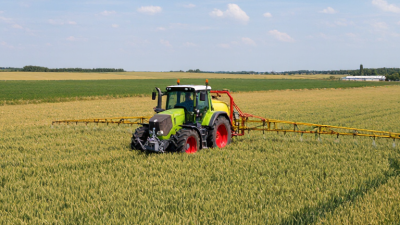
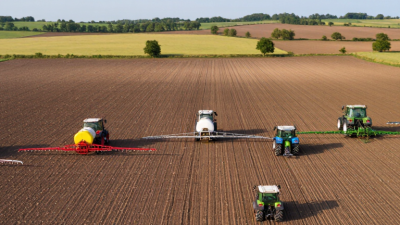
On a large farm, every field pass consumes time, fuel, and labor. A broadcast sprayer treats a wide swath in one run, making it useful for applying crop protection products or nutrients across broad, relatively uniform fields. From the cab, the advantage is easy to picture: a boom spanning several rows, steady travel across the field, and fewer turns at the headland. When conditions are right, that can improve work rates and help crews meet narrow application windows.
Spray-application specialist Dr. Tom Wolf’s published guidance supports a practical principle: effective coverage depends on matching nozzle choice, pressure, speed, and weather. This is a paraphrase, not a verified verbatim quotation. A wide boom alone does not guarantee even results. Wind, changing field contours, plugged nozzles, or inconsistent speed can leave visible gaps or overlap. Small details matter. So does calibration.
For large farms, choosing a broadcast sprayer is less about buying the widest machine and more about fitting equipment to acreage, terrain, crop, and operator capacity. A self-propelled unit may cover ground quickly, while a trailed model may suit an existing tractor fleet. Neither is automatically the better choice. Consider tank size, boom stability, cleaning needs, and access to service before comparing headline capacity. No machine fixes poor planning. And no checklist replaces a test run under real field conditions. The decision deserves a careful look—even experienced operators can find room to improve.
What a Broadcast Sprayer Is and How It Works
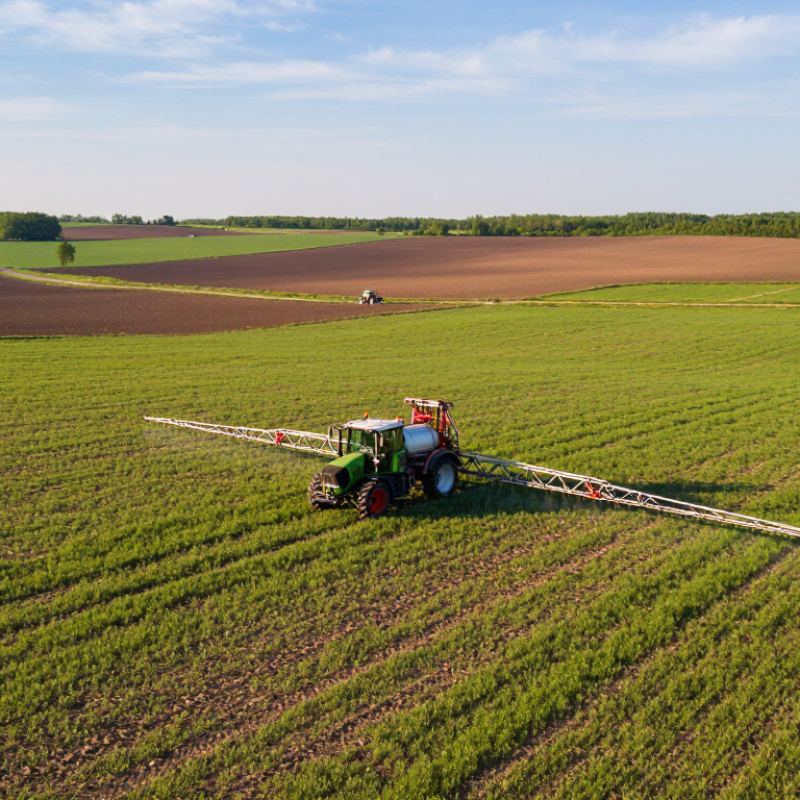
A broadcast sprayer distributes liquid across a broad area rather than placing it in narrow, separate bands. On a large farm, it may be mounted on a tractor or carried by a self-propelled vehicle. Its tank holds the spray mixture, while a pump moves liquid through pipes to nozzles along a boom. Simple in principle.
As the machine travels, each nozzle releases a controlled spray pattern. The boom’s width and nozzle spacing help create overlapping coverage, while pressure and travel speed affect how much liquid reaches each acre. Filters catch debris that could block a nozzle, and agitation can help keep some mixtures evenly suspended. Operators calibrate the sprayer by checking flow, speed, and application rate. A small pressure change can alter droplet size, so settings deserve attention. Coverage is not automatic; uneven ground or wind can still cause missed strips or drift.
Tips: Check nozzle patterns before entering the field, and clean clogged tips with the proper tool. Keep a steady speed and boom height. Recheck calibration when changing nozzles or operating conditions. Field estimates can be imperfect, so compare treated area with tank volume and adjust carefully.
How Large Farms Use Broadcast Sprayers
On large farms, broadcast sprayers cover a whole field in planned passes, rather than treating only individual plants. Operators use them for uniform applications across broad crop rows, especially when timing matters. The scale is substantial: the USDA’s 2022 Census of Agriculture counted about 880 million acres of farmland in the United States. A sprayer’s boom width, travel speed, and tank capacity help crews plan how much area they can cover before refilling. Every pass counts.
Before work begins, operators check nozzle condition, pressure, and output per acre. They also match the boom height to the crop and watch wind and temperature, since drift or uneven coverage can waste product. Section controls and GPS guidance can reduce missed strips and overlap, but they do not replace careful calibration. The USDA NASS 2021 Agricultural Chemical Use report found herbicides were applied to 97 percent of surveyed U.S. corn acres, illustrating how routine field-scale applications are in major crops. That figure is not a target for every farm. Crop, pest pressure, and product instructions still determine whether treatment is appropriate. A small leak can matter. So can a rushed turn.
Key Benefits for Broad-Area Crop Treatment
A broadcast sprayer can treat wide crop areas in fewer passes than many targeted methods. That can save operating time during narrow weather windows, especially when fields are large and access is straightforward. Even coverage matters. A steady travel speed and correctly selected nozzles help distribute spray across the boom width, reducing untreated strips and excess overlap. Look for practical signs in the field: consistent leaf coverage, similar results near the boom edges, and no obvious spray bands.
Tips: Check nozzle condition, pressure, and boom height before starting. Keep speed steady, and avoid spraying when wind could carry droplets off target. A quick test on a small section can reveal uneven output before you cover the whole field.
Broad-area application is not automatically the best fit for every crop or field. Irregular boundaries, changing wind, and dense obstacles can make uniform coverage harder. Calibration takes time, and the first pass may still need adjustment. Record the settings and field conditions that worked, then review them after treatment. This makes the next application more consistent, though weather and crop growth can change the result.
Why Choose a Broadcast Sprayer for Large Farms? — Key Benefits for Broad-Area Crop Treatment
| Dimension | Broadcast Sprayer | Practical Benefit on Large Farms | Important Consideration |
|---|---|---|---|
| Area treated | Applies spray across the full designated field area rather than only narrow crop-row bands. | Useful when weeds, pests, or disease targets are distributed broadly across a field. | Choose broadcast treatment only when the product label and crop situation call for whole-area application. |
| Operational capacity | Theoretical field capacity can be estimated as: speed (mph) × boom width (ft) ÷ 8.25 = acres per hour. | A wider boom can cover more ground per pass, helping large operations plan field time and labor. | This is a theoretical estimate; turning, refilling, obstacles, overlap, and field shape reduce actual capacity. |
| Illustrative capacity calculation | At 5 mph with a 60 ft boom: 5 × 60 ÷ 8.25 ≈ 36.4 theoretical acres per hour. | Provides a transparent starting point for comparing possible operating setups. | This is a calculation example, not a guaranteed field result or recommended travel speed. |
| Application pattern | Multiple nozzles along the boom create overlapping spray patterns across the treated width. | Can provide consistent broad coverage when equipment is correctly selected, set up, and operated. | Nozzle choice, spacing, pressure, boom height, and travel speed affect droplet pattern and coverage. |
| Calibration and rate control | Application rate depends on factors such as nozzle output, pressure, travel speed, and nozzle spacing. | Calibration helps keep the applied rate aligned with the intended rate and product label. | Check output and equipment condition regularly, and follow label directions for rate and application method. |
| Comparison with band spraying | Broadcast treatment covers the full treated area; band spraying treats only crop-row strips. | For a 30 in row spacing and a 10 in treated band, the band covers about one-third of the field area. | That area comparison assumes uniform rows and does not determine product cost or effectiveness; rates and labels matter. |
| Labor and field passes | A boom can treat a broad swath in each pass. | May reduce the number of passes needed compared with narrower application equipment. | Actual savings depend on field layout, equipment width, refill frequency, and the treatment program. |
| Drift and off-target movement | Spray can move beyond the target area under unsuitable weather or application conditions. | Good operating practices help protect adjacent crops, habitats, and other sensitive areas. | Follow product-label restrictions and local requirements; consider wind, temperature, humidity, and droplet size. |
| Best-fit situations | Large, relatively open fields requiring treatment across most or all of the field surface. | Well suited to broad-acre operations where coverage width and efficient field logistics are priorities. | Spot or band application may be more appropriate when the target is localized or treatment is limited to crop rows. |
Capacity figures are theoretical planning calculations. Actual performance and application requirements vary by equipment, field conditions, product label, and local regulations.
Factors That Affect Sprayer Choice and Performance
On a large farm, sprayer choice starts with field conditions, not horsepower alone. USDA’s 2022 Census of Agriculture counted about 880 million acres across 1.9 million farms, illustrating the scale and variety of U.S. operations. A broadcast sprayer can cover broad, open fields efficiently, but its boom width and tank capacity must match field shape, refill access, and daily work windows. A wide boom may save passes on flat ground. It can be awkward on uneven edges or around obstacles.
Small details matter.
Performance depends on nozzle type, droplet size, pressure, travel speed, and calibration. University extension guidance commonly emphasizes checking output against the operator manual and recalibrating when nozzles, pressure, or speed change. That advice is practical: a worn nozzle can quietly alter application rates across many acres.
Weather matters, too. Wind can carry droplets off target, while heat and low humidity can increase evaporation. Pause when conditions are unsuitable. It costs time, but correcting a poor pass may cost more. No single setup fits every field; even experienced operators should recheck settings as crops and conditions change.
Safety and Maintenance for Reliable Field Use
A broadcast sprayer can cover wide fields efficiently, but reliable use starts with a careful walk-around. Check the tank, frame, hoses, and fittings before filling. Look for cracked lines, loose clamps, and dried residue around seals. Small leaks matter.
Wear the protective equipment specified in the sprayer manual, and keep bystanders away while filling or operating. Confirm that guards are secure and the shutoff works before entering the field. Calibrate the boom and nozzles for the planned application; uneven output can waste material and leave untreated strips. Wind and changing field conditions also affect spray drift, so pause when control becomes uncertain.
Maintenance is easiest when it happens the same day. After use, flush the tank and lines as directed by the equipment instructions, then clean nozzle screens without damaging them. Check for clogs, worn tips, and pressure changes; a damaged nozzle may be hard to spot from the cab. Keep it simple.
Record repairs and calibration results, even if the notes are brief. Before storage, drain or protect components according to the manual, and inspect tires and wiring. A checklist helps, but it does not catch everything. Recheck the machine after rough ground or an unexpected pressure change, because small faults often become larger during a long field day.
Related Posts
-
Why Choose a Broadcast Sprayer for Large Fields?
-
What Is the Best Tractor Sprayer Made in China?
-
2026 Top Tractor Sprayer Models for Global Buyers?
-
What Is the Best 3 Point Sprayer from China?
-
7 Best 3 Point Sprayers for Tractors in 2026
-
Innovative Tractor Sprayer Technologies Transforming Global Agriculture Efficiency