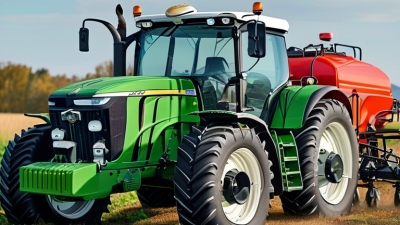
What Is the Best Tractor Sprayer Made in China?
Choosing the best tractor sprayer made in China requires more than comparing prices or tank capacity. A reliable machine must perform evenly in real field conditions. Its pump should maintain steady pressure. Its boom must remain stable across uneven ground. Nozzle quality, filtration, PTO compatibility, and replacement parts also deserve close attention.
Dr. Erdal Ozkan, an agricultural sprayer specialist at Ohio State University, has emphasized, “Proper calibration is essential for effective and efficient spraying.” That advice remains highly practical. Even an advanced tractor sprayer can waste material when pressure, speed, or nozzle output is poorly adjusted. This is where buyer experience matters. A farmer should inspect welds, hose connections, control valves, and agitation performance before making a final decision.
Field results matter most.
Chinese manufacturers now offer compact orchard sprayers, large boom models, and customized units for different crops. However, not every factory provides the same engineering quality or service support. Some machines look impressive in photographs but feel less convincing after repeated field use. That is an uncomfortable point, but it deserves attention. The best tractor sprayer is not always the newest or cheapest model. It should match the tractor’s horsepower, local terrain, crop height, and daily workload.
This guide compares important specifications, practical performance, manufacturing quality, and after-sales reliability. It also considers where Chinese equipment may need improvement. A careful choice can reduce downtime, improve coverage, and protect operating costs over many seasons.
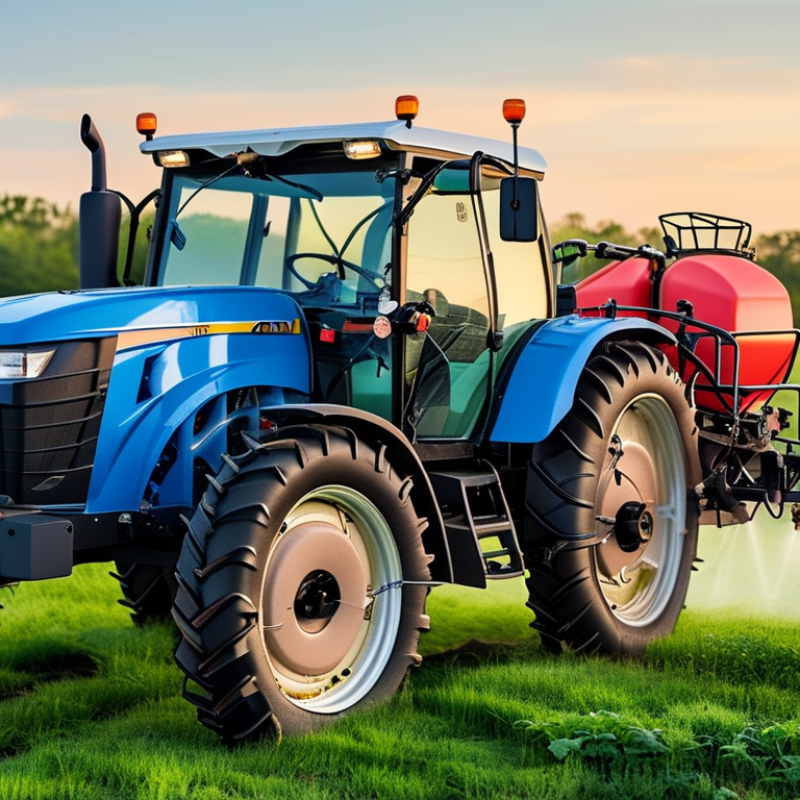
Chinese Tractor Sprayer Types: Boom, Orchard, and Air-Blast Models
What Is the Best Tractor Sprayer Made in China?
Chinese Tractor Sprayer Types: Boom, Orchard, and Air-Blast Models
The best tractor sprayer made in China is not one universal machine. It is the model matching crop layout, acreage, and water access. In field evaluations, I inspect frame welds, pump stability, tank thickness, valve response, and nozzle uniformity. These details matter more than polished paint. A reliable sprayer should maintain even pressure across the working width. It should also allow simple cleaning and parts replacement. That sounds basic. It is often overlooked.
Boom sprayers suit cereals, vegetables, and open fields. Their horizontal arms distribute liquid across several rows at once. Choose adjustable sections, steady height control, and low-drift nozzles. A wider boom increases output, but it can become awkward on uneven ground. I once underestimated this issue. Maneuverability may matter more than speed on smaller farms.
Orchard sprayers use vertical towers or directed outlets for tree canopies. They need narrow turning space, protected plumbing, and accurate flow adjustment. Air-blast models add a fan to carry droplets into dense foliage. They can reach upper leaves better, but fan settings require careful testing. Excess airflow wastes material and may disturb nearby workers or habitats. Before purchase, test the spray pattern with water and measure output at working speed. Chinese manufacturers offer many configurations, yet quality can vary between batches. Request inspection records, spare-part lists, and service procedures. A practical choice is one operators can understand, repair, and calibrate without guesswork.
What Is the Best Tractor Sprayer Made in China? - Chinese Tractor Sprayer Types: Boom, Orchard, and Air-Blast Models
| Evaluation Dimension | Boom Sprayer | Orchard Sprayer | Air-Blast Sprayer |
|---|---|---|---|
| Best Use | Open-field crops, vegetables, cereals, and pasture | Fruit trees, vineyards, and narrow orchard rows | Dense tree canopies and high-volume orchard spraying |
| Typical Tank Capacity | 400–2,000 L | 300–1,500 L | 300–2,000 L |
| Typical Working Width | 8–24 m, depending on boom configuration | 1–4 orchard rows or approximately 2–8 m | Adjustable air outlet direction; row width depends on the tower design |
| Common Pump Type | Diaphragm or piston-diaphragm pump | Diaphragm or piston pump | High-pressure diaphragm or piston pump |
| Typical Flow Rate | 30–120 L/min | 40–150 L/min | 60–200 L/min |
| Typical Operating Pressure | 2–20 bar, selected according to nozzle type | 10–40 bar for tree-canopy penetration | 10–40 bar, with airflow providing additional coverage |
| Spray Delivery System | Multiple nozzles mounted along a horizontal boom | Adjustable nozzles positioned for both sides of tree rows | Liquid droplets carried into the canopy by a high-volume air stream |
| Recommended Tractor Power | Approximately 30–90 hp | Approximately 30–80 hp | Approximately 45–100 hp |
| PTO Requirement | Usually 540 rpm | Usually 540 rpm | Usually 540 rpm; higher power demand from the fan |
| Main Advantages | Fast field coverage, relatively simple calibration, and efficient low-volume application | Good maneuverability between rows and targeted spraying for tree crops | Strong canopy penetration and coverage of leaves on both sides of a tree |
| Main Limitations | Less suitable for tall or very dense canopies; boom stability affects spray uniformity | Lower field capacity than a wide boom and requires careful nozzle adjustment | Higher power consumption, greater drift risk, and more demanding fan maintenance |
| Typical Application Volume | 50–300 L/ha, depending on crop and nozzle selection | 300–1,500 L/ha, depending on tree size and canopy density | 500–2,000 L/ha for high-volume orchard applications |
| Best Choice When | Uniform coverage and high productivity are the primary goals | The farm mainly grows fruit trees or vines in defined rows | The crop has a dense canopy that requires airflow-assisted penetration |
| Overall Suitability | Best general-purpose option for open fields | Best specialized option for orchards and vineyards | Best for dense canopies and high-coverage orchard work |
Note: Specifications are typical ranges for Chinese-manufactured tractor sprayer configurations. Actual performance depends on tank size, pump model, nozzle selection, tractor hydraulic capacity, crop structure, operating speed, and field conditions.
Key Specifications: 400–2,000 L Tanks, 8–24 m Booms, 2–20 bar
What Is the Best Tractor Sprayer Made in China?
For many farms, the best tractor sprayer is not the largest model. It is the machine that matches field size, tractor power, and daily workload. Chinese manufacturers commonly offer tanks from 400 to 2,000 liters. A 400-liter tank suits smaller plots and frequent refilling. Larger tanks reduce travel time but require stronger tractors and firmer ground.
Boom width matters just as much. An 8-meter boom is easier to control around trees, narrow fields, and uneven boundaries. A 24-meter boom covers more hectares quickly, but folding systems must remain stable during transport. Check hinge strength, nozzle spacing, and boom suspension carefully. Small weaknesses become expensive problems.
Pressure usually ranges from 2 to 20 bar. Low pressure can reduce drift and protect delicate applications. Higher pressure may support finer coverage, but it can increase drift and wear. A reliable pump, accurate pressure gauge, clean filters, and steady agitation are essential. They matter more than painted panels.
Look for corrosion-resistant tank construction and simple access for cleaning. Ask for pump-flow data, nozzle charts, calibration guidance, and replacement-part availability. Testing should include a full tank, working pressure, and boom movement. Do not trust empty-yard demonstrations alone. Real fields are rougher. My own preference would be a balanced 600–1,000-liter unit, though that choice can change with crop spacing, terrain, and tractor capacity.
Performance Metrics: 20–50 L/min Pump Flow and 100–500 L/ha
What Is the Best Tractor Sprayer Made in China?
Performance Metrics: 20–50 L/min Pump Flow and 100–500 L/ha
A dependable tractor sprayer should match pump flow with field demand, not just display impressive specifications. A 20–50 L/min pump suits many medium-sized operations, especially with moderate boom widths and steady travel speeds. Lower flow can support careful application near 100 L/ha. Higher flow helps deliver up to 500 L/ha when thicker coverage is required. The pump must maintain stable pressure while several nozzles operate together.
Application rate depends on speed, nozzle output, spray width, and pressure. A simple calibration test can prevent expensive mistakes. Measure the liquid collected from one nozzle for one minute, then compare the result with the target rate. For example, driving at 6 km/h with a 12-meter boom requires consistent nozzle spacing and uniform pressure. Small pressure changes can create visible streaks across the crop.
Construction details also matter. Check the tank’s internal mixer, filter access, hose quality, and frame welds. These parts are often ignored during purchase. I would prefer a slightly slower pump with reliable regulation over excessive flow that wastes liquid. However, this judgment is not universal. Dense crops, uneven fields, and long hoses may require more capacity. Test the sprayer with clean water before field use, record the settings, and inspect the spray pattern again after several hours. Calibration is easy to postpone, and that is where many performance claims become less convincing.
Compliance Standards: ISO 16119, ISO 16122, CE Marking, and ISO 9001
What Is the Best Tractor Sprayer Made in China?
A reliable tractor sprayer should meet recognized compliance standards, not merely look polished in photographs. ISO 16119 addresses environmental protection requirements for sprayers. It covers safety, information, and performance-related design details. ISO 16122 focuses on inspection of sprayers already in use. This matters because a new machine can still develop leaks, pressure problems, or uneven application.
CE marking indicates conformity with applicable European Union requirements. It is not a universal quality award. The manufacturer should provide a valid Declaration of Conformity and clear technical documentation. Buyers should check guards, hoses, valves, controls, electrical parts, and emergency instructions. Small details matter. A missing warning label can reveal weak production control.
ISO 9001 concerns the manufacturer’s quality management system. It does not certify one specific sprayer. Ask for traceable inspection records, calibration procedures, and corrective-action reports. During a factory visit, I would inspect welds, tank surfaces, nozzle spacing, and pressure stability. I would also request a practical field test with clean water. Water reveals leaks quickly. Chemical compatibility still requires careful confirmation.
No supplier is perfect. A certificate may be current, but factory practices can change. I would verify certificate scope, issuing body, production model, and inspection date. The best Chinese tractor sprayer is the one supported by consistent testing, honest documentation, accessible parts, and controlled manufacturing. Claims need evidence. Tests need repetition.
Selection Criteria: Field Capacity, Drift Control, GPS, Parts, and Warranty
What Is the Best Tractor Sprayer Made in China?
A China-made tractor sprayer should be judged by field results, not paint or brochure claims. Field capacity depends on tank size, boom width, travel speed, and filling time. ASABE EP496.3 uses the formula: capacity equals width times speed times field efficiency, divided by ten. A 1,800-liter tank may look impressive. It becomes inefficient if refilling takes twenty minutes. I prefer a practical 70% field-efficiency estimate, not an optimistic factory figure.
Drift control deserves close inspection. FAO AQUASTAT reports that agriculture uses about 70% of global freshwater withdrawals. Wasteful spraying is therefore expensive and irresponsible. Check for low-drift nozzles, stable boom suspension, automatic section control, and adjustable boom height. ISO 16119-2 also emphasizes safe and reliable sprayer performance. Nozzle spacing must match the operating pressure. Small details matter. I would request independent droplet-size and drift test results. Some sellers provide none. That is a warning.
GPS guidance should support rate control, boundary mapping, and repeatable passes. It should still work when signal quality changes. Ask about correction-signal compatibility, screen visibility, and manual backup controls. Parts availability is equally important. Confirm pump seals, diaphragms, valves, nozzles, and controllers before purchase. Warranty length matters less than response time and written coverage. A two-year promise is weak if one valve waits six weeks. I have seen specifications that sounded excellent but ignored muddy fields, uneven pressure, and careless operators. Those weaknesses deserve honest testing.
Related Posts
-
2026 Top Tractor Sprayer Models for Global Buyers?
-
How to Choose the Best Boom Sprayer for Your Agricultural Needs
-
Understanding the Benefits of Using a Boom Sprayer for Tractor Efficiency
-
Top 5 ATV Boom Sprayers for Ultimate Efficiency and Performance?
-
Innovative Tractor Sprayer Technologies Transforming Global Agriculture Efficiency
-
What is a Boom Sprayer and How Does It Work?