
Best 3pt Sprayer for 2026 Buyers Guide
A 3pt sprayer can make routine fieldwork more consistent, but the right choice depends on your tractor, crops, and acreage. This 2026 buyer’s guide compares practical features, not just impressive specifications. Consider tank capacity, boom width, pump output, nozzle options, and the tractor’s hitch and hydraulic limits. A full tank adds substantial weight. Measure your storage space, too. A sprayer that barely fits through a shed door may become an everyday frustration.
Spray-application specialist Jason Deveau’s educational work emphasizes sound application practices. A useful paraphrase of that guidance is: “Calibrate for the job, not just the tank.” Calibration, nozzle selection, and operating speed all affect coverage. Check how easily you can clean filters, inspect hoses, and obtain replacement parts. Look closely at boom stability and folding mechanisms; a loose section can complicate work on uneven ground. Specs help, but they cannot tell the whole story. Even an experienced buyer can misjudge how a sprayer handles a particular tractor or field. That deserves a second look. The sections ahead explain what to compare, which trade-offs matter, and how to match a 3pt sprayer to real working conditions before you buy.
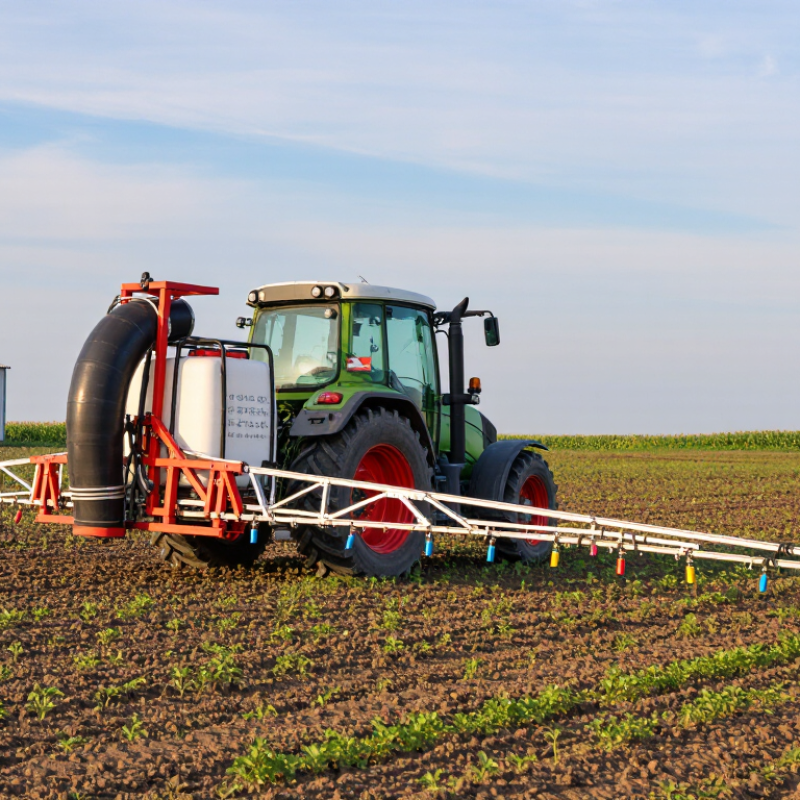
Understanding Three-Point Sprayers and Their Main Components
Understanding Three-Point Sprayers and Their Main Components
A three-point sprayer connects to a tractor’s rear hitch, but the hitch is only one part of the system. The frame carries the tank and boom; the pump moves liquid through filters, hoses, valves, and nozzles. Many units use a PTO-driven pump, while others use hydraulic or electric power. Check that the tractor’s hitch capacity matches the filled sprayer’s weight, not just the empty unit. That detail is easy to miss.
Nozzles shape coverage and droplet size, while pressure and travel speed affect the application rate. ASABE Standard S572.3 provides a repeatable method for classifying spray quality by comparing droplet spectra with reference nozzles. This matters because a nozzle’s appearance cannot reliably tell you its droplet class. USDA’s 2022 Census of Agriculture counted 1,900,487 farms across about 880.1 million acres, a reminder that operating needs vary widely (USDA, 2024). A small orchard and a broad pasture may call for very different boom widths and tank capacities. Before use, inspect nozzle wear, clean the filters, and check hoses for leaks. A clean tank is not proof of even output. There is still room for judgment: field conditions rarely match a neat specification sheet.
| Component or Selection Factor | Typical Specifications or Options | What to Check Before Buying |
|---|---|---|
| Tank capacity | Common configurations range from about 50 to 300 gallons. Smaller tanks reduce carried weight; larger tanks reduce refill frequency. | Match capacity to the tractor’s three-point lift capacity, field size, terrain, and the weight of the full sprayer. Water weighs about 8.34 lb per US gallon, before adding the sprayer’s own weight. |
| Three-point hitch | Many compact and utility-tractor sprayers use Category I; larger units may use Category II. Hitch dimensions and implement weight vary. | Confirm the tractor’s hitch category, lift capacity, link-pin dimensions, and clearance. Check lift capacity at the hitch points specified by the tractor manufacturer. |
| Pump and drive | Common pump types include diaphragm and roller pumps. PTO-driven pumps commonly use a 540-rpm PTO; some sprayers use hydraulic or other drives. | Check required PTO speed, pump output at the intended operating pressure, chemical compatibility, and whether the tractor has the necessary PTO or hydraulic connections. |
| Pump flow | Small and medium agricultural sprayers often use pumps rated in the approximate range of 5–20 gallons per minute, depending on pressure and pump design. | Allow enough flow for the selected nozzles, agitation, and any return flow. Compare pump performance at the required pressure rather than relying on maximum-flow figures alone. |
| Spray pressure | Operating pressure depends on the nozzle and application. Many field-boom setups operate within roughly 15–80 psi; other nozzle and spraying systems may require different pressures. | Use the pressure range specified for the chosen nozzle. A pressure gauge near the boom helps monitor operating conditions; higher pressure does not automatically improve coverage. |
| Boom width and folding | Typical boom widths vary widely, with approximately 20–60 ft common among many tractor-mounted field sprayers. Folding and breakaway designs are available. | Choose a width suited to field layout, tractor stability, transport access, and the intended application. Verify folded dimensions and working clearance. |
| Nozzles and spacing | Common boom spacing is 20 in, with 15-in and 30-in arrangements also used. Nozzle types include flat-fan, drift-reducing, and other application-specific designs. | Match nozzle type, flow rate, spacing, pressure, and travel speed to the target application and product label. Use the nozzle manufacturer’s charts for calibration. |
| Agitation and filtration | Sprayers may use hydraulic return agitation, mechanical agitation, or a combination. Suction and line filters help protect the pump and nozzles. | Check that agitation is suitable for the materials being sprayed and that filters are accessible for cleaning. Follow chemical-label instructions for mixing and handling. |
| Hoses, valves, and controls | Typical systems include a suction line, pressure line, control valves, pressure regulator, gauge, and boom-section controls. | Inspect hose pressure ratings, connections, valve access, and whether the controls can shut off boom sections independently. Confirm replacement parts are readily available. |
| Calibration and application rate | Application rate is determined by nozzle output, operating pressure, nozzle spacing, and travel speed; it is not set by tank capacity alone. | Calibrate with clean water before use and recheck after changing nozzles, pressure, or speed. Follow the product label and applicable local requirements. |
| Best fit: small plots and orchards | A compact tank and narrower boom or suitable directed-spray setup can be easier to maneuver in confined areas. | Prioritize low overall weight, tractor compatibility, visibility, and access around rows. A wide field boom may be unsuitable for tight spaces. |
| Best fit: larger fields | A higher-capacity tank, wider boom, adequate pump output, and multiple boom sections can reduce refill stops and improve coverage efficiency. | Confirm the tractor can safely lift and operate the fully loaded unit, including on slopes and during transport. Balance boom width with field conditions and tractor capacity. |
Related Posts
-
7 Tips to Choose the Best 3 Point Hitch Sprayer?
-
What Is the Best 3 Point Sprayer from China?
-
Top 3 Point Sprayer Suppliers in China for Global Buyers?
-
Understanding the Benefits of Using a Boom Sprayer for Tractor Efficiency
-
Top 5 ATV Boom Sprayers for Ultimate Efficiency and Performance?
-

What Is the Best Tractor Sprayer Made in China?