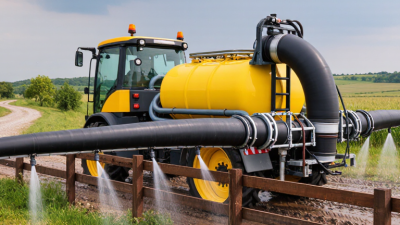
2026 How to Choose the Best Boomless Sprayer?
Choosing the best boomless sprayer in 2026 requires more than comparing tank size and price. Field conditions decide performance. A rocky pasture, roadside ditch, or wooded fence line needs different coverage from an open crop field.
FAO AQUASTAT reports that agriculture accounts for roughly 70% of global freshwater withdrawals. That figure makes application efficiency increasingly important. Less water does not automatically mean better spraying. Poor calibration can leave dry weeds, wet soil, or visible streaks across a field.
The U.S. Environmental Protection Agency emphasizes following product labels, reducing spray drift, and protecting nearby people, water, and habitats. ASABE spray-quality standards also help describe droplet sizes and application behavior. These references matter when evaluating a boomless sprayer, especially under changing wind and uneven terrain.
A practical buyer should examine nozzle design, droplet spectrum, operating pressure, pump capacity, tank durability, and application width. Ground speed matters too. A sprayer that performs well at four miles per hour may apply unevenly at eight.
Watch the wind.
Boomless systems are useful where a fixed boom could strike trees, posts, or rough ground. However, their wide spray pattern may become less predictable near sensitive areas. A model with adjustable nozzles and reliable pressure control usually offers greater flexibility. Still, no machine solves every field problem.
This 2026 guide compares real operating needs, manufacturer specifications, maintenance demands, and user experience. It also questions attractive claims that lack independent testing. The best boomless sprayer is not always the largest or cheapest. It is the one that delivers consistent coverage, manageable drift, and dependable service in your actual working conditions.
What Is a Boomless Sprayer and How Does It Work?
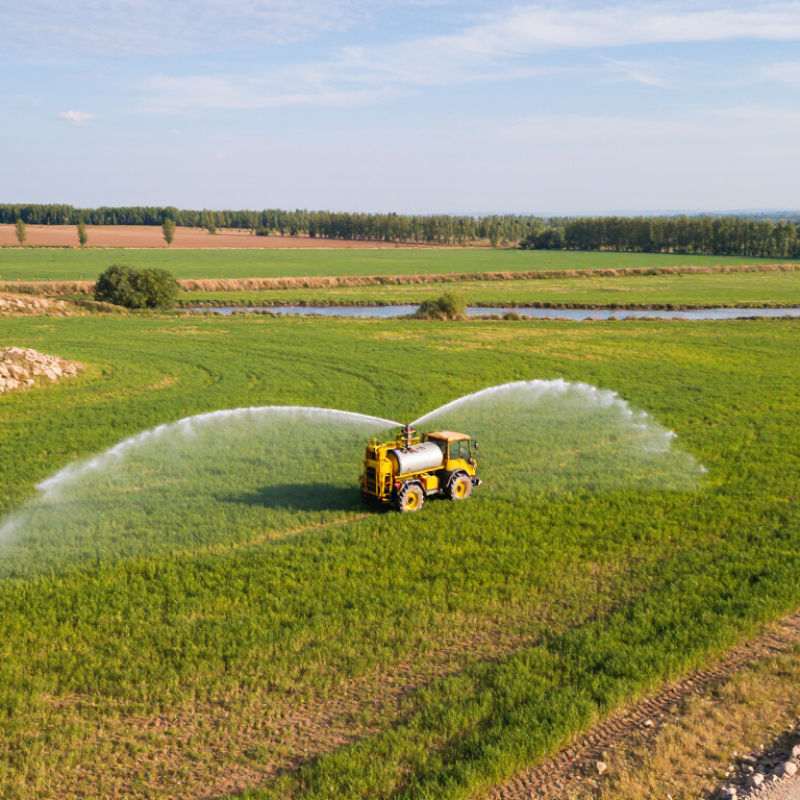
A boomless sprayer applies liquid without a long horizontal spray bar. Instead, one or more nozzles create a broad fan-shaped pattern. A pump moves liquid from the tank through a filter, hose, and pressure regulator. The nozzle then breaks the liquid into droplets and spreads them across the target area.
The spray pattern depends on nozzle design, pressure, height, and wind. Higher pressure may create finer droplets, but fine droplets can drift more easily. Lower pressure produces larger droplets and often reduces drift, though coverage may become less even. On uneven ground, the flexible spray pattern can reach ditches, fence lines, and rough field edges better than a rigid boom.
Calibration is essential. Measure the application area, check the nozzle output, and match travel speed with pressure. A simple collection test can reveal blocked nozzles or uneven flow. Keep the tank solution mixed when the product requires agitation. Wear suitable protective equipment and follow the product label and local requirements.
It is not a perfect tool. Wide coverage can hide untreated strips or overlap areas. Wind changes quickly, too. I would inspect the pattern on a calm day before treating a large area, then adjust speed and nozzle height carefully. Small errors become expensive across many acres.
How to Choose the Best Boomless Sprayer
A boomless sprayer uses one or more angled nozzles to create a wide fan-shaped spray pattern without a horizontal boom. The chart shows the theoretical swath width produced by a 120° spray angle at different nozzle heights. Higher mounting increases coverage width, but excessive height can reduce spray uniformity and increase drift. Choose a sprayer according to the required coverage, operating pressure, terrain, liquid type, and wind conditions.
Which Spraying Tasks Are Best Suited to a Boomless Sprayer?
In 2026, a boomless sprayer is best suited to uneven, wooded, or hard-to-reach areas. Its spray pattern can reach beyond obstacles that limit a traditional boom. This makes it practical for fence lines, brush edges, ponds, orchards, and rough pasture. It also works well on narrow trails, drainage banks, and irregular fields.
Boomless sprayers are useful when coverage matters more than precise row placement. They can treat large open areas quickly, especially where crops are absent or spacing changes often. However, wind can carry droplets beyond the target. That weakness is easy to underestimate. Operators should check wind direction, nozzle height, and nearby sensitive vegetation before spraying. I have found that uneven ground often requires slower travel, even when the equipment seems powerful.
Tips: Match the nozzle to the task, not just the tank size. Use coarse droplets when conditions allow. Keep a steady speed and avoid spraying during gusty weather. Test a small area first. Record the settings that worked, because memory becomes unreliable after a long day. A boomless sprayer may save time, but it still needs careful calibration, regular cleaning, and honest judgment about site conditions.
How to Compare Spray Width, Coverage, and Droplet Control
2026 How to Choose the Best Boomless Sprayer?
Choosing a boomless sprayer starts with the spray pattern, not the tank size. I compare spray width at the working height I actually use, often 24 to 36 inches above the target. A wide pattern can reduce passes, but uneven edges may leave untreated stripes. On rough ground, I slow down and measure the wet band with water-sensitive paper. That small test often changes my choice.
Coverage depends on nozzle output, travel speed, and overlap. I mark a 100-foot route, collect output for one minute, and calculate the application rate. Then I repeat the test at two speeds. A sprayer that looks efficient at six miles per hour may underapply when terrain forces slower travel. Edge overlap also needs checking, because boomless patterns can thin unexpectedly. I do not trust one pass.
Droplet control matters just as much. Medium droplets can balance coverage and drift resistance, but pressure changes their size. Lower pressure may reduce drift, yet it can weaken breakup and create larger gaps. I inspect leaves, soil, and nearby surfaces after testing instead of judging mist visually. Wind, humidity, and nozzle wear can alter results within minutes. My measurements are not perfect. Therefore, I record pressure, speed, water volume, and weather during every comparison. Choose the pattern that stays consistent in real conditions, not only in a calm yard.
What Power Source, Tank Size, and Features Should You Choose?
Choosing a boomless sprayer starts with the power source, not the paint or advertised output.
For small properties, a battery-powered unit can be quiet, clean, and easy to control. It suits spot treatment and short sessions near sheds, paths, or garden edges. Keep a spare battery nearby. That detail matters. Electric models may struggle when the tank is full or the spray must reach distant ground. A tractor-driven pump offers steady pressure for larger fields, while a small gasoline engine adds mobility where no vehicle is available. Fuel storage needs care and adds noise, so convenience is not always the real advantage.
Tank size should match your refill distance and chemical handling routine.
A 25- to 40-gallon tank often works for lawns, orchards, and small acreage. Bigger tanks reduce interruptions but increase towing weight and stopping distance. Measure the loaded weight, not the empty label. Water weighs about 8.3 pounds per gallon. I once underestimated that difference; the vehicle handled the empty unit well, then felt strained on a slope. That was a useful mistake, but not one to repeat. Leave headspace for safe mixing and movement.
Look for a reliable filter, pressure gauge, flow control, and an easy-to-reach shutoff.
A boomless pattern should spread evenly without excessive drift. Adjustable nozzles help when switching from open grass to narrow fence lines.
A reinforced frame, secure straps, and a drain valve simplify maintenance. Check whether parts can be cleaned without special tools.
More pressure is not automatically better; it can waste liquid and damage nearby plants. Test with clean water first, watching coverage, leaks, and wind. Good equipment still needs an attentive operator.
How to Evaluate Safety, Maintenance, Cost, and Long-Term Value
Choosing the Best Boomless Sprayer in 2026
Safety should guide every evaluation, not just the purchase decision. Check the spray pattern near fences, roads, workers, and sensitive plants. A stable frame reduces sudden movement on uneven ground. Look for clear pressure controls, secure hose connections, and shields around moving parts. I prefer testing with clean water first. It reveals leaks without creating unnecessary exposure.
Maintenance becomes expensive when access is poor. Open the pump area, remove the filter, and inspect the nozzle before buying. Parts should be easy to clean and replace. After each use, rinse the tank, flush the lines, and store the unit under cover. Small habits matter. However, I have seen operators overlook cracked seals during winter storage. That mistake can appear months later, when repairs are inconvenient.
Cost should include labor, water use, replacement parts, and downtime. A cheaper sprayer may demand frequent adjustments or uneven applications. Measure coverage across a known area, then compare output with the manufacturer’s stated figures. Results can vary with wind, terrain, and operator skill. Do not trust one demonstration. Record several trials. Long-term value also depends on repair support, corrosion resistance, and practical service life. A reliable unit may still be the wrong choice if its controls are uncomfortable or its capacity exceeds your regular needs.
| Evaluation Dimension | Compact Spot Sprayer | ATV/UTV Boomless Sprayer | Tow-Behind Boomless Sprayer | High-Capacity Utility Sprayer |
|---|---|---|---|---|
| Typical Tank Capacity | 15–25 gal (57–95 L) | 25–60 gal (95–227 L) | 25–100 gal (95–379 L) | 100–300 gal (379–1,136 L) |
| Typical Use | Small lawns, spot treatment, gardens, and localized weed control | Pastures, trails, fence lines, orchards, and uneven rural areas | Large lawns, fields, roadsides, and extended property maintenance | Large farms, municipalities, sports grounds, and frequent commercial use |
| Coverage Width | Approximately 10–20 ft (3–6 m) | Approximately 15–30 ft (4.5–9 m) | Approximately 20–40 ft (6–12 m) | Approximately 25–50 ft (7.5–15 m), depending on nozzle setup |
| Typical Working Pressure | 20–40 psi | 30–60 psi | 30–70 psi | 40–100 psi, subject to application requirements |
| Application Uniformity | Moderate More affected by walking speed and nozzle distance |
Moderate to Good Good for open areas when calibrated correctly |
Good Consistent travel speed improves coverage |
Good to Very Good Best when pressure and speed are controlled |
| Overspray and Drift Risk | Medium Higher risk near sensitive plants or property boundaries |
Medium Wind direction and nozzle height require close attention |
Medium Wider spray pattern can increase off-target exposure |
Medium Higher flow and pressure require strict drift control |
| Safety Requirements | Wear chemical-resistant gloves, eye protection, protective clothing, and suitable footwear | Use personal protective equipment, secure the tank, and keep spray away from people, animals, water, and crops not listed on the label | Use personal protective equipment, check hitch security, and avoid spraying during unsuitable wind conditions | Use complete label-required protective equipment, lockout procedures, spill controls, and trained operators |
| Terrain and Stability | Very Good Lightweight and easy to control by hand |
Good Suitable for rough terrain when the tank is securely mounted |
Moderate Trailer stability decreases on steep slopes or uneven ground |
Limited High liquid weight requires suitable equipment and stable terrain |
| Calibration Difficulty | Low Small area and simple controls |
Moderate Speed, pressure, and nozzle output must be checked |
Moderate Requires accurate speed and swath-width measurements |
Higher Flow rate, pressure, travel speed, and multiple outlets need regular verification |
| Routine Maintenance | Rinse tank and lines after every use; inspect hose, filter, wiring, and nozzle | Flush the system, clean the intake filter, inspect fittings, and check battery connections | Flush the system, lubricate moving parts, inspect tires and hitch, and protect the pump from freezing | Flush thoroughly, inspect valves and pressure regulators, service the pump, and maintain hoses and fittings |
| Winter Storage | Drain completely and protect the pump and hose from freezing temperatures | Drain, rinse, disconnect power, and store the pump according to the operating manual | Drain the tank, protect the pump and plumbing, stabilize tires, and store under cover | Complete system flush, inspect seals, winterize plumbing, and maintain covered storage |
| Common Wear Parts | Nozzles, strainers, hose, wiring connectors, and pump diaphragm | Nozzles, filters, hose, pump diaphragm, battery cables, and switches | Nozzles, filters, hose, pump diaphragm, wheel bearings, tires, and hitch components | Nozzles, filters, valves, pressure regulator, hoses, pump components, and tank fittings |
| Typical Purchase Cost Range | Approximately US$150–$500 | Approximately US$400–$1,500 | Approximately US$700–$3,000 | Approximately US$2,000–$10,000+ |
| Operating Cost | Low Low fuel or vehicle demand; limited chemical volume |
Low to Moderate Vehicle fuel, battery charging, chemical, and rinse-water costs |
Moderate Towing fuel, tires, maintenance, chemical, and rinse-water costs |
Higher Greater chemical volume, fuel, labor, maintenance, and compliance costs |
| Labor Efficiency | Low Best for small areas and occasional treatment |
Moderate Good access and maneuverability for medium-sized areas |
High Efficient for repeated passes over broad areas |
Very High Best for frequent, large-scale applications with trained operators |
| Expected Service Life | Approximately 3–7 years with proper cleaning and protected storage | Approximately 5–10 years with regular maintenance and correct loading | Approximately 5–12 years, depending on pump, chassis, tires, and storage conditions | Approximately 8–15 years when serviced, calibrated, and stored correctly |
| Long-Term Value | High for occasional use Low entry cost and simple ownership |
High for mixed terrain Balances mobility, capacity, and operating cost |
High for broad coverage Good productivity when the towing vehicle is already available |
High for frequent professional use Higher initial cost can be justified by labor savings and utilization |
| Best Selection Rule | Choose when the treated area is small and portability matters more than speed | Choose when access, maneuverability, and medium-area coverage are priorities | Choose when consistent coverage and reduced refill frequency are important | Choose when annual usage, labor savings, service support, and compliance justify the investment |
Related Posts
-
How to Choose the Best Boomless Sprayer in 2026?
-
Unlocking Precision: The Ultimate Guide to Boomless Sprayer Kits for Efficient Application
-
What Is a Boomless ATV Sprayer and How Does It Work?
-
Top 10 UTV Sprayer With Boom Types for Sale?
-
2026 How to Use Boomless Spray Nozzle Effectively?
-

How to Choose the Best Spot Sprayer for Your Needs?