7 Best Master Mfg Sprayers for Global Buyers?
Choosing the right master mfg sprayer is rarely about buying the largest tank or the lowest-priced model. Global buyers need dependable coverage, practical controls, and parts that remain available after delivery. A sprayer may look impressive online, yet perform poorly when seals harden, nozzles clog, or water quality changes.
Dr. Erdal Ozkan, a respected spray-technology specialist at The Ohio State University, states, “The goal of spraying is to deposit the pesticide on the target.” That principle matters beyond agricultural treatment. It highlights the need for consistent pressure, suitable nozzle selection, even distribution, and careful calibration. The best master mfg sprayer should create a controlled spray pattern, not simply produce more liquid.
This guide reviews seven models for different global buying situations. The comparison considers tank capacity, pump performance, hose reach, mounting options, maintenance access, and operator comfort. It also examines shipping practicality and replacement-part availability, which are often ignored during purchasing. Small details matter. A readable gauge can prevent wasted material. A reinforced hose can reduce downtime. A stable frame can improve safety on uneven ground.
No single model fits every market. That is the honest limitation. Climate, water conditions, voltage standards, and local service networks can change the decision. Some buyers may prefer stronger output, while others need compact storage and simple cleaning. The following selections offer useful starting points, but specifications should still be verified with the manufacturer before ordering.
Master Mfg. Sprayers Explained: Types, Uses, and Global Market Context
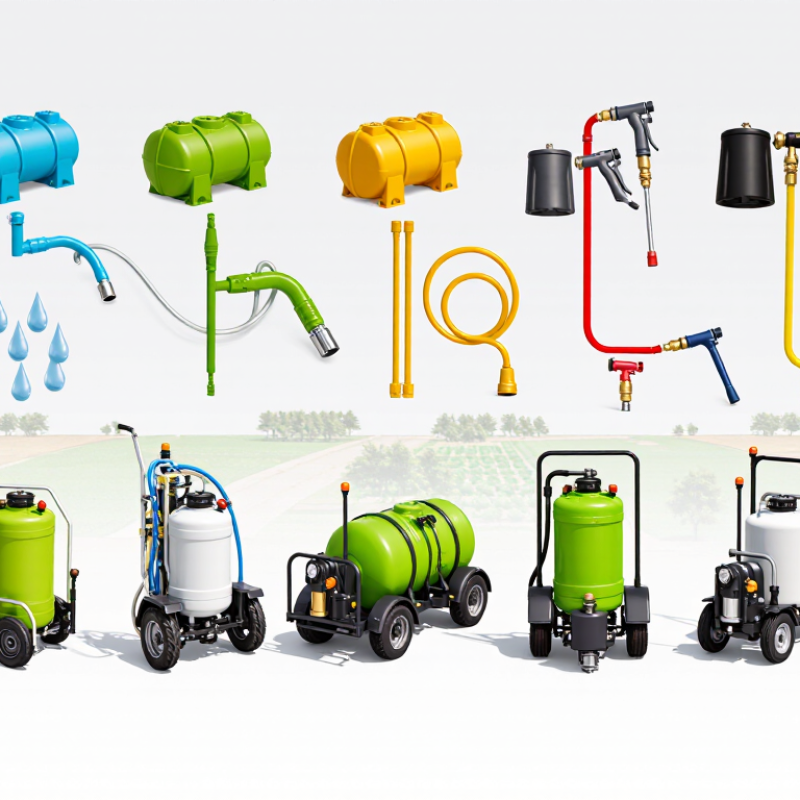
Professional sprayers vary widely in design, capacity, and working pressure. Backpack models suit small plots, greenhouse rows, and targeted lawn treatment. Tow-behind units cover larger fields with less physical effort. Handheld spot sprayers offer control around trees, fences, and narrow paths. Each type serves a different operating rhythm.
In practical field use, nozzle choice often matters more than tank size. Flat-fan nozzles create even coverage across open areas. Cone nozzles work better around dense foliage. Adjustable wands help operators reach hidden leaves without disturbing nearby plants. Calibration should include walking speed, pressure, and liquid output. Small errors can waste material.
Global buyers should check hose fittings, voltage needs, replacement parts, and language-specific manuals. Climate also affects performance. Heat can harden seals, while cold storage may damage pumps and tanks. Regional service access deserves attention before purchase. A lower price may become expensive after one broken component.
Experience shows that product descriptions rarely answer every field question. Ask for flow-rate data and cleaning guidance. Keep records.
Some uncertainty remains.
Different crops, water quality, and local equipment standards can change results. Buyers should test a small area first, inspect spray patterns, and confirm that the equipment suits approved agricultural or landscaping applications. Proper training, protective equipment, and responsible storage support safer daily operation.
7 Best Sprayer Categories for Global Buyers: Typical Tank Capacity
Tank capacity is a practical way to compare sprayer categories for different operating conditions. Handheld and backpack sprayers suit small plots and spot treatment, while trolley, ATV/UTV, and tractor-mounted systems support larger areas and longer application cycles. The figures shown are representative industry ranges rather than brand-specific product data.
Evaluation Criteria: Capacity, Pressure, Flow Rate, and ISO 5682-1 Testing
When comparing seven sprayers for global buyers, capacity is only the starting point. A larger tank reduces refilling, but it also increases weight and transport demands. A 1,000-liter tank may suit broad fields, yet it can be excessive for smaller plots. Check the usable volume, drain design, and tank markings. Clear markings prevent costly mixing errors.
Pressure control deserves closer attention.
Stable pressure supports even nozzle coverage across changing terrain. Ask for the working range, gauge accuracy, and relief-valve response. Flow rate should be measured at several pressures, not quoted as one attractive figure. ISO 5682-1 testing can provide a useful reference for evaluating sprayer performance, including output consistency and test conditions. However, test results depend on nozzle type, water temperature, and calibration. Laboratory figures do not always match dusty field conditions. That assumption is risky.
I recommend requesting raw test data, nozzle specifications, and repeatability records.
Compare liters per minute with application width and travel speed. Convert units carefully when suppliers use different regional standards. Small calculation errors can change the application rate significantly. Inspectors should also check leaks, hose flexibility, and pressure recovery after switching sections. These details are easy to overlook. In practice, no sprayer is perfect. A reliable choice is the model whose limits are clearly documented, tested, and honestly explained.
Seven Best Master Mfg. Sprayers Compared by Tank Size and Spray Output
Seven Best Master Mfg Sprayers for Global Buyers?
Seven Best Sprayers Compared by Tank Size and Spray Output
For small gardens, the 12-liter manual sprayer offers a practical starting point. Its output reaches about 0.8 liters per minute with a standard nozzle. The 16-liter battery backpack model reduces pumping effort and delivers nearly 1.2 liters per minute. It feels balanced on short jobs, although the shoulder straps may need better padding.
The 20-liter battery sprayer suits larger beds and greenhouse rows. Its adjustable output ranges from 1.0 to 1.8 liters per minute. A 25-liter trolley sprayer adds useful mobility on hard floors. It can reach approximately 2.0 liters per minute, but uneven ground may expose weak wheels. The 30-liter rechargeable unit supports longer work periods, producing about 2.2 liters per minute under normal pressure.
For commercial users, the 40-liter cart model offers fewer refills and an output near 2.8 liters per minute. The 60-liter powered sprayer provides the highest capacity in this comparison, with output approaching 3.5 liters per minute. That capacity saves time, yet its weight demands careful handling. My first comparison focused too much on tank size. Nozzle quality, battery endurance, hose length, and pressure stability also change real performance. Buyers should test clean water before field use and confirm local equipment requirements. Output figures are practical estimates, not guaranteed results.
ASABE S572.1 Droplet Classes and Nozzle Selection for Crop Protection
ASABE S572.1 droplet classes provide a practical language for choosing nozzles and managing spray quality. Classes range from Extremely Fine to Ultra Coarse, with Fine, Medium, and Coarse between them. Smaller droplets improve coverage on leaf surfaces, but they can drift more easily. Larger droplets reduce drift risk, yet may leave weaker coverage on dense foliage.
Nozzle selection should match the product label, target pest, crop canopy, and weather conditions. In field checks, I compare the spray chart with actual pressure, boom height, and travel speed. A nozzle rated Medium at one pressure may shift toward Fine or Coarse at another. Do not trust color alone. Two nozzles with similar colors can produce different patterns. Windy conditions often call for a Coarse or Very Coarse class, when permitted by the product label. Coverage may suffer. That tradeoff deserves attention.
Tips: Check droplet class at the operating pressure you will use. Keep boom height uniform across uneven ground. Inspect worn tips, filters, and leaks before spraying. Use water-sensitive paper under the canopy to evaluate coverage, but remember it cannot measure drift. Humidity, heat, and wind can change field performance quickly. A first calibration can be imperfect; record what happened and adjust carefully. Local rules and pesticide labels remain the controlling references for every application.
7 Best Sprayer Configurations for Global Buyers: ASABE S572.1 Droplet Classes and Nozzle Selection for Crop Protection
| Configuration |
Tank Capacity |
Spray Width |
Typical Operating Pressure |
Recommended Nozzle Type |
ASABE S572.1 Droplet Class |
Suitable Crop-Protection Use |
Key Buyer Considerations |
| Handheld Trigger Sprayer |
1–2 L |
0.3–0.6 m |
1.5–3.0 bar |
Adjustable hollow-cone or fan nozzle |
Fine to Medium |
Spot treatment, greenhouse plants, nursery crops and small pest outbreaks |
Low purchase cost and precise application; wind drift can increase at higher pressure. |
| Battery Backpack Sprayer |
15–20 L |
0.5–1.0 m |
2.0–4.0 bar |
Flat-fan or low-drift air-induction nozzle |
Medium to Coarse |
Vegetable beds, orchards, vineyards and small field areas |
Portable and suitable for irregular terrain; battery runtime and operator comfort should be checked. |
| Manual or Electric Cart Sprayer |
40–60 L |
1.0–2.0 m |
2.0–5.0 bar |
Even flat-fan nozzle with nozzle spacing of approximately 50 cm |
Medium |
Nurseries, turf, greenhouse aisles and small commercial plots |
Good maneuverability and simple calibration; confirm wheel stability on slopes. |
| ATV Boom Sprayer |
100–200 L |
2–4 m |
2.0–4.5 bar |
Low-drift flat-fan nozzle, 50 cm spacing |
Medium to Coarse |
Pasture, row crops, orchards and medium-size farm parcels |
Offers faster coverage than handheld equipment; boom height and ground speed must remain consistent. |
| UTV or Compact Utility Boom Sprayer |
200–400 L |
4–8 m |
2.0–5.0 bar |
Air-induction flat-fan or pre-orifice flat-fan nozzle |
Coarse to Very Coarse |
Broad-acre vegetables, pasture, cereals and low-drift herbicide applications |
Balances productivity and transport size; verify pump output against the number of nozzles. |
| Tractor-Mounted Field Boom Sprayer |
400–1,000 L |
8–18 m |
2.0–6.0 bar |
Pressure-compensating flat-fan or air-induction nozzle |
Medium to Very Coarse |
Large-scale cereal, oilseed, pulse and vegetable production |
High field capacity and consistent output; requires reliable boom stabilization and accurate speed control. |
| Air-Assisted Orchard Sprayer |
400–1,500 L |
3–8 m effective canopy width |
5.0–15.0 bar |
Hollow-cone or adjustable-cone nozzle with air assistance |
Fine to Medium |
Tree fruit, citrus, vines and dense perennial canopies |
Improves canopy penetration; airflow, fan direction and droplet drift require careful adjustment. |
ASABE S572.1 reference: Droplet categories are commonly classified by volume median diameter as Very Fine (<145 µm), Fine (145–225 µm), Medium (226–325 µm), Coarse (326–400 µm), Very Coarse (401–500 µm), Extremely Coarse (501–650 µm) and Ultra Coarse (>650 µm). Actual droplet size depends on nozzle design, pressure, liquid properties and operating conditions. Always follow the pesticide label, local regulations and calibrated application rate.
Global Buyer Checklist: CE, ISO, Electrical Voltage, Warranty, and Spare Parts
When evaluating professional sprayers for global buyers, compliance should be checked before spray capacity or tank design. A CE declaration should match the exact model, electrical system, and destination market. Ask for test reports, not only a printed logo. ISO certification can support production consistency, but it does not automatically prove product safety.
Voltage is easy to overlook. Confirm the rated voltage, frequency, plug type, motor power, and included adapter before ordering. A 220–240 V unit may not operate safely on a 110–120 V supply. I once saw a buyer focus on nozzle performance while missing the local plug requirement. That mistake caused delays and extra freight costs.
Small detail. Big impact.
Warranty terms should state coverage length, excluded parts, labor responsibility, and the process for international claims. Check whether the seller provides remote troubleshooting and clear repair instructions. Spare parts matter even more after installation. Request a parts list for seals, hoses, nozzles, pumps, filters, and switches. Confirm stock levels, prices, shipping methods, and expected lead times. Keep written records. Verbal promises can become unclear across languages and time zones. A reliable supplier should answer technical questions precisely, provide traceable documents, and explain limitations honestly. No supplier is perfect, and buyers should allow for occasional delays, incomplete manuals, or unexpected maintenance needs.