
7 Tips to Choose the Best Side by Side Sprayer?
Choosing the right side by side sprayer can shape every trip across a field, orchard, or large property. The wrong model may waste chemical, strain the pump, and leave dry strips behind. The right one feels balanced, predictable, and easy to control.
Dr. Erdal Ozkan, a respected agricultural spray technology specialist, has emphasized, “Uniform coverage is the foundation of effective spraying.” That principle deserves attention. A larger tank does not automatically mean better performance. Nozzle spacing, pressure control, boom stability, filtration, and vehicle compatibility often matter more. Small details matter.
This guide presents seven practical tips for selecting the best side by side sprayer. It considers tank capacity, pump output, spray width, controls, terrain, maintenance, and operator safety. You will see why a compact unit may suit narrow orchard rows, while a higher-capacity system may serve open pasture more efficiently. Picture the decision clearly: muddy ground, a full tank, vibrating boom arms, and limited visibility. Does the sprayer remain stable?
Experience also teaches humility. Product brochures rarely show every weakness. A model can look excellent online, yet feel awkward when filling, cleaning, or turning sharply. That is why real specifications, verified user feedback, and dealer support deserve careful review. Do not choose by price alone. Measure the job first. Then match the machine to it.
Assess Your Spraying Needs and Field Conditions
Assess Your Spraying Needs and Field Conditions
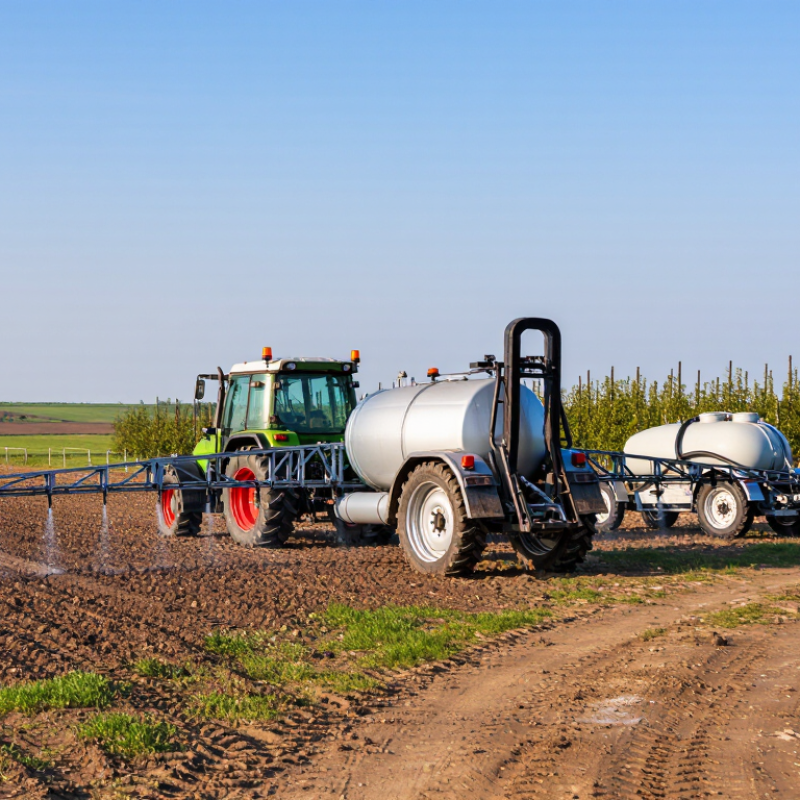
Before choosing a side by side sprayer, define the work it must perform. Measure your usual treatment area, not your largest field. Note the crops, row spacing, terrain, and daily spraying distance. A small vegetable plot needs different coverage than uneven pasture. Record water sources, refill time, and storage space. These details often reveal whether a compact tank is practical.
Walk the field after rain and during dry conditions. Mud, slopes, loose soil, and narrow gates can quickly expose weak ground clearance or poor traction. Check the vehicle’s turning radius near trees, fences, and crop rows. A boom may look efficient in a brochure, yet become awkward around irregular boundaries. That matters.
Match nozzle type, pump capacity, tank size, and operating pressure to your application goals. Uniform pressure helps maintain a consistent spray pattern across the boom. Use a calibration test with clean water before applying any treatment. Follow product labels, protective procedures, and local application requirements. Weather deserves equal attention: wind, heat, and humidity can change coverage and drift risk. I would rather make two careful passes than rush one poor pass. Still, my first estimate may be wrong. Field notes, maintenance records, and operator feedback should refine the choice over time. A sprayer that fits the field is usually safer, easier to control, and less wasteful.
7 Tips to Choose the Best Side by Side Sprayer? - Assess Your Spraying Needs and Field Conditions
| Tip | Assessment Dimension | What to Check | Useful Planning Benchmark | Recommended Selection Guidance |
|---|---|---|---|---|
| 1 | Match the tank capacity to the work area | Estimate the treatment area, water availability, refill distance, and the number of daily refill stops. | 25–60 gal (95–227 L) is a practical planning range for many small-property and utility-vehicle applications. | Choose a smaller tank for tight access and frequent product changes. Select a larger tank when water is difficult to access and the vehicle can safely carry the additional weight. |
| 2 | Calculate the required spray output | Compare the application rate, travel speed, spray width, and nozzle output before selecting the pump. | Required flow can be estimated with: GPM = GPA × MPH × W ÷ 5,940, where GPA is gallons per acre and W is spray width in inches. | Select a pump with sufficient flow for the boom, agitation, and pressure-control system. Leave operating capacity above the calculated requirement rather than running continuously at maximum output. |
| 3 | Evaluate field size and coverage width | Measure open acreage, narrow lanes, orchard spacing, fence lines, and areas requiring spot treatment. | A boom width of approximately 4–12 ft (1.2–3.7 m) can suit many side-by-side applications, depending on access and operating speed. | Use a wider boom for open ground to improve productivity. Use a narrower or folding boom where trees, buildings, gates, and uneven boundaries limit clearance. |
| 4 | Consider terrain, ground clearance, and stability | Review slopes, soft soil, ruts, rocks, standing water, and the vehicle’s rated payload and center of gravity. | Liquid weight is significant: water weighs about 8.34 lb per US gallon (1 kg per liter), before adding the tank and sprayer components. | For hilly or rough terrain, prioritize secure tank mounting, a low center of gravity, adequate ground clearance, suitable tires, and a payload rating that exceeds the fully loaded sprayer weight. |
| 5 | Select nozzles for the target application | Identify whether the job involves herbicides, fertilizers, insecticides, fungicides, or spot treatment, and check the required droplet characteristics. | Common agricultural nozzle flow is often specified at 40 psi (2.8 bar), but the correct pressure depends on nozzle type and label requirements. | Choose nozzles according to the chemical label, target surface, desired spray quality, and drift risk. Use matched nozzles across the boom and replace worn nozzles that exceed the intended flow rate. |
| 6 | Check control, filtration, and agitation features | Look for pressure regulation, a visible pressure gauge, shut-off controls, an inline filter, agitation, and easy access for cleaning. | A pressure gauge should be readable from the operator’s position, while filtration should be compatible with the selected nozzle orifice size. | Choose independent boom-section control for irregular fields and spot work. Include an effective filter and cleanable plumbing to reduce nozzle blockage and maintain a consistent application rate. |
| 7 | Verify safety, compatibility, and maintenance needs | Confirm vehicle payload, electrical capacity, mounting points, chemical compatibility, rinse facilities, and operator protection requirements. | The fully loaded system weight should remain below the vehicle’s rated payload, including the tank, pump, boom, accessories, operator, and other cargo. | Prioritize secure mounting, chemical-resistant materials, emergency shut-off access, tank-rinsing capability, hose protection, and straightforward seasonal storage and maintenance procedures. |
Planning figures are general selection references. Always follow the pesticide label, local regulations, the vehicle manufacturer’s payload limits, and the sprayer manufacturer’s operating instructions.
Related Posts
-
7 Best Master Mfg Sprayers for Global Buyers?
-

Exploring the Benefits of ATV Boom Sprayers for Efficient Agriculture Practices
-
Top Skid Sprayer Options for Global Buyers Today?
-

How to Choose the Best Side by Side Sprayer for Your Needs?
-

The Ultimate Guide to Choosing the Best UTV Sprayer Boomless for Your Needs
-
Why Choose a Broadcast Sprayer for Large Fields?