China Top 100 Gallon Sprayer Tank Manufacturers?
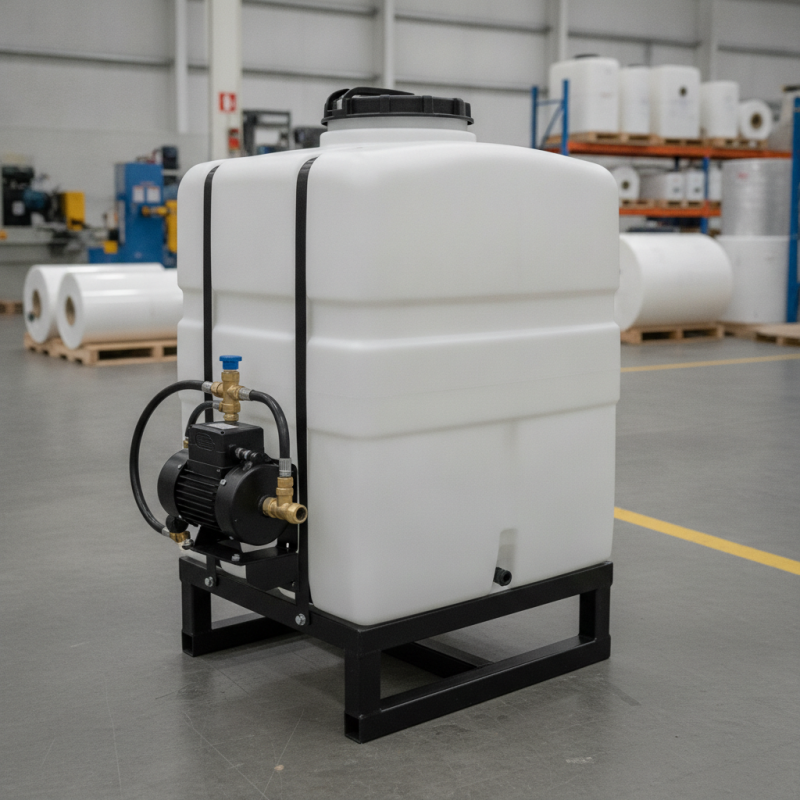
A 100 gallon sprayer tank can look simple in a product photo: a molded vessel, a pump, and a few fittings. Real performance depends on what those parts do together. Buyers should examine tank material, wall shape, outlet placement, mounting support, and access for cleaning. A full tank carries substantial weight. A rough road or uneven load can expose weaknesses that a catalog image cannot show.
For an expert perspective, Tom Wolf is a recognized spray-application specialist whose work addresses equipment setup and application quality. I can’t verify a verbatim statement from him about 100-gallon tanks, so I won’t present invented words as his quotation. A sound buying principle is simple: capacity alone does not establish suitability. Match the tank to the sprayer frame, pump flow, intended use, and available storage space.
This guide examines manufacturers in China and the details worth checking before requesting a quote. Not every supplier publishes the same specifications. Ask for material data, dimensions, outlet and fitting details, mounting guidance, and clear product photos. Confirm whether the listed capacity is nominal or usable. Small differences matter.
A ranking needs evidence. Company claims should be checked against current product information and direct communication, rather than copied without review. Treat this list as a starting point, not a final endorsement. The right 100 gallon sprayer tank should fit the equipment, withstand routine handling, and remain practical to inspect and clean.
100 U.S. Gallons Equals 378.5 L: Defining Sprayer Tank Capacity
A 100 U.S. gallon sprayer tank holds about 378.5 liters, not 100 liters or 378 liters exactly. NIST Special Publication 811 lists one U.S. liquid gallon as 3.785411784 liters; multiplying by 100 gives 378.541 liters. The rounded figure is practical for product specifications and shipping calculations. Units matter. An Imperial gallon is larger, so 100 Imperial gallons equal roughly 454.6 liters. Buyers comparing tanks from different markets should check which gallon standard appears on the data sheet.
Rated capacity is not always the same as usable working volume. A tank needs headspace to limit sloshing and accommodate liquid movement during turns. Its molded level marks, outlet position, and internal shape can also affect how much liquid remains after draining. Measure a sample fill with a calibrated meter before relying on stated capacity. Small differences add up: a 5% capacity gap in a nominal 100-gallon tank is about 18.9 liters. That may affect refill timing and field coverage. It is an easy detail to overlook, and published capacity alone does not show how evenly a sprayer applies liquid.
Rotomolded HDPE Tanks: Material, UV Resistance, and Chemical Compatibility
A 100-gallon sprayer tank needs more than generous capacity; its material must handle sunlight, liquid weight, and repeated field use. Rotomolded high-density polyethylene (HDPE) forms a one-piece shell, reducing seams where leaks may develop. The process also allows practical shapes, such as molded corners and a sloped floor that helps liquid drain. Wall thickness can vary, so check the tank’s specifications rather than judging strength by appearance alone.
UV-stabilized HDPE slows damage from sunlight, but it does not make a tank immune to years outdoors. Sun still wins. Whenever possible, park equipment under cover, and inspect exposed surfaces for fading, chalkiness, or hairline cracks. Chemical compatibility needs equal care: concentration, temperature, and contact time can change how a liquid affects the plastic. A tank suitable for one diluted solution may not suit a stronger mix. Confirm compatibility with the tank supplier and chemical documentation before filling. If the guidance is unclear, pause and ask. It may feel overly cautious, but a small compatibility check can prevent costly leaks and equipment downtime.
HDPE Sprayer Tanks: Material, UV Resistance & Chemical Compatibility
Typical chemical-resistance screening ratings for HDPE at approximately 20–25°C
Ratings are a general guide: 1 = poor, 5 = excellent. Actual compatibility depends on concentration, temperature, exposure time, and tank design. Rotomolded tanks are commonly made from HDPE; UV-stabilized resin can improve outdoor durability, but does not prevent unlimited UV exposure. Confirm the specific chemical and operating conditions with the tank supplier before use.
A Full Water Load Weighs About 834 lb (378 kg): Design and Mounting Checks
For a 100-gallon sprayer tank, water alone adds about 834 lb (378 kg) when full. This estimate uses the U.S. gallon conversion in NIST Special Publication 811 and water’s approximate density of 1 kg per liter, as described by the USGS Water Science School. Temperature changes density slightly, so treat the figure as a planning value, not a complete load rating. The tank, pump, hoses, and frame add more weight. Count them too.
Mounting matters. Place the tank low and close to the vehicle’s centerline, then check the frame, brackets, fasteners, and axle ratings against the total loaded weight. A full tank can shift its load during turns or over rough ground; baffles may reduce surge, but they do not remove it. Inspect mounting points for cracking, loosened bolts, or deformation after initial use and periodically thereafter. Keep clearance around tires and suspension through the full range of movement. Small details get missed. I would also recheck the setup with a partly filled tank, since that condition can create different fluid movement than a full load.
China Top 100 Gallon Sprayer Tank Manufacturers? - A Full Water Load Weighs About 834 lb (378 kg): Design and Mounting Checks
| Design or Mounting Check | Reference Value or Calculation | What to Verify |
|---|---|---|
| Nominal capacity | 100 US gallons = approximately 378.5 liters | Confirm whether the stated capacity is usable capacity, nominal capacity, or total tank volume. Allow for headspace and avoid filling beyond the tank maker’s instructions. |
| Water-only load | Approximately 834 lb (378 kg), using water at about 8.34 lb per US gallon | This is the liquid mass only. Add the tank’s empty mass and the mass of the pump, plumbing, frame, and other equipment to determine the supported total. |
| Approximate static force from the water | Approximately 3.71 kN (834 lbf) | Use the completed assembly’s weight and the actual support layout when checking the vehicle frame or mounting structure. |
| Idealized load on four supports | About 208.5 lb (94.6 kg) per support, if the water load were shared equally | This is a simple static estimate, not a rated support load. Uneven ground, frame flex, tank shape, and mounting tolerances can make actual reactions unequal. |
| Idealized load on two supports | About 417 lb (189 kg) per support, if the water load were shared equally | Check the support material, fasteners, bearing area, and underlying structure. Do not use equal sharing as a substitute for structural design. |
| Tank footprint and fit | Tank dimensions vary by design; there is no single footprint for a 100-gallon tank | Measure the actual tank and mounting area. Check clearance for access, hoses, valves, fill openings, and vehicle movement. |
| Liquid pressure at the tank bottom | For water, approximately 0.433 psi per foot of liquid depth (about 9.81 kPa per meter) | Pressure depends on liquid depth, not capacity alone. Confirm that the tank is intended for the liquid, fill height, and service conditions. |
| Restraint and movement | Full water load: approximately 834 lb (378 kg), before adding tank and equipment mass | Provide suitable restraints and mounting points for the intended vehicle or equipment use. Account for braking, turning, vibration, and sloshing loads using an appropriate engineering design. |
| Contact and support surfaces | Support area and allowable bearing loads depend on the tank and mounting system | Use broad, compatible supports as specified by the tank supplier. Avoid sharp edges, concentrated loads, and unsupported areas that could deform or abrade the tank. |
| Final inspection | Inspect the tank, mounts, fasteners, and connections before operation | Check for leaks, cracks, loose hardware, rubbing, and movement after installation and during routine maintenance. Follow applicable vehicle, workplace, and tank-manufacturer requirements. |
Calculation basis: 100 US gallons of water at approximately 8.34 lb per gallon. Values are approximate; tank mass, dimensions, liquid properties, load distribution, and mounting requirements depend on the specific product and installation.
How to Evaluate Chinese Manufacturers: Testing, Certifications, and Production
When assessing Chinese makers of 100-gallon sprayer tanks, ask for test records tied to the exact tank design, not generic factory certificates. PlasticsEurope’s Plastics—The Fast Facts 2023 reports global plastics production of 400.3 million tonnes in 2022. That scale makes resin traceability important: request resin grade, batch records, and confirmation that recycled material is not substituted without approval. A certificate is only a starting point.
Check whether the manufacturer tests wall thickness at several points, leak resistance, impact strength, and chemical compatibility with the intended spray mixtures. ASTM D543 offers a method for evaluating plastics’ resistance to chemical reagents; it is a useful reference, but does not certify a finished tank. Ask for test conditions, sample count, and actual results.
For production quality, ISO 9001 documentation can show process controls, yet it cannot prove that every tank is sound. Look for inspection records from recent production runs.
Walk the production floor if possible. Watch an operator measure the tank opening and inspect molded seams under bright light. Ask how rejected units are recorded and whether a failed test triggers a documented correction. Small details matter. I would also request a water-filled load test using the tank’s intended mounting points. This is not a complete substitute for field use, and I have seen paperwork look stronger than the product itself; verify claims with a sample and independent inspection.
Comparing 100 Suppliers by Region, Tank Range, Customization, and After-Sales Support
Comparing 100 gallon sprayer tank suppliers by region can reveal differences in freight costs, production lead times, and access to technical support. Nearby factories may make sample checks easier, but distance alone does not determine reliability. Ask whether a supplier manufactures tanks directly or coordinates production elsewhere. Details matter here.
Tank range deserves close inspection. A supplier may list several capacities yet offer few shapes or fitting options. Confirm material, wall thickness, UV protection, outlet placement, and mounting dimensions for the exact tank you need. For customization, request a dimensioned drawing and written confirmation of each change. Clarify whether a new mold is needed; small adjustments and custom tooling are not the same thing. Do not rely on product photos alone.
After-sales support can separate a useful partner from a low-priced quote. Compare warranty coverage, replacement-part availability, leak-testing procedures, and typical response times. Ask how shipping damage is documented and what installation guidance is provided. Use the same questions for each supplier, then compare written answers, data sheets, sample quality, and confirmed lead times. A spreadsheet score helps, but it cannot prove consistent performance. I would treat supplier claims as starting points, not verified results; that judgment still requires careful checking.
Related Posts
-
How to Choose the Best ATV Sprayer for Your Farming Needs and Terrain
-
7 Best ATV Sprayer Boom Kit Options for Enhanced Efficiency
-
Top 10 Side by Side Sprayers for Efficient Lawn Care and Gardening
-
Top 5 ATV Boom Sprayers for Ultimate Efficiency and Performance?
-
How to Maximize Efficient Use of ATV Boom Sprayers for Effective Crop Management
-
How to Choose the Best Trailer Sprayer for Your Needs?