China Best 15 Gallon Sprayer Tank Supplier?

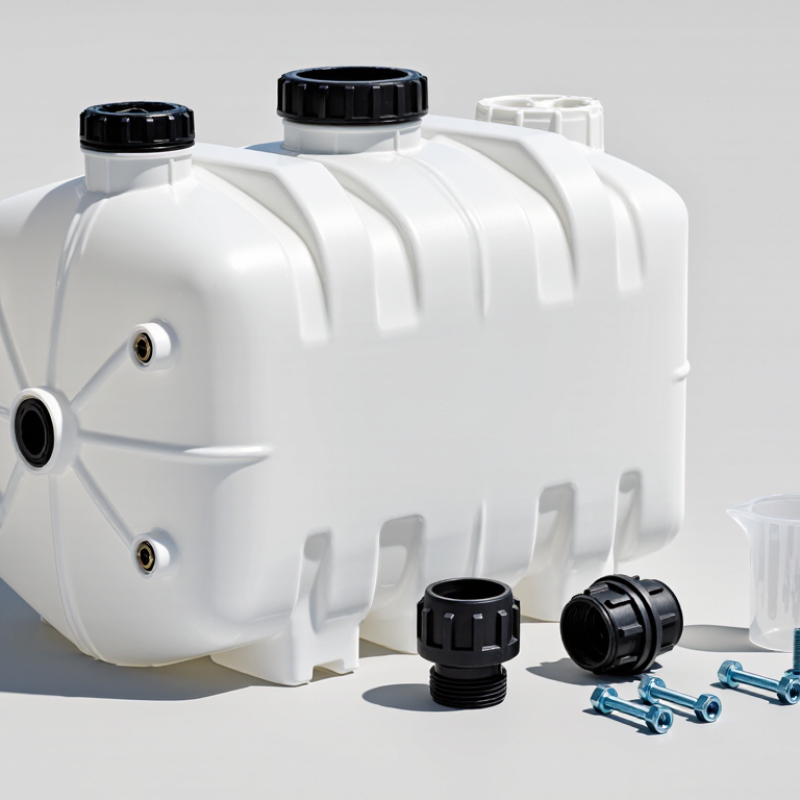
Choosing a China-based supplier for a 15 gallon sprayer tank takes more than comparing prices. A tank may look solid in a product photo, yet small details decide how it performs: wall thickness, molded seams, cap fit, outlet placement, and mounting points. A useful buyer’s principle, paraphrased from Purdue Extension pesticide safety specialist Fred Whitford’s practical approach to application equipment, is to judge the whole system—not one component alone. This is a paraphrase, not a verbatim quotation.

This guide will compare suppliers by material information, production capabilities, customization options, quality checks, and communication. Ask for clear drawings and close-up photos. Check whether the tank suits your sprayer frame, pump, and intended liquids. Look for consistent dimensions. Inspect the outlet area. It matters.

A supplier’s claims deserve verification. Request sample units, inspection records, and written answers about resin, fittings, and packaging. Where available, review third-party test documents rather than relying only on sales language. Also consider lead times and after-sales support; a low quote is less useful if replacement parts are hard to obtain. Some details may remain uncertain until a sample is tested. That is worth admitting. The comparison ahead aims to identify credible options, explain trade-offs, and help buyers ask sharper questions before placing an order.
China Best 15 Gallon Sprayer Tank Supplier?

Understanding the Specifications of a 15-Gallon Sprayer Tank

China Best 15 Gallon Sprayer Tank Supplier?
Understanding the Specifications of a 15-Gallon Sprayer Tank

A 15-gallon tank holds about 56.8 liters at its stated capacity, but usable volume may be lower. Leave room for liquid movement and check the manufacturer’s recommended fill level. Measure the tank’s length, width, and height against your sprayer frame. A tank that fits the volume may still block controls or sit poorly on a narrow platform. Check the material and wall thickness, too. Chemical compatibility matters; never assume one plastic suits every spray solution.

Tips: Ask for a dimensional drawing and confirm outlet size, lid opening, and mounting points before ordering. Check whether the tank includes a vented cap and a clearly marked volume scale. These details make filling and draining easier. Small things. Request information about UV resistance if the tank will stay outdoors. I would not rely on appearance alone; two similar tanks can have different fittings.

For supplier comparisons, request capacity, material, weight, and inspection details in writing. Ask how the tank is checked for leaks and dimensional consistency. If possible, review a sample before placing a large order. A photo helps, but it cannot confirm wall thickness or fit. Specifications can look complete and still leave a gap, so verify the details that match your pump, hose, and mounting setup.

Understanding the Specifications of a 15-Gallon Sprayer Tank

A U.S. 15-gallon tank holds approximately 56.8 liters. The chart estimates the water load at several fill levels, using 8.34 pounds per U.S. gallon (about 1 kilogram per liter). Water weight does not include the tank, sprayer components, or any other contents.

Materials, Design, and Manufacturing Standards

A 15 gallon sprayer tank must handle repeated filling, vibration, and exposure to sunlight. For many applications, rotationally molded polyethylene offers useful impact resistance and allows the tank to be formed with fewer seams. Ask whether the resin includes UV protection, and request details about its grade. Material names alone are not enough.

Design details affect daily use. A broad fill opening makes cleaning easier, while a molded level indicator helps operators estimate remaining liquid. Check that the outlet sits low enough for practical drainage and that fittings match the intended hose size. Rounded corners can reduce stress points. Still, a clever shape is not automatically a better one; it must fit the sprayer frame without rubbing or shifting.

Manufacturing standards deserve close attention. A capable supplier should monitor wall thickness, inspect molded surfaces, and test finished tanks for leaks. Ask how samples are checked and whether production records can be traced to specific batches. A simple water-fill test can reveal pinholes, but it does not replace checks for dimensions or fitting alignment. I would also inspect the inside for rough edges. Small flaws are easy to overlook, and they can make cleaning frustrating.

How to Assess Chinese Sprayer Tank Suppliers

China Best 15 Gallon Sprayer Tank Supplier?

How to Assess Chinese Sprayer Tank Suppliers

Choosing a supplier starts with a clear specification, not a polished catalog. For a 15-gallon sprayer tank, confirm capacity, dimensions, opening size, outlet position, and fitting threads. Ask which plastic is used and how the tank handles sunlight, vibration, and common agricultural chemicals. Request a drawing with measurements. Check it against your frame and pump before discussing price.

A sample can reveal details that photos hide: uneven seams, a loose cap, or a fitting that sits awkwardly close to the tank wall. Small details matter. Ask how wall thickness is checked and whether production batches receive leak tests. Request recent inspection records, material information, and a written process for handling defects. Clear answers are more useful than broad promises. If possible, compare a sample with the final production specification.

Also assess communication and delivery planning. Can the supplier explain tooling, sample lead time, packaging, and what happens if a shipment is delayed? Confirm each point in writing, including any agreed changes. A factory visit or independent inspection may help when order value justifies the cost. No checklist catches everything; I would still allow time to inspect the first batch. That can change.

China Best 15 Gallon Sprayer Tank Supplier? - How to Assess Chinese Sprayer Tank Suppliers

Use this supplier-evaluation checklist to compare documented capabilities. The point allocations are a suggested scoring framework, not market statistics or a claim about any particular supplier.

Assessment Area What to Check Evidence to Request Suggested Scoring Guide Maximum Points Score
Capacity and usable volume Confirm whether “15 gallons” means US gallons or Imperial gallons, and clarify nominal versus usable capacity. 15 US gallons is approximately 56.8 L; 15 Imperial gallons is approximately 68.2 L. Dimensioned drawing, capacity specification, and a documented volume-measurement method. Full points for clearly defined units, capacity, and measurement method; partial points if any item is unclear. 12
Material and chemical compatibility Identify the tank resin and confirm compatibility with the intended spray liquid, concentration, temperature, and exposure time. HDPE is commonly used for chemical and agricultural containers, but compatibility depends on the specific contents and conditions. Resin specification or traceable material documentation, plus written compatibility guidance for the intended application. Full points when material identity and application-specific compatibility are documented; do not rely on a general “chemical-resistant” claim alone. 14
Wall construction and design Review wall-thickness information, molded features, mounting points, outlet location, and reinforcement. There is no single wall thickness that suits every tank design and operating condition. Engineering drawing, stated tolerances, and a clear description of how critical dimensions are inspected. Full points for controlled specifications and inspection methods; partial points for drawings without tolerances or verification details. 10
Leak and pressure testing Ask how the tank and fittings are checked for leakage. Confirm that any pressure or vacuum limits match the product’s intended use; do not assume a storage tank is suitable for pressurized spraying. Written test procedure, acceptance criteria, test records, and clarification of whether testing covers the tank, fittings, or both. Full points for documented, repeatable tests with defined acceptance criteria; partial points for undocumented or sample-only checks. 14
UV and outdoor exposure For outdoor use, ask whether the resin includes UV stabilization and how outdoor durability claims are supported. Accelerated exposure methods such as ASTM G154 can help evaluate material performance, but a test result does not by itself establish a specific service life. Resin or additive specification and, where relevant, test method, exposure conditions, and results. Full points for traceable material information and clearly described supporting evidence; partial points for an unsupported UV-resistance claim. 10
Fit with sprayer components Verify fill opening, cap, vent, outlet, drain, mounting footprint, and connections against the intended sprayer. Confirm thread type, dimensions, and any gasket requirements. Interface drawing, thread details, sample parts, or a fit-check record using the specified components. Full points when all interfaces are dimensioned and checked; partial points when compatibility is based only on verbal confirmation. 10
Production quality controls Check how incoming materials, production settings, finished dimensions, appearance, and nonconforming products are controlled. ISO 9001 certification concerns a quality-management system; it is not, by itself, proof that a particular tank meets product requirements. Quality-control plan, sample inspection records, corrective-action process, and any current certificate with its scope and issuing body verified. Full points for documented controls and verifiable records; partial points for a certificate or policy without product-level inspection evidence. 12
Sampling and order consistency Confirm whether a production-representative sample is available and whether approved specifications will be used for repeat orders. Sample approval process, specification sheet, change-control procedure, and batch or lot identification method. Full points when samples, specifications, and changes can be traced; partial points when samples are available but production consistency is not addressed. 8
Packaging and shipping readiness Review protection against abrasion, deformation, contamination, and transit damage. Confirm packed dimensions and loading assumptions before comparing freight quotations. Packaging specification, packed measurements, photographs or sample packaging, and a written process for recording shipping damage. Full points for defined protective packaging and verified shipping details; partial points for estimates without supporting measurements. 5
Warranty and issue resolution Clarify warranty duration, covered defects, exclusions, claim evidence, response process, and remedies before placing an order. Written warranty terms and a documented procedure for handling quality complaints. Full points for clear written terms and a practical claims process; partial points for vague or verbal assurances. 5
Total possible score 100

Evaluation note: Compare suppliers using the same drawings, intended-liquid details, test requirements, and shipping assumptions. Confirm all product specifications and test claims in writing before ordering.

Comparing Production Capacity and Customization Options

A 15-gallon sprayer tank looks simple, but its production details affect reliability. When comparing suppliers in China, ask for monthly output, current lead times, and capacity during peak seasons. A large factory is not automatically the right fit. Check whether its reported capacity includes inspection and packing, not just molding. Numbers need context.

Customization can cover tank shape, outlet position, wall thickness, color, and mounting points. These choices may affect tooling costs and delivery time. Ask how the supplier checks dimensions and tests finished tanks for leaks. Request sample measurements and material details, including whether the resin suits outdoor exposure. Small variations can complicate assembly.

Tips: Request a sample before approving a large order. Ask for production photos or inspection records, and confirm what happens when a batch misses agreed specifications. A clear answer is useful; vague promises are not. Also compare packaging, since a tank can be well-made yet arrive scratched or distorted. Some requirements may need compromise. That is worth discussing early.

Supplier Verification, Quality Control, and Shipping Considerations

When evaluating a 15-gallon sprayer tank supplier, request a production sample, resin documentation, and a written inspection plan. PlasticsEurope’s 2024 report estimates global plastics production reached 413.8 million tonnes in 2023, but volume says little about one tank’s consistency. Check resin grade, UV-stabilizer documentation, wall-thickness measurements, and fitting dimensions against your drawings. Then ask how the supplier records batch results. A certificate alone is not proof.

Test filled tanks for leakage and inspect seams, openings, and molded surfaces under consistent lighting. Confirm the supplier’s water-test method, duration, and acceptance criteria before production. We have to admit: a visual check can miss thin spots. Ask for thickness readings at several locations, including corners and around the outlet. Keep an approved sample as a reference for later batches.

Shipping deserves equal scrutiny. UNCTAD’s Review of Maritime Transport 2024 reports that maritime transport carries over 80% of world trade by volume, so port delays can affect delivery plans. Request the packing dimensions, pallet layout, and loading photos; confirm tanks cannot rub against sharp edges or deform under stacked cartons. The World Bank’s Logistics Performance Index assesses tracking, timeliness, and logistics competence. Ask for shipment milestones and a clear process for reporting transit damage. Check the details, not just the promise.