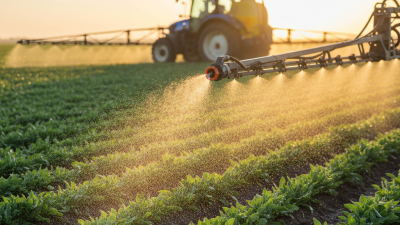
2026 Best Types of Sprayer Nozzles for Global Buyers?
Choosing the right sprayer nozzles in 2026 requires more than comparing prices or catalog photos. Global buyers must match nozzle design with crop type, chemical label, pressure, boom height, and local weather. A flat-fan nozzle may support uniform coverage across broad-acre crops. A hollow-cone nozzle can suit targeted applications, but drift risks require careful control. Air-induction models may reduce fine droplets, although they are not ideal for every product or field condition.
The need for precision is growing. FAO’s AQUASTAT database reports that agriculture accounts for roughly 70% of global freshwater withdrawals. Better application can reduce waste, but nozzle performance alone cannot solve poor calibration. The OECD-FAO Agricultural Outlook 2024–2033 also highlights continuing pressure to raise productivity while managing environmental resources. These trends make sprayer nozzles an important purchasing decision for farms, distributors, and equipment manufacturers.
Standards matter. ASABE S572.1 classifies spray nozzle droplet sizes, while ISO 10625 supports consistent nozzle identification through color coding. Buyers should still verify testing conditions, because laboratory results may differ from field performance. That assumption is too neat. Wind, water quality, boom stability, and operator habits can change the result within minutes. This guide compares the best types of sprayer nozzles for global buyers in 2026, including flat-fan, air-induction, hollow-cone, full-cone, and adjustable models. It considers application accuracy, drift management, durability, compatibility, and total operating cost. Market rankings can be useful. They are not universal truth. A reliable choice begins with the label, the crop, and the actual spray task.
What Are Sprayer Nozzles and Why Do They Matter?
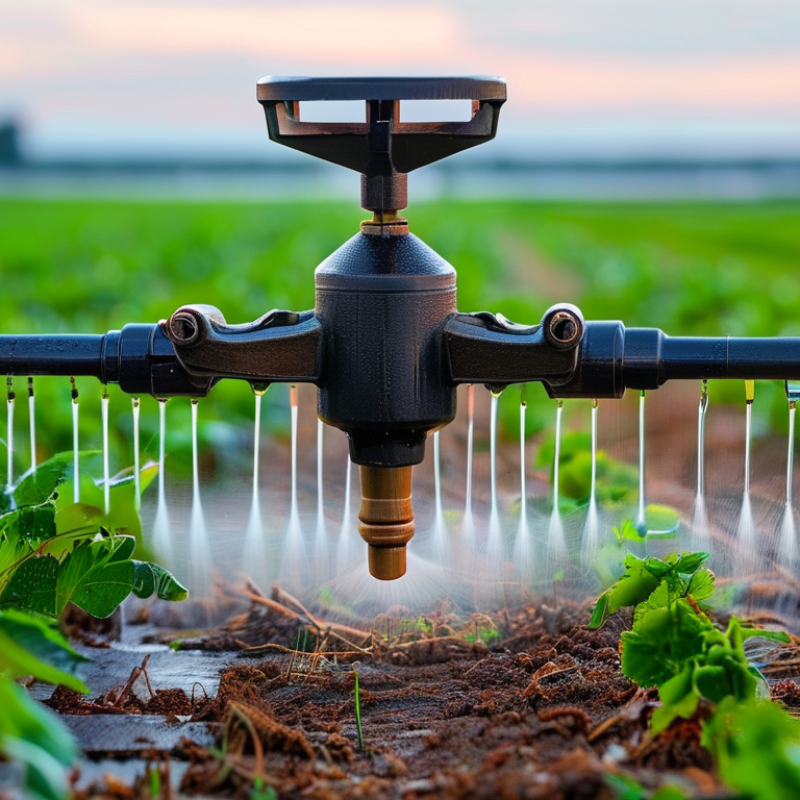
Sprayer nozzles are small components that control how liquid leaves a spraying system. They shape the spray pattern, droplet size, flow rate, and coverage. In practical use, these details affect crop protection, cleaning, irrigation, and industrial coating work. A nozzle that produces uneven droplets may leave dry spots or create unnecessary drift. That wastes material and reduces operating confidence.
Common nozzle types include flat-fan, hollow-cone, full-cone, and air-induction designs. Flat-fan nozzles suit broad, even coverage. Hollow-cone nozzles create finer droplets for targeted applications. Full-cone models provide more solid coverage, while air-induction nozzles can produce larger, air-filled droplets. The best choice depends on pressure, liquid thickness, target distance, and local working conditions. One chart cannot answer everything. Field testing remains important.
Tips: Check the nozzle flow rate before installation. Match the material with a compatible nozzle body. Inspect spray patterns on clean cardboard or a test surface. Replace worn tips promptly, because small wear can change output significantly. Keep records of pressure, speed, and coverage. This simple habit helps global buyers compare results across different equipment and climates. Selection is sometimes less perfect than expected. Careful testing reduces that uncertainty.
How Different Sprayer Nozzle Types Work
Sprayer nozzles convert liquid pressure into controlled droplets. Flat-fan nozzles produce a narrow, overlapping sheet for uniform field coverage. Hollow-cone nozzles create a circular spray pattern, making them useful for dense crop canopies. Full-cone nozzles deliver larger, fuller droplets for soil-directed applications. Air-induction nozzles mix air into the liquid, producing coarse droplets that usually reduce drift risk.
Droplet size changes with pressure, orifice design, and liquid viscosity. The ASABE S572.1 standard classifies spray quality from very fine to ultra-coarse, helping buyers compare performance across countries.
Smaller droplets cover leaf surfaces well. They also move more easily in wind. That trade-off matters.
Twin-fan nozzles split the spray into forward and rearward angles, improving contact with upright leaves. However, field results can vary with boom height and travel speed. A nozzle that worked well during a calm morning may perform poorly in afternoon wind.
Check actual pressure with a calibrated gauge, not only the tractor display. FAO’s AQUASTAT data estimates that agriculture accounts for about 70% of global freshwater withdrawals, so reducing overlap and runoff has practical value.
Still, water savings depend on calibration, crop structure, and operator habits. The nozzle alone cannot solve every application problem.
How to Match Nozzle Design with Spraying Tasks
Choosing a sprayer nozzle starts with the task, not the product catalogue. A flat-fan nozzle suits uniform field coverage on low-growing crops. A hollow-cone design creates finer droplets for targeted coverage inside dense foliage. For liquid fertiliser, a stream or low-drift nozzle may reduce leaf contact and improve placement. Match the nozzle pattern to the target shape, travel speed, and required application rate.
Droplet size matters as much as spray pattern. Fine droplets cover surfaces well, but wind can move them away from the target. Coarse droplets drift less, although they may leave weaker coverage. For cleaning solutions, a solid stream can reach narrow surfaces. For surface coating, an even fan often prevents stripes and heavy edges. Always check pressure and flow together. A nozzle that performs well at one pressure may produce poor results elsewhere.
In practical testing, I measure output from each nozzle for one minute before field use. Small differences can reveal wear or blockage. The filter, liquid temperature, and fluid thickness also affect performance. I once focused too much on droplet size and overlooked travel speed. The coverage looked acceptable, but the application rate was uneven. That mistake reinforced a simple lesson: design, calibration, and operating conditions must be evaluated as one system. Global buyers should also confirm thread standards, materials, replacement access, and local operating requirements before ordering.
2026 Best Types of Sprayer Nozzles for Global Buyers? - How to Match Nozzle Design with Spraying Tasks
| Nozzle Type | Typical Spray Pattern | Common Operating Pressure | Relative Flow Range | Droplet Spectrum | Best-Matched Spraying Tasks | Main Advantages | Important Limitations | Recommended Materials |
|---|---|---|---|---|---|---|---|---|
| Flat-Fan Nozzle | Uniform fan-shaped sheet with tapered edges for overlapping passes | 1.5–4.0 bar | 0.4–3.0 L/min at 3 bar | Fine to medium, depending on orifice size and pressure | Broadcast herbicide Fungicide Insecticide Field crops | Good transverse distribution; widely suitable for boom spraying; simple to calibrate | Fine droplets may drift in hot, dry, or windy conditions; requires correct boom height and overlap | Acetal, stainless steel, ceramic, or hardened polymer |
| Even-Fan Nozzle | Nearly uniform spray across the full width of each nozzle | 1.0–3.0 bar | 0.5–2.5 L/min at 3 bar | Fine to medium | Band spraying Seed rows Fertilizer strips Directed application | Produces an even band without relying on extensive overlap; useful for row crops | Not normally intended for broad boom overlap; poor alignment can leave untreated gaps | Polymer, stainless steel, or ceramic |
| Hollow-Cone Nozzle | Circular ring of spray with an open center | 3.0–10.0 bar | 0.3–2.5 L/min at 5 bar | Fine to very fine | Orchards Vegetable canopies Insect control Fungicide coverage | Excellent canopy penetration and surface coverage; suitable for air-assisted sprayers | High drift potential; wear and blockage can significantly change the spray pattern | Ceramic, stainless steel, or wear-resistant polymer |
| Full-Cone Nozzle | Solid circular cone with comparatively uniform volume distribution | 2.0–8.0 bar | 0.8–8.0 L/min at 3 bar | Medium to coarse | Liquid fertilizer Soil wetting Industrial washing Dust suppression | Handles higher flow rates; provides strong impact and broad three-dimensional coverage | Usually less suitable for drift-sensitive foliar spraying; can cause runoff at excessive rates | Stainless steel, brass for compatible liquids, ceramic, or engineering polymer |
| Air-Induction Flat-Fan Nozzle | Flat fan containing air-filled droplets | 2.0–6.0 bar | 0.6–3.5 L/min at 3 bar | Coarse to extremely coarse | Systemic herbicide Drift-sensitive areas Field crops Pre-emergence treatment | Strong drift reduction compared with conventional fine-spray nozzles; good for windy conditions within label limits | May provide less contact coverage; requires sufficient pressure and may not suit low-volume applications | Acetal, stainless steel, ceramic, or hardened polymer |
| Low-Drift Pre-Orifice Nozzle | Flat fan with reduced fine-droplet production | 1.5–5.0 bar | 0.5–3.0 L/min at 3 bar | Medium to coarse | General crop protection Herbicide Field boundaries Moderate drift risk | Balances spray coverage and drift control; generally easier to use than air-induction designs | Drift reduction is lower than with many air-induction designs; excessive pressure increases drift | Polymer, stainless steel, or ceramic |
| Twin Flat-Fan Nozzle | Two opposing fan patterns, commonly angled forward and backward | 2.0–5.0 bar | 0.6–3.5 L/min at 3 bar | Fine to medium | Contact fungicide Insecticide Dense crop canopy Vertical targets | Improves front-and-back surface coverage and can help reach upright foliage | Higher drift and evaporation risk with fine droplets; demands accurate boom height and speed control | Stainless steel, ceramic, or wear-resistant polymer |
| Deflector or Anvil Nozzle | Wide, low-pressure sheet or fan created by liquid striking a deflector surface | 0.7–2.5 bar | 1.0–6.0 L/min at 1.5 bar | Coarse to very coarse | Liquid fertilizer Pre-emergence herbicide Soil application Pasture treatment | Works at low pressure; produces relatively large droplets and can reduce drift | Coverage on leaf surfaces may be limited; pattern quality is sensitive to mounting height and angle | Polymer, stainless steel, or brass for compatible agricultural liquids |
| Flood-Jet Nozzle | Very wide, low-impact fan or flood pattern | 0.5–2.0 bar | 1.5–10.0 L/min at 1.5 bar | Coarse to extremely coarse | Bare-soil herbicide Liquid fertilizer Roadside vegetation Dust control | Provides high output at low pressure; useful when broad ground coverage is more important than leaf coverage | Limited penetration into dense canopies; uneven application can occur if boom height is incorrect | Polymer, stainless steel, or ceramic for abrasive liquids |
| Adjustable Cone Nozzle | Adjustable cone or narrow-to-wide spray, depending on cap position | 1.5–5.0 bar | 0.3–2.5 L/min at 3 bar | Fine to medium | Handheld sprayers Spot treatment Gardens Cleaning tasks | Convenient for changing spray width and flow during small-area work | Pattern and flow are less repeatable than calibrated fixed nozzles; not ideal for precision boom application | Acetal, polypropylene, stainless steel, or brass |
| Solid-Stream Nozzle | One concentrated jet or narrow stream | 2.0–10.0 bar | 0.2–5.0 L/min at 3 bar | Very coarse to liquid jet | Targeted spot spraying Equipment washing Fire-risk dust suppression Long-range application | Long reach and high impact; useful where precise directional delivery is required | Very limited area coverage; unsuitable for uniform broadcast application | Stainless steel, brass, ceramic, or reinforced polymer |
| Rotary Atomizer | Rotating, finely atomized spray with adjustable droplet size | System-dependent; commonly 1.0–4.0 bar liquid pressure | 0.1–2.0 L/min per outlet | Fine to medium, often approximately 80–250 micrometres | Aerial application Greenhouse crops Low-volume spraying Specialty treatments | Can produce a relatively controlled droplet spectrum and low application volume | Requires careful calibration, clean liquid, stable operating conditions, and strict drift management | Stainless steel, engineering polymer, or corrosion-resistant composite materials |
Selection note: Actual flow depends on nozzle orifice size, liquid density, pressure, temperature, and wear. As a practical rule, flow generally increases with the square root of pressure. Always verify application rate, droplet classification, chemical-label requirements, wind conditions, boom height, travel speed, and local regulations before use.
Which Materials and Features Suit Global Buyers?
2026 Best Types of Sprayer Nozzles for Global Buyers?
Choosing a sprayer nozzle is less about popularity and more about field conditions. Flat-fan nozzles suit uniform broadcast spraying over open crops. Hollow-cone models create finer droplets for targeted coverage, but wind can carry them away. Air-induction nozzles reduce drift with larger, air-filled droplets. They may need higher pressure for consistent patterns.
Material selection matters across different markets. Stainless steel handles many agricultural liquids and offers dependable durability. Ceramic inserts resist abrasion from suspended particles, especially in hard water. Acetal and reinforced polymer nozzles can reduce cost and corrosion concerns. However, chemical compatibility must be checked before purchase. A material that works well in one formulation may swell or crack in another. There is no universal winner.
Tips: Match the nozzle to pressure, droplet size, flow rate, and local application rules. Check filters and seals before testing. Use clean water to inspect the spray pattern. Measure output from several nozzles, not just one. Replace worn tips when flow rises noticeably. Color coding helps crews work faster, but it can create false confidence. Confirm the actual flow rate. Field results sometimes differ from catalog data because water quality, pump condition, and operator technique change performance. A small trial on the intended equipment is often wiser than a large first order.
2026 Best Types of Sprayer Nozzles for Global Buyers
Typical spray-angle midpoints help compare coverage patterns. The most suitable material depends on chemical compatibility, temperature, abrasion, and operating pressure.
| Nozzle Type | Typical Angle | Common Materials | Suitable Features |
|---|---|---|---|
| Flat Fan | 80–110° | Polypropylene, stainless steel, ceramic | Uniform overlapping coverage and low-to-medium pressure spraying |
| Hollow Cone | 60–90° | Stainless steel, brass, ceramic | Fine droplets, cooling, humidification, and chemical atomization |
| Full Cone | 60–120° | Polypropylene, PVDF, stainless steel | Solid-area coverage and resistance to many industrial chemicals |
| Air-Induction | 80–110° | Polyacetal, polypropylene, stainless steel | Reduced drift, air-filled droplets, and improved outdoor application control |
| Solid Stream | 0–15° | Stainless steel, hardened steel, ceramic | Long-range impact, cleaning, descaling, and abrasive-duty service |
The angle values represent common commercial ranges; actual performance varies with orifice design, pressure, liquid properties, and installation height. Polypropylene and PVDF are widely selected for chemical resistance, stainless steel for strength and temperature capability, and ceramic for highly abrasive fluids.
How to Select, Use, and Maintain the Right Nozzle
Selecting the best sprayer nozzle in 2026 means matching droplet size to the crop, product label, pressure, and weather. A hollow-cone nozzle may improve canopy penetration, while a low-drift nozzle creates larger droplets. The choice is never universal. ASABE S572.1 classifies spray quality by droplet spectrum, giving global buyers a shared technical language. FAO’s State of Food and Agriculture reports that agriculture accounts for approximately 70% of global freshwater withdrawals, making application efficiency increasingly important.
Before spraying, inspect the nozzle material, orifice, filter, pressure gauge, and boom height. Calibrate every section with clean water and measure output for a fixed time. Compare the result with the target application rate. Excessive pressure can create finer droplets and raise drift risk. Wind, heat, and low humidity may change field performance within minutes. Read the legally approved product label for the target market.
Rinse the system promptly after use. Remove nozzles and clean them with a soft brush. Never use wire. Replace a nozzle when measured flow exceeds the new-nozzle reference by about 10%, a common agricultural extension benchmark. Field technicians often find that operators trust appearance too much. That mistake is expensive. Record pressure, flow, date, and weather during each calibration. A perfect chart cannot replace a muddy field check.
Related Posts
-
How to Choose the Right Boomless Spray Nozzle for Your Needs?
-
How to Choose the Right Boom Sprayer Nozzles for Your Agricultural Needs?
-
What is a Sprayer Nozzle and How Does it Work?
-
2026 How to Use Boomless Spray Nozzle Effectively?
-
Exploring the Benefits of ATV Boom Sprayers for Efficient Crop Management
-
How to Choose the Best 25 Gallon Sprayer Tank for Your Needs