Why Choose a 40 Gallon Sprayer Tank for Global Buyers?

For global buyers, selecting a 40 gallon sprayer tank involves more than checking capacity. The tank must fit the sprayer frame, pump output, hose system, and working environment. A compact tank can support small farms, greenhouse operations, orchards, and roadside maintenance. It also reduces unnecessary weight during transport. That choice matters.

Agricultural engineer Dr. John Fulton has emphasized, ā€œApplication quality depends on matching equipment, rate, timing, and field conditions.ā€ This principle applies directly to a 40 gallon sprayer tank. Buyers should examine tank-wall thickness, chemical resistance, molded fittings, drain access, and calibration marks. Polyethylene construction is common because it handles outdoor use and many approved agricultural formulations. However, not every chemical is compatible. Always check the product label and manufacturer guidance.

A well-designed tank should provide steady liquid flow, simple cleaning, and reliable agitation. Imagine a worker measuring concentrate beside a muddy field, with limited water and changing temperatures. Clear volume markings and a secure lid can prevent costly mistakes. International buyers should also confirm pallet dimensions, spare-parts availability, warranty terms, and electrical compatibility. These details are easy to overlook.

Still, a 40 gallon sprayer tank is not automatically the best choice. It may be too small for extensive acreage and too large for narrow applications. Real operating conditions can be less predictable than brochures suggest. Careful sizing remains essential. With proper calibration, lawful product use, routine inspection, and operator training, this tank size can offer a practical balance between mobility, control, and dependable field performance.
Why Choose a 40 Gallon Sprayer Tank for Global Buyers?

What Is a 40-Gallon Sprayer Tank?

Why Choose a 40 Gallon Sprayer Tank for Global Buyers?

What Is a 40-Gallon Sprayer Tank?

A 40-gallon sprayer tank stores liquid for controlled agricultural, horticultural, and property-maintenance applications. In most markets, ā€œgallonā€ means the US gallon, equal to approximately 151.4 liters. An Imperial gallon equals about 181.8 liters. This difference matters.

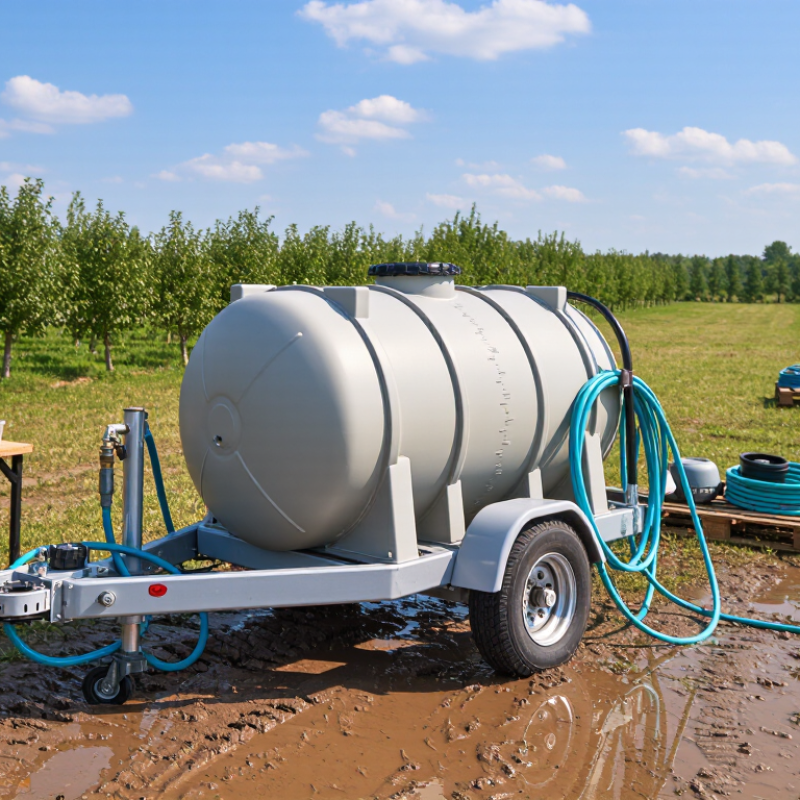
The tank usually includes a polyethylene container, fill opening, outlet, pump connection, and support frame. Its actual usable volume may be lower than 40 gallons. Operators need space for mixing movement and thermal expansion. A completely full tank is not always practical.

Application rate determines coverage. At 10 gallons per acre, a full US tank may cover about four acres. At 20 gallons per acre, coverage falls to about two acres. Nozzle selection and pressure can change these figures. ASABE S572.1 classifies agricultural spray nozzles by droplet size, supporting more consistent calibration. Guessing is risky.

FAO AQUASTAT reports that agriculture accounts for roughly 70% of global freshwater withdrawals. That figure makes accurate application more important, especially where water access is limited. Field experience also shows that tank shape, agitation, and transport stability affect daily efficiency. Some buyers focus only on capacity. That is a mistake. A 40-gallon tank can be useful, but its fittings, calibration, material quality, and local measurement system deserve equal attention.

Key Features and Capacity Benefits for Global Buyers

Why Choose a 40 Gallon Sprayer Tank for Global Buyers?

A 40-gallon sprayer tank holds about 151.4 liters, offering practical capacity without excessive weight. At 10 gallons per acre, it can cover four acres before refilling. At 20 gallons per acre, coverage falls to two acres. Actual performance depends on nozzle flow, travel speed, pressure, and terrain. This capacity suits small farms, greenhouse operations, orchards, and municipal maintenance teams. It is not a magic size. Operators still need accurate calibration.

FAO AQUASTAT reports that agriculture accounts for roughly 70% of global freshwater withdrawals. Efficient application therefore matters, especially where water access is limited. A useful tank should include clear metric and US-gallon markings, a wide filling opening, and a low-point drain. Internal baffles can reduce liquid surging during transport. A reliable pump, stable frame, and accessible filter also improve daily handling. ISO 16119 provides internationally recognized requirements for agricultural sprayer safety and environmental protection. Buyers should check material specifications, chemical compatibility, and local transport rules before ordering. UV-stabilized polyethylene usually supports outdoor service, but sunlight still degrades equipment over time. That detail is easy to overlook. A 40-gallon tank can reduce refill stops, yet a full tank may challenge smaller vehicles or uneven ground. Selecting capacity by application rate, not appearance, remains the more dependable approach.

How to Choose the Right Tank Material and Design

Why Choose a 40 Gallon Sprayer Tank for Global Buyers?

Material selection shapes every part of a 40 gallon sprayer tank’s performance. High-density polyethylene is lightweight, corrosion-resistant, and easier to move between fields. It suits many water-based treatments, but not every chemical. Compatibility must be checked against the actual fluid, concentration, and storage temperature. Fiberglass offers strong chemical resistance, though impact damage can be harder to inspect. Stainless steel provides durability and heat tolerance, but it adds weight and usually increases maintenance costs.

Design matters just as much. Look for a wide, stable base and reinforced mounting points. Internal baffles reduce sloshing during transport and help protect the operator from sudden load shifts. A low sump supports better drainage, while a large opening makes cleaning less frustrating. Clear volume markings should remain readable in sunlight. Wall thickness is important too. Thin walls may reduce shipping weight, but they can deform under pressure or rough handling. That trade-off is easy to underestimate.

Tips: Ask for material test data, wall-thickness specifications, and a fluid compatibility chart. Check whether fittings match local hose sizes and common replacement parts. Inspect the tank after delivery, especially around seams and mounting brackets. No design is perfect. Some buyers focus on price and later discover that cleaning access is poor. A small sample test can prevent an expensive mistake. Also verify temperature limits, UV protection, and applicable safety requirements before purchase.

Equipment Compatibility, Transport, and Maintenance Considerations

Why Choose a 40 Gallon Sprayer Tank for Global Buyers?

Equipment Compatibility, Transport, and Maintenance Considerations

A 40 gallon sprayer tank offers a practical balance between capacity and mobility. It can support farm, landscape, and sanitation tasks without becoming difficult to handle. Before purchasing, confirm the tank’s outlet size, pump requirements, hose fittings, and frame dimensions. These details affect whether existing equipment connects smoothly. I once underestimated outlet compatibility, and a simple adapter delayed setup. That mistake was avoidable.

Transport also deserves careful attention. A full tank becomes extremely heavy, so the supporting vehicle or trailer must handle the loaded weight safely. Measure doorways, loading ramps, and storage spaces before ordering. Tank shape matters too. A low, stable design may reduce movement during transport. International buyers should also check packaging quality and available replacement parts. Delivery can expose weak fittings or poorly protected valves.

Tips: Rinse the tank after every use. Inspect seals, hoses, and clamps regularly. Store it away from direct sunlight and freezing temperatures. Keep the tank partly open while drying, when appropriate. Do not mix incompatible liquids. A maintenance log helps identify recurring problems, although many users skip it. That small habit can prevent costly downtime. Check instructions from the manufacturer and verify local handling requirements before operation.

Purchasing, Compliance, and Supplier Evaluation Factors

Why Choose a 40 Gallon Sprayer Tank for Global Buyers?

A 40 gallon sprayer tank offers a practical balance between capacity, handling, and transport. It suits farms, landscaping teams, and maintenance contractors with moderate application needs. Buyers should confirm tank dimensions before ordering. A full tank can become difficult to move, especially on uneven ground.

Material quality matters too. UV-resistant polyethylene can reduce cracking and fading during outdoor use. Check wall thickness, molded seams, fittings, and drain design. These details often reveal more than product photos.

Purchasing also requires careful compliance review. Ask suppliers for material declarations, test reports, safety data, and traceable production records. Confirm that labels, packaging, and instructions match the destination market. Requirements may differ by country or application. Do not rely on verbal promises. Request current documents and check whether an independent laboratory issued them.

Supplier evaluation should include sample approval, production capacity, inspection procedures, warranty terms, and replacement-part availability. Payment conditions and delivery responsibilities deserve equal attention.

A low unit price may hide weak support or expensive shipping. That mistake is easy to make.

Tips: Request one sample first. Measure every opening and connection. Test the tank with clean water before field use. Compare two written quotations, not just prices. Ask how defects are handled. A supplier that answers slowly may still be capable, but unclear answers deserve reflection. My judgment can be wrong. Keep records, verify claims, and avoid approving a large order until the details remain consistent.