4 Gallon Backpack Sprayer 7 Buying Tips

Choosing a 4 gallon backpack sprayer can feel simple until the tank is full and pressing against your shoulders.

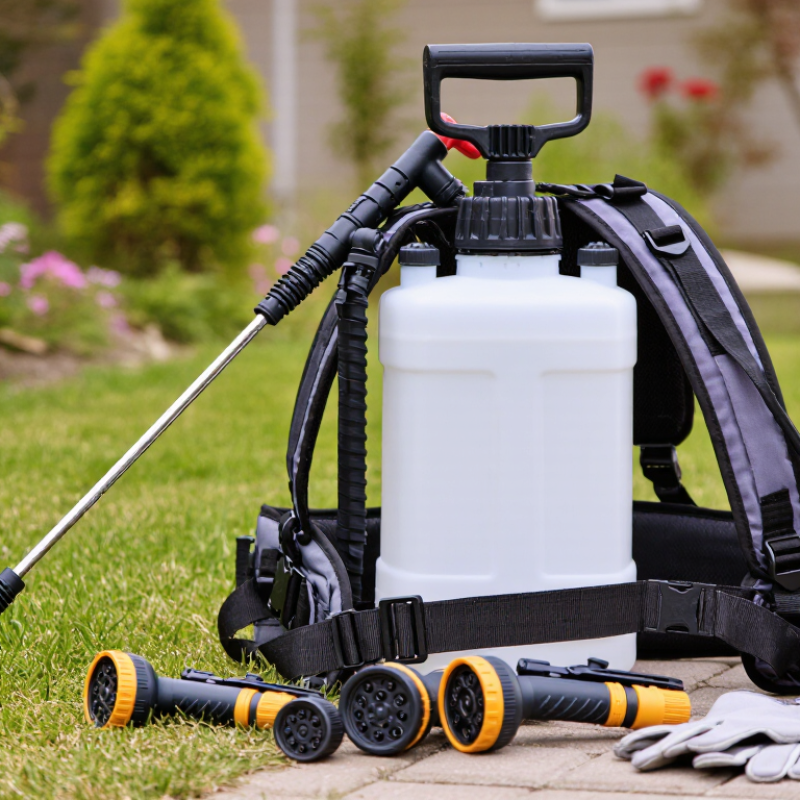
The right model should match your plants, application area, liquid type, and working habits. A four-gallon tank holds substantial weight, so harness design matters as much as spray pressure. Padded straps, an adjustable waist belt, and balanced weight distribution can reduce shoulder strain during long jobs. Small details become important.

A practical buying decision should also examine nozzle options, wand length, pump action, seals, and cleaning access. Adjustable nozzles help switch between a focused stream and a wider spray pattern. Reliable models usually provide steady pressure instead of sudden bursts. Still, no sprayer is maintenance-free. Filters clog, washers wear, and careless storage can shorten service life.

Check the manufacturer’s instructions before using any product. Confirm that the tank and seals are compatible with the intended liquid. Wear the recommended protective equipment, avoid spraying in strong wind, and keep people and pets away from the treatment area. These are not decorative warnings.

I have found that advertised capacity can hide a practical weakness: a full tank may become uncomfortable quickly. This is where many buyers misjudge the machine. A slightly heavier sprayer with better support may outperform a lighter model over several hours. The seven buying tips below focus on capacity, comfort, durability, control, maintenance, safety, and real-world value. Think carefully. The cheapest choice is not always the most dependable.
4 Gallon Backpack Sprayer 7 Buying Tips

Define Your Spraying Needs and Confirm the Four-Gallon Capacity

4 Gallon Backpack Sprayer 7 Buying Tips

Define Your Spraying Needs and Confirm the Four-Gallon Capacity

A four-gallon tank holds about 15.1 liters of liquid. Water alone weighs approximately 33.4 pounds. Add the backpack, pump, hose, and fittings, and the load becomes noticeably heavier. I once focused on tank size and underestimated carrying comfort. That mistake appeared after several wet passes across uneven ground.

Define the work before comparing features. Are you treating garden beds, fence lines, pasture edges, or small orchard rows? Measure the target area and record the required application rate. The Food and Agriculture Organization reports that agriculture uses roughly 70% of global freshwater withdrawals, so accurate application matters. A larger tank does not automatically mean better coverage.

Check whether the stated four-gallon capacity is usable volume. Some manufacturers describe total tank volume, while the working fill line sits lower. Leave space for mixing and movement. Confirm the nozzle’s flow rate, pressure range, and spray width. ASABE spray-quality guidance shows that nozzle selection affects droplet size and drift potential. Use the product label’s directions and required protective equipment.

Try a simple calibration test with clean water. Spray a measured area, then calculate the liquid used. Four gallons may cover less ground than expected when the nozzle runs quickly. It may also last longer with a narrow, controlled pattern. The result depends on walking speed, pressure, plant density, and operator habits. My own estimates are often too optimistic. Recheck them before buying.

Compare Pump Types, Pressure Ratings, and Spray Range

4 Gallon Backpack Sprayer 7 Buying Tips

Compare Pump Types, Pressure Ratings, and Spray Range

A four-gallon backpack sprayer should feel balanced before it feels powerful. Fill the tank with water and walk several minutes. Uneven weight can strain your shoulders quickly.

Check the pump type. Piston pumps usually suit herbicides and general garden work, while diaphragm pumps handle abrasive or stronger mixtures more reliably. Read the manufacturer’s chemical-compatibility chart, not just the product description. Pressure matters. A higher pressure rating can create a finer mist, but it may drain the battery or increase drift on windy days. Choose adjustable pressure when treating both low plants and taller shrubs. Do not guess.

Compare the stated spray range with real working conditions. Wind, nozzle angle, liquid thickness, and operator height can reduce the advertised distance. A wide spray pattern covers ground faster, while a narrow stream reaches focused areas. Range is personal. Test the nozzle using clean water and measure the useful pattern, not the longest splash. Examine the wand, hose, shoulder straps, and shutoff valve for secure fittings. Small leaks become tiring during long applications. Confirm that replacement seals and filters are available. I have found that easy cleaning often matters more than impressive pressure numbers. Rinse the tank after every use, even when the mixture looks harmless. The perfect specification is less valuable if maintenance feels inconvenient.

4 Gallon Backpack Sprayer: 7 Buying Tips — Compare Pump Types, Pressure Ratings, and Spray Range

No. Buying Tip What to Compare Typical Specifications Best Use or Benefit What to Check Before Buying
1 Choose the Right Pump Type Compare piston and diaphragm pump construction, chemical compatibility, and maintenance requirements. Piston pumps: commonly about 15–60 psi.
Diaphragm pumps: commonly about 20–90 psi.
Piston pumps are generally suitable for water-based herbicides, insecticides, and fertilizers. Diaphragm pumps are better suited to abrasive or suspension-based liquids, such as wettable powders. Choose a diaphragm pump if the label permits abrasive mixtures or if corrosion and seal protection are important. Confirm that replacement seals and diaphragms are available.
2 Match the Pressure Rating Look at the operating pressure, maximum pressure, and whether pressure can be adjusted while spraying. Low-pressure work: 15–30 psi.
General treatment: 30–45 psi.
Higher-pressure reach: 45–60+ psi.
Lower pressure produces larger droplets and reduces drift. Higher pressure can create a finer spray and improve reach, but it may increase drift and nozzle wear. Do not select a sprayer only by its maximum rating. The unit should provide stable, adjustable pressure within the range required by the chemical label and nozzle.
3 Evaluate Spray Range Compare horizontal reach, vertical reach, hose length, wand length, and the included nozzle type. Typical hand-wand horizontal reach: approximately 10–25 ft.
Typical vertical reach: approximately 8–20 ft, depending on pressure and nozzle.
A longer wand and a focused stream nozzle help treat shrubs, fence lines, roof edges, and high branches. A fan nozzle is better for uniform ground coverage. Spray distance changes with wind, liquid viscosity, nozzle orifice, elevation, and pressure. Treat published range as an estimate rather than a guaranteed working distance.
4 Check Tank Capacity and Working Load Compare usable fill volume, tank shape, fill opening, liquid-level markings, and total carried weight. 4 U.S. gallons = approximately 15.1 liters.
Water alone weighs about 33.4 lb, before adding the sprayer.
A 4-gallon tank provides a practical balance between coverage and portability for many residential and light commercial applications. Leave expansion space and follow the fill line. A full tank can be heavy, so check the empty unit weight, shoulder-strap adjustment, waist support, and back-panel ventilation.
5 Compare Nozzle Options Review nozzle pattern, flow rate, spray angle, material, and whether quick-change tips are included. Common patterns include adjustable cone, flat fan, hollow cone, and stream.
Typical handheld flow is roughly 0.1–0.5 gal/min, depending on nozzle and pressure.
Flat-fan nozzles provide more even broadcast coverage, while stream nozzles provide longer reach. Adjustable cone nozzles are versatile for spot treatment. Use the nozzle specified for the application rate. Avoid increasing pressure to compensate for a worn or incorrect nozzle, because this can change the delivered dose.
6 Estimate Coverage and Battery Runtime Compare flow rate, application rate, usable tank volume, pump output, and—on powered models—battery capacity. Coverage depends on the label rate and nozzle output.
For example, at 1 gal per 1,000 sq ft, a 4-gallon tank can theoretically cover about 4,000 sq ft before refill.
Coverage calculations help determine whether one tank is enough for lawns, beds, orchards, or fence lines and reduce over- or under-application. Actual coverage is affected by walking speed, overlap, terrain, interruptions, and hose or nozzle flushing. Follow the product label rather than relying only on tank capacity.
7 Prioritize Durability, Safety, and Serviceability Inspect tank material, chemical-resistant seals, shutoff valve, pressure regulator, filter, hose connections, and cleaning access. Useful features include a lockable trigger, in-line filter, wide filling opening, drainable tank, chemical-resistant hose, and replaceable wear parts. Reliable seals and easy rinsing help prevent leaks, clogged nozzles, cross-contamination, and premature pump wear. Look for clear maintenance instructions, accessible filters, compatible spare parts, secure tank straps, and a safety data sheet or label that supports the intended chemical.
Reference note: Pressure, flow, and spray-range figures are typical operating ranges for 4-gallon backpack sprayers. Actual performance varies by pump design, nozzle, liquid formulation, temperature, elevation, and operating technique. Always follow the pesticide or fertilizer label.

Evaluate Tank Materials, Nozzle Options, and Chemical Compatibility

4 Gallon Backpack Sprayer: 7 Buying Tips

Tank material affects weight, durability, and chemical resistance. High-density polyethylene usually handles routine agricultural and garden solutions well. Check the tank wall for flexing, seams, and a wide opening. A narrow opening makes rinsing frustrating. Inspect the shoulder straps and waist belt, too. Four gallons can feel heavy after twenty minutes. A padded harness with adjustable load control improves comfort and steadiness.

Nozzle choice changes coverage. A flat-fan nozzle suits even bands, while a cone nozzle reaches foliage more effectively. Some kits include adjustable nozzles, but flexibility can reduce consistency. I prefer removable tips with clear flow markings. Measure the spray width across a paved surface before treatment. Then compare output with the product label. Small errors become obvious quickly. Do not trust pressure alone.

Chemical compatibility deserves careful attention. Confirm compatibility for the tank, hose, pump, seals, wand, and nozzle materials. A solution that leaves plastic unharmed may damage rubber seals. Always follow the product label and the sprayer manufacturer’s material guidance. Never assume a familiar chemical is automatically safe. Rinse the unit immediately after approved use, including hidden hose sections. Store it dry and test for leaks with clean water. I once underestimated seal wear because the tank looked perfect; that was a useful reminder. A slightly higher price may buy safer, steadier performance, but specifications matter more than appearance.

Check Harness Comfort, Weight Balance, and User Safety Features

4 Gallon Backpack Sprayer: 7 Buying Tips

A four-gallon tank can weigh over 35 pounds when filled. NIOSH’s Revised Lifting Equation uses 23 kilograms as a recommended limit under ideal lifting conditions, not as a backpack-sprayer safety guarantee. The load sits against your spine for much longer. Check the harness before judging the tank. Wide, padded shoulder straps should spread pressure without rubbing your neck. A contoured back panel can reduce movement, but excessive padding may trap heat.

Fit the waist belt firmly across your hips. It should carry part of the weight, while the shoulder straps stabilize the tank. The sprayer should remain close to your back, with no sharp pull when you walk, bend, or turn. Try a filled unit for several minutes. An empty showroom test can mislead you. Weight balance matters more than a soft strap alone.

Look for a guarded trigger, a dependable shutoff, and a pressure-release method that prevents accidental discharge. The National Institute for Occupational Safety and Health identifies force, awkward posture, and repetition as major ergonomic risk factors. A stable harness reduces awkward leaning during repeated spraying. Check the manual for compatible protective equipment and cleaning instructions. Chemical-resistant seals matter. So does a readable pressure gauge. I would not trust a “comfortable” harness until its adjustments stay secure after movement. Tiny buckle slippage is easy to overlook.

Review Maintenance Needs, Warranty Coverage, and Overall Value

4 Gallon Backpack Sprayer: 7 Buying Tips

Maintenance determines whether a four-gallon backpack sprayer remains useful after one season. Check tank seams, hose flexibility, pump pressure, straps, and nozzle condition before purchase. A clogged filter can create uneven spray patterns. Small leaks become obvious problems. The U.S. EPA’s 2021 Pesticide Industry Sales and Usage report valued American pesticide sales at roughly $18 billion, showing why accurate application equipment deserves careful evaluation. EPA guidance also emphasizes calibration and label compliance.

Ask how easily the pump, seals, wand, and pressure regulator can be replaced. University of Nebraska-Lincoln Extension guidance commonly uses a 10% output increase as a nozzle-wear warning. Measure flow with clean water, not guesswork. ASABE S572.1 also classifies spray quality by droplet size, which can change when pressure or nozzle condition shifts. I have found that a transparent tank helps, though cloudy plastic hides residue better than expected. That is inconvenient.

Warranty coverage should state the duration, excluded parts, labor terms, and return process. A longer warranty is not automatically better. Some coverage excludes seals and normal wear, which are often the first failed components. Compare the warranty with replacement-part prices and local availability. The better value may be the sprayer with simpler repairs, padded straps, a stable base, and a reliable pressure gauge. Keep rinsing equipment after every use. I admit I sometimes rush this step, and dried residue is much harder to remove later.