How to Use a 3 Point Hitch Sprayer for Effective Spraying?
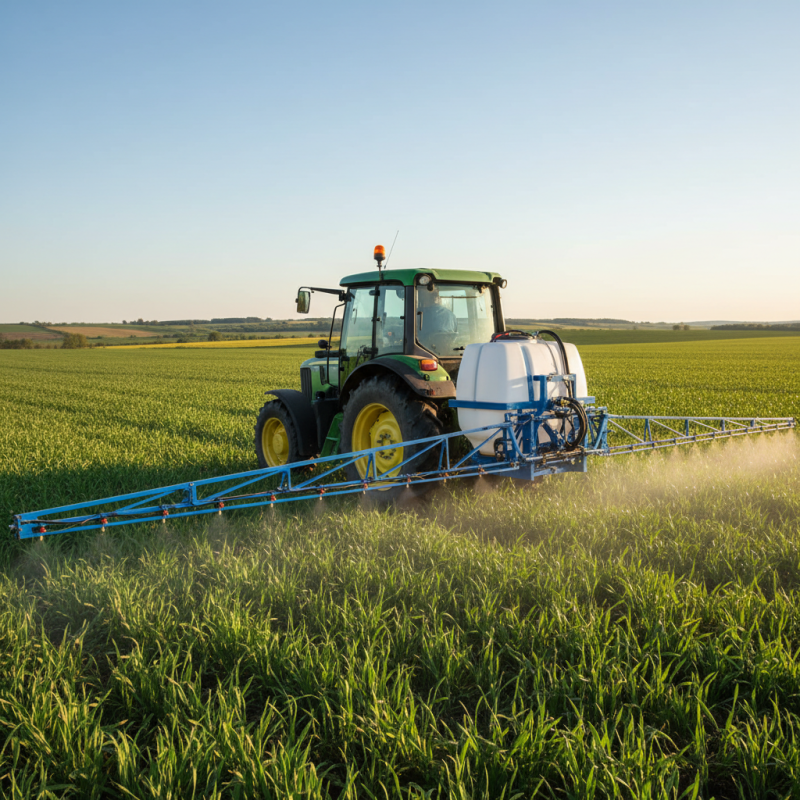
Using a 3 point hitch sprayer can transform your farming or gardening experience. This equipment is designed for efficiency and effectiveness in spraying applications. However, many users overlook key aspects of its operation.
When setting up your 3 point hitch sprayer, attention to detail is crucial. Ensure the tank is clean before use. A dirty tank can lead to chemical contamination. Check all connections and hoses carefully. Leaks can waste valuable materials and time.
Understanding the nozzles is equally important. Different tasks require different nozzle types and sizes. Some users may struggle with this aspect. It might take time and practice to get it right. Ultimately, the more you know about your 3 point hitch sprayer, the more effective your spraying will be.
Understanding 3 Point Hitch Sprayers: Key Features and Benefits
When considering a 3 Point Hitch Sprayer, understanding its key features is crucial. This sprayer attaches easily to tractors, enhancing efficiency. Users can adjust spray widths, ensuring even coverage. The ability to control spray pressure is vital. It prevents over-application and waste of resources.
One noteworthy benefit is its versatility. It handles various liquids, from pesticides to fertilizer. However, operating it requires some practice. Users often find it challenging at first. Learning to calibrate and maintain the sprayer can be complex.
Effective spraying depends on the sprayer's settings. Adjustments can affect results significantly. Many users overlook this and face uneven application issues. Regular maintenance is necessary to keep the equipment in shape. Occasionally, operators discover that neglecting small details leads to larger problems.
Preparing Your Equipment: Maintenance Tips for Optimal Performance
Maintaining your 3-point hitch sprayer is essential for effective performance. Start by inspecting the sprayer regularly. Check for leaks in the hoses and connections. Look at the nozzle tips; they should be clean and unobstructed. Clogs can cause uneven spraying. Replace worn parts immediately. Ignoring these issues may lead to poor results in the field.
Cleaning the sprayer after each use helps prevent chemical buildup. Rinse it thoroughly with fresh water. Pay particular attention to the tank and hoses. Residues from previous chemicals can affect future applications. Don’t forget to lubricate moving parts. This reduces friction and prolongs the life of the equipment.
Always refer to the user manual for specific maintenance procedures. Sometimes, the manual outlines steps we overlook. Regular checks can save time and money. Notice when performance drops; it may signal deeper issues. Keeping your equipment in good shape is a responsibility. It's not just about spraying; it's about doing it right.
How to Use a 3 Point Hitch Sprayer for Effective Spraying
Maintenance is key for optimal performance of your 3-point hitch sprayer. The following chart illustrates the average percentage of maintenance needs for effective spraying over a year.
Choosing the Right Chemical Solutions for Effective Spraying
Choosing the right chemical solutions is vital for effective spraying with a 3 point hitch sprayer. The type of chemicals you select largely determines your results. Always ensure the solutions are appropriate for your target crops. For example, herbicides are useful for controlling weeds, while insecticides help manage pests. Pay attention to the recommended mixing ratios. This is crucial for safety and effectiveness.
Furthermore, consider the environmental impact of your choices. Some chemicals can harm beneficial insects or contaminate water sources. Reread the labels before applying. A common mistake is not rotating chemical types, which can lead to resistance. Testing small areas with different solutions can yield insights.
You might discover unexpected reactions or poor efficacy. Continuous learning and adaptation are key. The right chemical approach requires patience, observation, and sometimes trial and error. Don't rush; a thoughtful approach pays off in the long run.
Calibration Techniques for Accurate Application Rates and Coverage
Calibration is crucial when using a 3-point hitch sprayer. It ensures that the right amount of solution is applied. Incorrect calibration can lead to under- or over-application. This might harm plants or waste resources. Start by determining the desired application rate. This rate is often expressed in gallons per acre.
Next, measure the speed of your tractor. You can do this by marking a distance on the ground and timing how long it takes to cover that distance. Once you have your speed, adjust the pressure on the sprayer to match the desired rate. Remember, different nozzle sizes will change your flow rate. Select the appropriate nozzles for your calibration needs.
Tip: Always calibrate your sprayer before the season begins. Recalibrate if you change nozzles or if the weather changes significantly.
It's easy to overlook calibration, but it’s essential. A mistake can lead to uneven coverage. Test your setup in a small area before full application. This will help you spot mistakes early on. Check for streaks or missed spots in your test area. Adjust as necessary to improve accuracy and efficiency.
How to Use a 3 Point Hitch Sprayer for Effective Spraying? - Calibration Techniques for Accurate Application Rates and Coverage
| Calibration Technique |
Description |
Recommended Flow Rate (GPM) |
Application Speed (MPH) |
Coverage Area (Acres per Hour) |
| Spray Nozzle Selection |
Choosing the correct nozzle type and size for targeted application. |
0.5 - 3.0 |
3 - 5 |
1 - 3 |
| Calibrating Pressure |
Adjusting sprayer pressure to achieve the desired flow rate. |
15 - 30 |
4 - 7 |
2 - 4 |
| Calibration Test |
Running a calibration test to determine actual flow rate and coverage. |
1.0 - 2.5 |
5 - 8 |
3 - 5 |
| Speed Adjustment |
Adjusting the speed of operation to ensure thorough coverage. |
Varies by product |
2 - 6 |
1 - 4 |
| Environmental Conditions |
Considering wind speed and direction during application. |
N/A |
N/A |
N/A |
Safety Measures and Best Practices When Using a 3 Point Hitch Sprayer
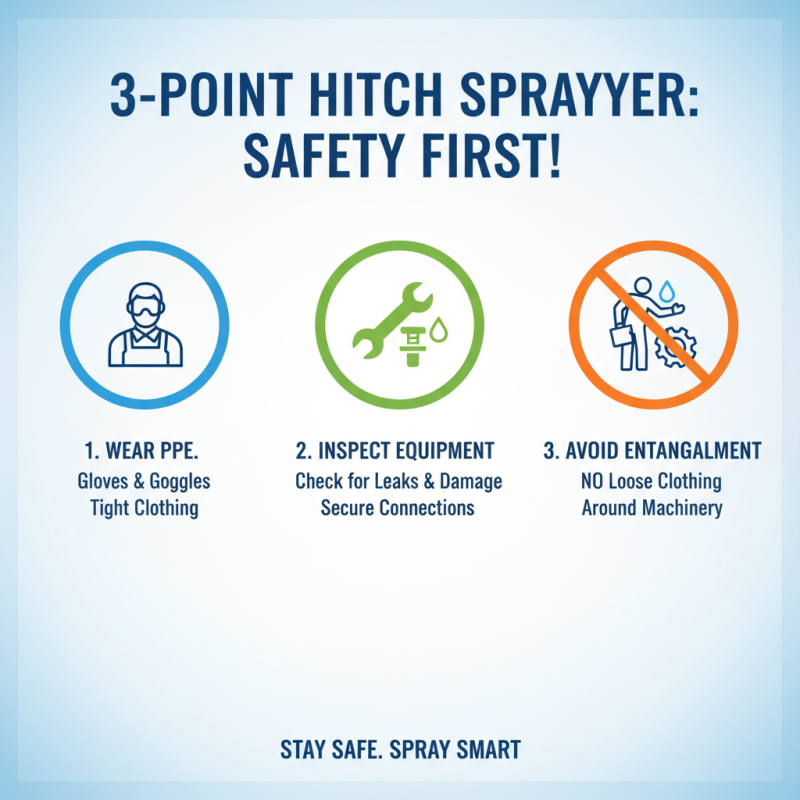
Using a 3 point hitch sprayer requires careful attention to safety measures. Wear appropriate personal protective equipment, such as gloves and goggles. Ensure that your clothing fits tightly to avoid any entanglement with machinery. Before spraying, inspect the equipment for leaks or damage. Make sure that all connections are secure to prevent accidental spills.
It is important to plan the area you will spray. Avoid areas with high foot traffic or near water sources. This helps minimize accidental exposure. When mixing chemicals, do so in a well-ventilated area. Always read the labels and follow manufacturer instructions for safe handling. Be aware of wind direction, as this can affect spray drift.
After completing the task, clean the equipment thoroughly. Residual chemicals can pose risks. Dispose of any waste materials properly. Reflect on your process. Was there anything that could be improved for next time? Keeping a record can help identify areas for better efficiency and safety in the future.