What is Unified AI API and How Does It Work?
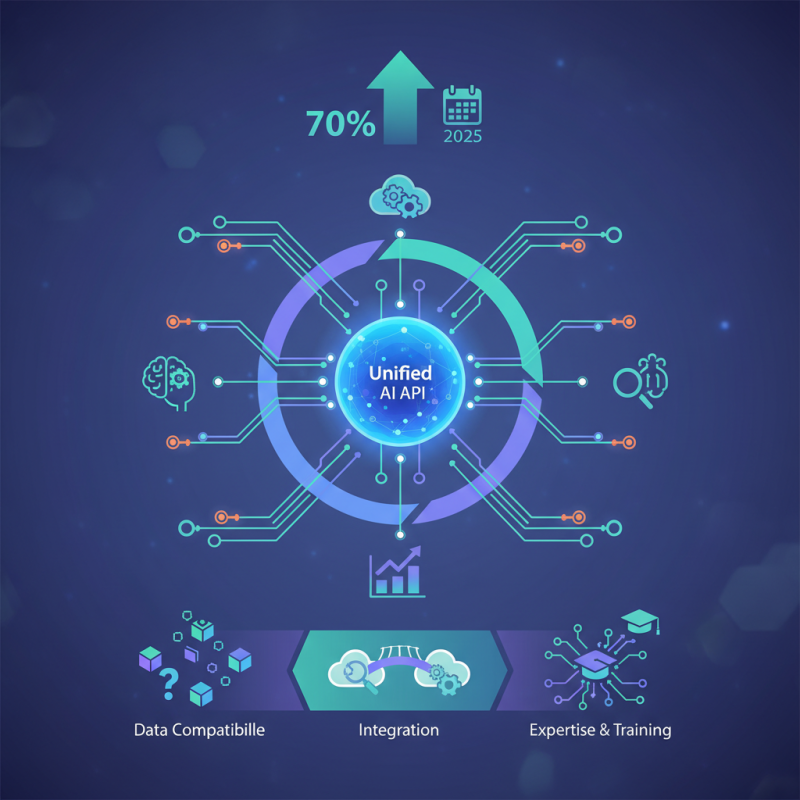
The concept of Unified AI API is gaining traction in the tech industry. A recent report from Gartner indicates that 70% of organizations will deploy Unified AI solutions by 2025. This highlights the growing need for a cohesive approach to integrating various AI capabilities.
Dr. Emily Chen, a prominent AI expert, noted, “Unified AI APIs enable businesses to streamline their AI strategies.” These APIs facilitate seamless communication between different AI models, enhancing efficiency and effectiveness. Companies can leverage insights from diverse data sources more efficiently.
However, achieving true unification is not without challenges. Many organizations struggle with data compatibility and integration issues. Without the right expertise and infrastructure, the implementation of a Unified AI API can fall short of its potential. The importance of adequate training and resources cannot be overstated in this rapidly evolving landscape.
Definition of Unified AI API and Its Core Purpose
The Unified AI API represents a significant advancement in artificial intelligence integration. It serves as a single pathway to access diverse AI models. This integration simplifies the development process for businesses looking to implement AI solutions. A report from McKinsey indicates that nearly 50% of companies are already using AI in at least one business function. The Unified AI API makes it easier to expand these uses.
The core purpose of the Unified AI API is to streamline interactions between different AI systems. Developers can avoid the complexity of managing multiple APIs. This efficiency can lead to faster deployment times and reduced costs. According to a recent survey by Gartner, companies could save up to 30% on operational costs by utilizing integrated AI solutions. However, organizations must also be aware of potential challenges, such as data privacy and the need for robust security protocols.
While the Unified AI API can provide many benefits, it is not a perfect solution. Some businesses may struggle with the initial transition. Ensuring compatibility with existing systems can prove difficult. Additionally, the rapid pace of AI development may leave some APIs outdated quickly. Organizations should continuously evaluate their systems to keep pace with evolving technology.
Key Components and Architecture of Unified AI API
The Unified AI API comprises several key components that facilitate seamless interaction with various AI models. These components include data processing modules, model management, and user interface layers. Each module plays a crucial role in ensuring data is properly formatted and passed between systems. This process can introduce challenges. For instance, inconsistent data formats may cause issues during model inference.
The architecture of the Unified AI API is designed around a microservices framework. This allows each component to function independently yet communicate effectively. Microservices can scale easily, accommodating changes in user demand. However, the complexity can also lead to integration issues. Managing multiple services requires careful planning and monitoring.
Moreover, security is vital in this architecture. Each component must adhere to strict protocols to protect sensitive data. Failure to implement proper security measures can expose vulnerabilities. The architecture must evolve continuously. Developers need to reflect on their strategies and address gaps proactively to ensure robust performance.
How Unified AI API Facilitates Integration Across Platforms
Unified AI API serves as a critical conduit for seamless integration across diverse platforms. This technology enables applications to communicate more efficiently. According to the 2021 McKinsey Report, companies that adopt advanced integration solutions can boost their productivity by up to 25%. This is substantial, especially in a competitive landscape where agility matters.
A Unified AI API simplifies the complexities of connecting different services. By creating a standardized protocol, it reduces the friction often seen in data exchange. Many organizations struggle with fragmented systems, which can lead to miscommunication and delays. A recent Forrester study highlights that nearly 70% of enterprises face integration challenges, affecting their operational efficiency. Solutions like Unified AI API address these pain points effectively, encouraging better collaboration and responsiveness.
Yet, integration is not without hurdles. It requires careful planning and understanding of existing systems. Misalignment in goals can lead to unintended costs and setbacks. Many firms often underestimate the resources needed for a successful integration. Engaging with user feedback during implementation can reveal insights that help refine the process. This feedback loop is crucial for sustained success in leveraging Unified AI APIs.
Applications and Use Cases of Unified AI API in Industry
Unified AI APIs offer diverse applications across various industries. In healthcare, they streamline patient data management. Real-time analysis enhances decision-making for doctors. Predictive analytics can identify potential health risks early, allowing for timely intervention. These APIs also support telemedicine solutions, improving patient access to care.
In finance, Unified AI APIs automate complex processes. They help in fraud detection by analyzing transaction patterns. This technology offers insights into market trends, aiding investment strategies. However, the reliance on AI raises questions about data privacy and security. Financial institutions must carefully balance innovation with responsibility.
Retail is another area seeing significant benefits. Unified AI APIs enable personalized shopping experiences. They analyze customer behavior, recommending products tailored to individual preferences. However, this approach can miss the mark, leading to potential overfitting in customer insights. Businesses must continuously adapt their algorithms to reflect changing customer needs and preferences.
Challenges and Future Trends for Unified AI API Development
The development of Unified AI APIs faces several challenges that require careful consideration. Integration of different AI models can be complex. Interoperability issues often arise when connecting APIs with existing systems. A recent industry report highlights that 70% of organizations struggle with API integration due to these complexities. This can lead to increased project timelines and costs.
Moreover, data privacy remains a pressing concern. As AI APIs handle vast amounts of sensitive data, ensuring compliance with regulations is critical. According to a survey, 65% of organizations fear that data breaches will hinder AI adoption. This creates a need for developing more secure and transparent methods in AI API designs.
Looking ahead, future trends in Unified AI APIs are promising yet challenging. The move toward greater standardization may simplify integration processes. However, as AI capabilities expand, the demand for customization grows. Balancing standard features with tailored solutions will be essential. The industry must address these evolving needs to remain relevant and effective in a fast-paced digital environment.