
China Top 10 Premium Ceremonial Matcha Suppliers?
China’s premium tea market is becoming more attentive to Japanese-style preparation, stone-milled texture, and ceremonial presentation. This guide examines China’s Top 10 Premium Ceremonial Matcha Suppliers through practical quality indicators, not attractive packaging alone. Shade-grown leaves, cultivar selection, harvest timing, steaming, drying, and grinding speed can change the final cup. So can storage.
Color matters. Aroma matters more.
A trustworthy supplier should explain the tea’s origin, harvest season, processing method, lot information, and laboratory testing. Buyers should look for a vivid green appearance, fine powder, clean umami, gentle sweetness, and minimal bitterness. However, “ceremonial grade” is not a universally regulated international category. It often reflects marketing language. That detail deserves attention.
Sen no Rikyū, the influential Japanese tea master, offered a simple principle: “Tea is naught but this: boil the water, then make the tea and drink it.” His words still challenge modern comparisons. Premium Ceremonial Matcha is not valuable because it sounds prestigious. It must perform in the bowl.
This introduction also considers supplier experience, milling consistency, traceability, packaging, export readiness, and customer support. Some companies may excel at flavor but provide limited documentation. Others may offer strong testing records while lacking traditional character. That tension is real.
The ranking is therefore a starting point, not a final verdict. Professional buyers should request samples, compare preparation results, and verify current certifications directly. Even excellent matcha can lose freshness after opening. Small details matter.
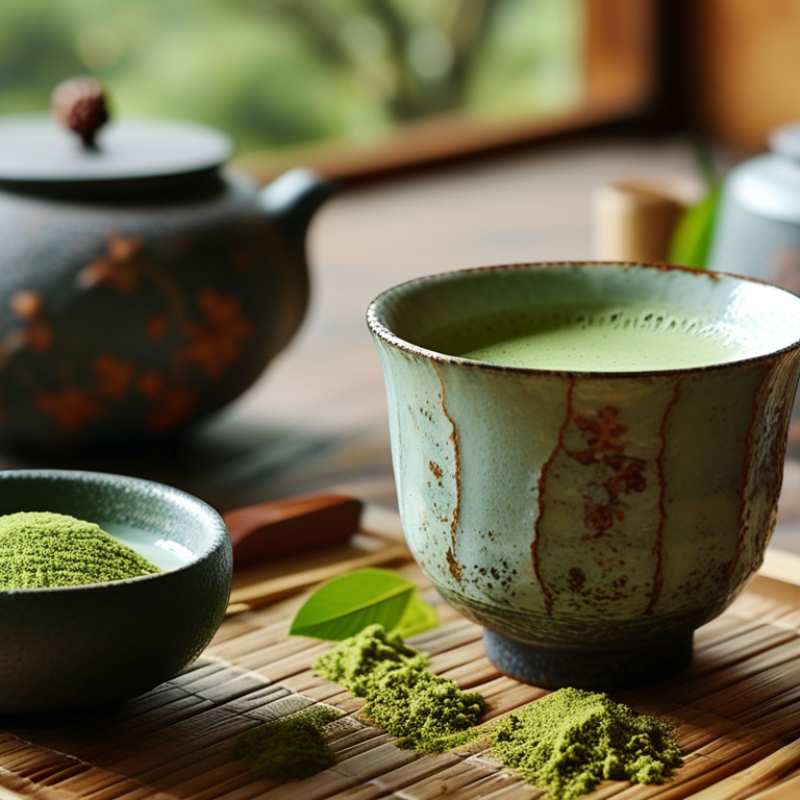
What Defines Premium Ceremonial Matcha in China?
China Top 10 Premium Ceremonial Matcha Suppliers?
What Defines Premium Ceremonial Matcha in China?
Premium ceremonial matcha begins with traceable tea leaves, not attractive packaging. Under China’s GB/T 34778-2017 matcha standard, powder quality depends on raw material, processing, sensory traits, and safety controls. Shade-grown leaves usually develop deeper green color and stronger umami. However, “ceremonial grade” is mainly a market term, not a unified legal grade in China. Buyers should question vague claims.
Processing also matters. Stone milling creates fine powder, but it can reduce output and increase heat exposure if poorly controlled. A premium supplier should show milling temperature, particle-size testing, harvest date, and storage conditions. The powder should look vivid green, smell fresh and sea-like, and form a smooth suspension with hot water. Clumps are not always a defect. Stale aroma is.
China remains the world’s largest tea producer, with about 3.4 million tonnes recorded in the FAOSTAT 2024 release for 2022. That scale creates expertise, but it also creates uneven quality. The China Tea Marketing Association’s recent industry materials emphasize origin traceability, standardized production, and quality inspection. A serious supplier should provide batch-level certificates for pesticide residues, heavy metals, moisture, and microbiological safety. Organic certification can support credibility, but it does not guarantee superior flavor. Sensory evaluation still requires trained tasting, clean water, and consistent preparation. Even experienced buyers can misjudge color under artificial lighting.
China Top 10 Premium Ceremonial Matcha Suppliers? - What Defines Premium Ceremonial Matcha in China?
A practical, supplier-neutral comparison based on verifiable production characteristics, quality-control indicators, and premium ceremonial matcha benchmarks in China.
| No. | Anonymous Supplier Profile | Primary Chinese Tea Region | Typical Cultivar Focus | Shade-Growing Practice | Milling Method | Typical Particle-Size Target | Quality-Control Indicators | Ceremonial Suitability | Screening Score |
|---|---|---|---|---|---|---|---|---|---|
| 1 | Supplier Profile A | Western Zhejiang | Small-leaf green-tea cultivars | Approximately 14–21 days before harvest when producing tencha-style material | Slow stone milling or low-temperature ceramic milling | Generally targeted below 15 μm for a smooth mouthfeel | Low moisture, vivid green color, traceability by lot, pesticide-residue testing | High when umami, low bitterness, and fine suspension are confirmed | ★★★★★ |
| 2 | Supplier Profile B | Southern Anhui | Shading-tolerant tea varieties | Usually 14–28 days, depending on weather and leaf maturity | Granite stone mill or controlled air-classification milling | Approximately 10–18 μm | Consistent lot color, clean aroma, microbiological control, certificate of analysis | High for daily ceremonial preparation if astringency is controlled | ★★★★☆ |
| 3 | Supplier Profile C | Central Hunan | Early-harvest green-tea cultivars | Shading commonly used for 14–21 days in premium batches | Low-temperature industrial milling with sieving | Approximately 12–20 μm | Bright green liquor, controlled oxidation, heavy-metal and pesticide screening | High when freshness and fine texture are maintained during storage | ★★★★☆ |
| 4 | Supplier Profile D | Eastern Guizhou | High-elevation local green-tea cultivars | Partial or full shading for approximately 10–21 days | Low-heat stone or ceramic milling | Approximately 10–16 μm | High-elevation traceability, low moisture, clean vegetal aroma, batch testing | High for rich aroma and balanced umami | ★★★★☆ |
| 5 | Supplier Profile E | Western Sichuan | Fresh, tender-leaf green-tea selections | Typically 14–21 days for premium shade-grown lots | Controlled-temperature stone milling | Approximately 12–18 μm | Clear harvest date, lot segregation, color retention, sensory evaluation | High when marine or grassy notes remain clean rather than harsh | ★★★★☆ |
| 6 | Supplier Profile F | Western Fujian | Small-leaf cultivars selected for low bitterness | Approximately 14–28 days for ceremonial-grade production | Stone milling supported by fine screening | Generally below 18 μm | Low bitterness, smooth foam formation, pesticide-residue and microbial testing | High for whisked tea and premium beverage applications | ★★★★☆ |
| 7 | Supplier Profile G | Southern Yunnan | Selected local tea varieties rather than large-leaf material | Usually 10–21 days, subject to cultivar and climate | Low-temperature mechanical milling | Approximately 15–25 μm | Requires close checking of bitterness, oxidation, storage history, and cultivar suitability | Medium to high, depending on sensory balance and particle fineness | ★★★☆☆ |
| 8 | Supplier Profile H | Northern Guangxi | Early-harvest green-tea cultivars | Commonly 14–21 days for premium shade-grown material | Air-cooled milling with multiple sieve passes | Approximately 12–20 μm | Uniform color, low moisture, clean finish, documented pesticide testing | Medium to high for commercial ceremonial use | ★★★☆☆ |
| 9 | Supplier Profile I | Southern Jiangsu | Fine-leaf tea cultivars grown for fresh aroma | Typically 10–18 days in specialty batches | Ceramic or controlled-temperature mechanical milling | Approximately 15–22 μm | Aromatic freshness, low oxidation, packaging under light- and oxygen-limiting conditions | Medium to high when the powder remains fresh and smooth | ★★★☆☆ |
| 10 | Supplier Profile J | Central Hubei | Regional green-tea cultivars selected for color and yield | Approximately 10–21 days, depending on production specification | Low-temperature roller or air-classification milling | Approximately 15–25 μm | Supplier should provide harvest records, test reports, moisture data, and sensory samples | Medium; suitable only after independent sample approval | ★★★☆☆ |
Note: “Ceremonial grade” is a market term rather than a universally standardized legal classification in China. A premium assessment should therefore be based on cultivar, shading, harvest timing, tencha-style processing, low-temperature milling, particle fineness, freshness, sensory performance, traceability, and independent safety testing rather than on the grade name alone.