Top 5 Tips for Choosing the Best Spot Sprayer?
Choosing the right spot sprayer can be a daunting task. Each sprayer offers unique features. They can significantly impact the efficiency of your tasks. As industry expert Mark Thompson, an agronomy specialist, once said, "The right equipment can make or break your success." His insight emphasizes the importance of selecting the best tools for agricultural needs.
Understanding the nuances of spot sprayers is crucial. Consider factors such as capacity, portability, and ease of use. Each selection has its pros and cons. A bigger capacity may seem appealing, but it can also be cumbersome. In some situations, smaller models are more efficient. Think about your specific requirements to find the right balance.
As you navigate this selection process, remember that trial and error is part of the journey. It’s okay to make mistakes. Each choice teaches valuable lessons. Whether you’re a novice or seasoned professional, reflect on what worked and what didn’t. Your experiences will guide future decisions. Ultimately, a thoughtful choice can enhance your productivity and effectiveness in using a spot sprayer.
Understanding the Essential Features of Spot Sprayers for Optimal Use
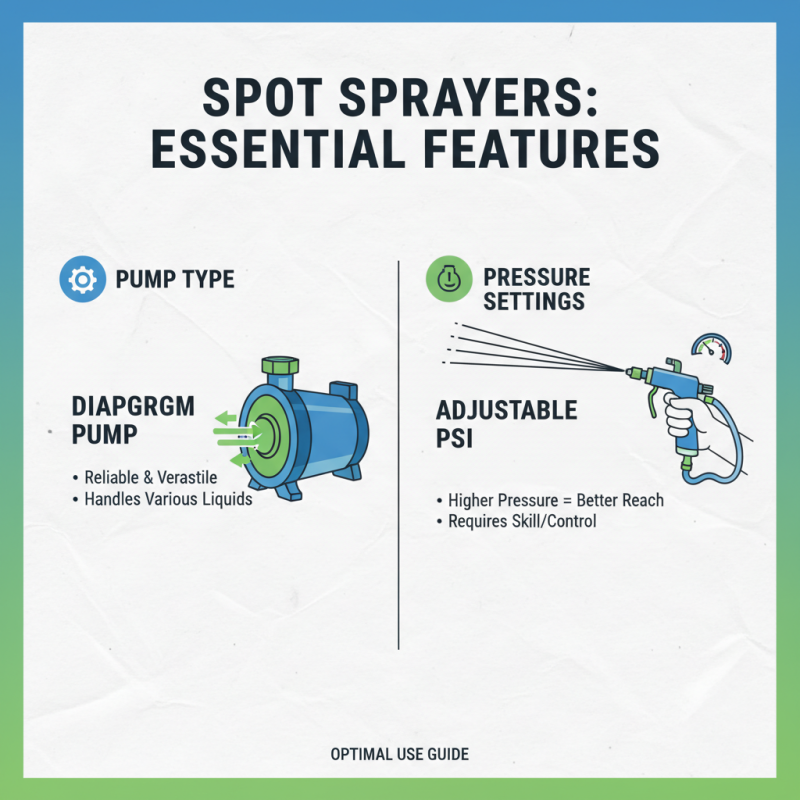
When selecting a spot sprayer, understanding its essential features is crucial. One key feature is the pump type. A diaphragm pump offers reliability and versatility. It can handle different liquids without damage. Consider the sprayer’s pressure settings as well. Higher pressure allows for better reach but may require more skill to control.
Tank capacity matters too. A larger tank means fewer refills but can add weight and bulk. Think about your intended use. If you're treating small areas, a compact sprayer could suffice. However, for larger areas, invest in a model with a bigger tank. Don't overlook portability; the unit should be easy to maneuver.
Also, pay attention to the nozzle options. A variety of nozzles provides flexibility for various tasks. Some may prefer a coarse spray for large areas, while others need precision for gardens. Balancing these features can be challenging. After all, what works for one user may not suit another. Embrace the trial and error inherent in finding the right fit.
Evaluating the Tank Capacity Needed for Your Specific Spraying Needs
When choosing a spot sprayer, evaluating the tank capacity is crucial. The right size depends on the area you need to cover and the type of tasks. Small jobs might only require a 5-gallon tank, while larger applications could need a 20-gallon or bigger capacity. Think about how often you'll refill. Frequent stops can disrupt your workflow.
Consider your spraying needs in detail. Are you tackling weeds in a garden or treating a large field? Each scenario demands different capacities. Sometimes, a larger tank may seem better, but it can become cumbersome. Balancing ease of use with capacity is vital. Another point to reflect on is the type of chemicals or solutions you will use. Some products may require more water, which influences your choice.
Take note of the weight as well. A full tank can become difficult to manage. If you often transport your sprayer, a lighter option may be necessary. Evaluate your terrain as well. Rough or uneven ground can complicate handling. People's preferences differ widely, so adjusting your choice based on personal experience makes sense.
Top 5 Tips for Choosing the Best Spot Sprayer - Evaluating the Tank Capacity Needed for Your Specific Spraying Needs
| Tip |
Description |
Tank Capacity |
Usage Scenario |
| Evaluate Your Area Size |
Consider the size of the area you will be spraying to determine the tank capacity. |
15-30 gallons |
Small farms or gardens |
| Consider Type of Spraying |
Different applications, such as herbicides or pesticides, may require different capacities. |
30-50 gallons |
Medium-sized fields |
| Account for Frequency of Use |
Higher frequency may require larger tanks to avoid frequent refills. |
50-100 gallons |
Commercial applications |
| Assess Terrain Type |
Rugged or hilly terrain may influence your choice for maneuverability. |
20-40 gallons |
Uneven landscapes |
| Check Compatibility with Equipment |
Ensure the tank fits well with your existing equipment for efficient use. |
15-50 gallons |
Varied usage scenarios |
Assessing Spray Patterns: Importance of Nozzle Types and Configurations
When selecting a spot sprayer, understanding nozzle types and configurations is essential. Different nozzles produce varying spray patterns. The right pattern can significantly influence the effectiveness of your application. For instance, wide fan nozzles cover larger areas but may lead to uneven distribution. In contrast, narrow stream nozzles offer more precision but require careful aiming.
Nozzle material and design also contribute to performance and longevity. For example, ceramic nozzles resist wear better than plastic variants. Consider the type of chemicals you plan to use; some materials may degrade over time. It’s crucial to mix and match nozzle types based on your specific tasks. This can result in unintended consequences if not thoroughly tested.
While there are many nozzle configurations available, finding the best fit for your needs often involves trial and error. A common mistake is overlooking the impact of drift caused by wind. This can compromise your spraying efforts and lead to wasted resources. Pay attention to environmental conditions before applications. Each spraying session can teach you something valuable, reminding you to evaluate and adjust your setup continuously.
Comparing Power Sources: Battery vs. Gas vs. Electric Spot Sprayers
When choosing a spot sprayer, power source is a crucial factor.
Battery-powered sprayers offer convenience.
They are lightweight and portable, making them suitable for small tasks.
However, batteries may have limited run times. Users might find themselves
recharging frequently. This can be a setback for larger projects.
Gas spot sprayers provide robust power and can handle extensive jobs.
They often have higher flow rates. Yet, they can be bulky and require more maintenance.
Users need to consider fuel availability and exhaust fumes.
These factors add complexity to their use. In some cases, they might not be the best
choice for residential settings.
Electric sprayers are another option.
They are quieter and cleaner than gas models. They also have consistent power output.
A downside is their dependency on power outlets. This can limit where
you can use them. Assessing your specific needs
is vital. Each power source has its merits and challenges. Understanding these can lead to a more informed choice.
Analyzing Weight and Portability for Efficient Field Operations
When selecting a spot sprayer, weight and portability play crucial roles. Consider the operational environment. Sprayers that are too heavy can be challenging to maneuver, leading to operator fatigue. A lightweight sprayer enhances agility. It allows you to navigate through tight spaces and uneven terrains with ease.
Portability means more than just weight. Sprayers should be easy to load and transport. Look for features like ergonomic handles and compact designs. These features simplify the process of moving from one site to another. Sometimes, a sprayer's design may seem beneficial but can cause inconvenience during transportation. Reflect on how often you will move the sprayer between fields.
Evaluating the weight balance is essential. A well-distributed weight can improve handling. Test how it feels when lifted and moved around. If it feels awkward, it may not be ideal for extended use. Once you identify your needs, you can make a more informed decision. Balance your desire for portability with the sprayer's capacity. Finding that sweet spot can significantly enhance your field operations.
Top 5 Tips for Choosing the Best Spot Sprayer
This chart illustrates key dimensions to consider when choosing the best spot sprayer. Factors like weight, portability, durability, capacity, and price are essential for efficient field operations.