7 Tips for Buying Power Transmission Parts?
Buying Power Transmission Parts is an operational decision, not a simple catalog exercise. A mismatched coupling, bearing, or gearbox can create vibration, heat, and unplanned downtime. The U.S. Department of Energy reports that motor-driven systems consume roughly 70% of industrial electricity in the United States. Efficiency and compatibility therefore deserve equal attention.
This guide presents seven practical tips for selecting reliable components. It considers load, speed, operating temperature, lubrication, materials, supplier capability, and total ownership cost. ISO 281 provides a recognized method for calculating rolling-bearing life. AGMA standards also offer useful guidance for gear rating and transmission performance. These references cannot replace field knowledge, however. Dust, shock loading, poor alignment, and irregular maintenance can change real results quickly.
Look beyond the lowest quotation. That assumption is convenient—and often wrong. A cheaper part may have weaker seals, shorter fatigue life, or unclear traceability. Ask for dimensional drawings, material specifications, test records, and conformity documentation. Confirm whether the part fits your shaft, housing, torque range, and duty cycle. A caliper, vibration reading, and maintenance log can reveal more than a polished product page.
The right choice should support safety, uptime, and predictable maintenance. Still, no purchasing checklist is perfect. Equipment ages, production conditions shift, and supplier data may contain gaps. Use these seven tips as a disciplined starting point, then validate every critical Power Transmission Parts decision against actual site conditions.
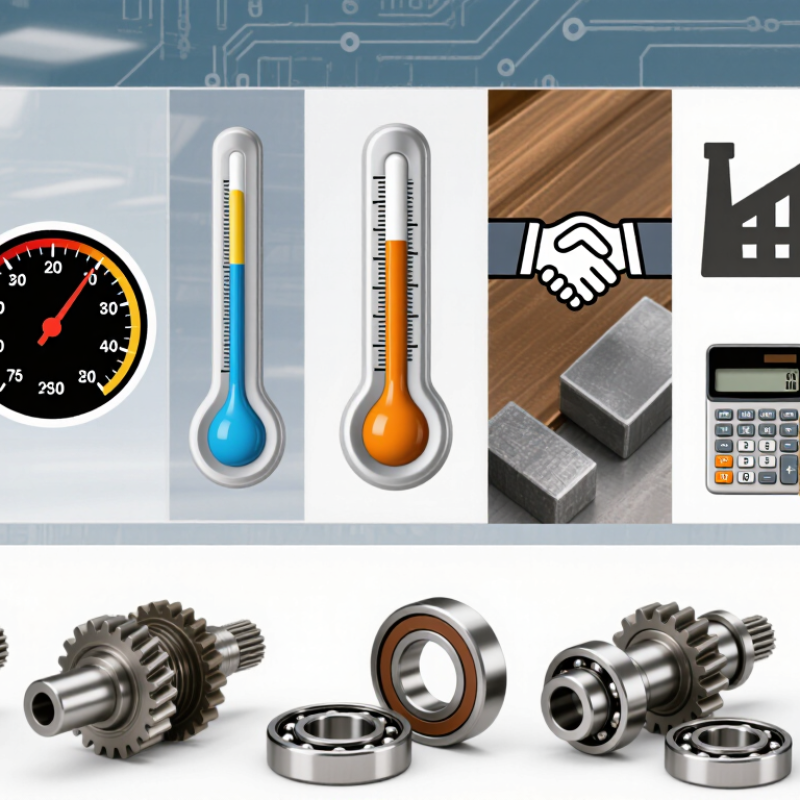
Define the Power Transmission Part and Its Operating Requirements
A power transmission part transfers motion or force between machine components. Common examples include belts, chains, gears, couplings, and bearings. Each works differently, so a part that fits physically may still perform poorly. A narrow belt, for instance, can slip under a heavy startup load. Define the part’s role before comparing materials or dimensions.
Record the operating requirements from the actual machine, not just an old purchase note. Check shaft size, speed range, torque, load direction, duty cycle, and available space. Note heat, dust, moisture, and vibration near the installation. These conditions affect wear and service life. A conveyor running eight hours daily needs a different assessment from a lightly used workshop tool. If readings are uncertain, measure again. I have seen small measurement errors create frustrating fit problems; it is easy to overlook them.
Tip: Share the machine model, photos, measurements, and operating conditions with a qualified supplier or technician. Ask how the proposed part handles peak loads and routine maintenance. Confirm tolerances before ordering. Keep the old component for comparison, but do not assume it was the right specification.
Verify Compatibility with Equipment, Loads, and Motion Conditions
Power transmission parts should match the machine, not just the catalog picture. The U.S. Department of Energy reports that motor-driven systems consume about 70% of industrial electricity. Poor alignment, excessive friction, or incorrect gearing can waste energy quickly. Check shaft diameter, keyway size, mounting space, speed range, and torque demand before ordering. A coupling that fits physically may still fail under shock loads.
Tip 1: Map the real load. Record starting torque, continuous torque, peak torque, radial force, and axial force. Include reversing motion and sudden stops. For bearings, compare the calculated load with the L10 rating defined in ISO 281. Do not treat a laboratory rating as a guaranteed service life. Dust, water, heat, and weak lubrication change the result.
Tip 2: Match the motion condition. A chain drive, belt, gearbox, or coupling experiences different stress during constant rotation, indexing, oscillation, and frequent acceleration. Measure actual operating speed, not only the motor nameplate speed. Tip 3: Verify interfaces twice. Confirm bore tolerance, shaft fit, fastener grade, guarding clearance, and lubrication access. OSHA machine-safety guidance emphasizes guarding moving transmission components, but installation teams sometimes leave inspection gaps. That is an uncomfortable detail, yet it matters. Tip 4: Check the supplier’s technical evidence. Request load curves, temperature limits, dimensional drawings, and test standards. Industry reports often present average performance; your machine may be harsher. Recheck the assumptions after installation. Real vibration can expose mistakes that calculations miss.
Evaluate Material Quality, Design Standards, and Service Life
When buying power transmission parts, start with material quality, not appearance. A polished surface can hide weak steel or inconsistent heat treatment. Ask for material certificates, hardness data, and traceable batch records. For belts, chains, gears, and couplings, inspect edges, tooth profiles, bores, and keyways. Small burrs can become serious alignment problems. Choose corrosion-resistant materials when moisture, chemicals, or outdoor exposure is expected.
Design standards are equally important. Confirm dimensions, tolerances, load ratings, and speed limits against recognized engineering standards. A part that fits may still fail under shock loads or repeated reversing. Check whether the design supports your shaft size, lubrication method, and installation tools. I have seen purchasing teams select a stronger component that could not fit the existing guard. That mistake was expensive. Ask for technical drawings and test reports before approval, not after delivery.
Service life depends on real operating conditions. Estimate cycles, temperature, dust, vibration, and daily running hours. Review the manufacturer’s maintenance intervals, seal design, and replacement procedure. Seals wear first. Keep inspection records for noise, heat, wear patterns, and tension changes. Compare total lifecycle cost, including downtime and labor, rather than purchase price alone. One uncomfortable truth remains: service-life estimates are not guarantees. Actual alignment, installation quality, and neglected lubrication can shorten them sharply. A conservative estimate is often wiser, though not always cheaper.
7 Tips for Buying Power Transmission Parts? — Evaluate Material Quality, Design Standards, and Service Life
| Tip | Evaluation Dimension | What to Check | Useful Standard or Technical Reference | Service-Life Relevance |
|---|---|---|---|---|
| 1 | Verify material quality | Confirm the material grade, heat-treatment condition, hardness range, corrosion resistance, and traceability. Common transmission materials include carbon steel, alloy steel, stainless steel, engineering plastics, and elastomers. | Request a material certificate, hardness report, and inspection records. For steel fasteners, ISO 898-1 defines mechanical property classes for many carbon-steel and alloy-steel fasteners. | Correct material selection helps resist fatigue, wear, impact, corrosion, and excessive deformation under the actual operating conditions. |
| 2 | Match the load and speed rating | Compare continuous torque, peak torque, radial and axial loads, rotational speed, shock loading, duty cycle, and starting conditions with the component rating. | For rolling bearings, basic rating life is commonly calculated using the L10 life concept described in ISO 281. For gears, bending and contact strength should be evaluated using recognized gear-rating methods such as ISO 6336. | Operating above the rated load or speed can accelerate fatigue, overheating, tooth damage, shaft bending, and premature failure. |
| 3 | Check dimensional accuracy and fit | Check bore and shaft dimensions, keyway size, concentricity, runout, surface roughness, parallelism, and mounting clearances before purchasing. | ISO 286 provides a system of limits and fits for sizes commonly used in shaft-and-hole assemblies. Use the equipment drawing and the component manufacturer's tolerance requirements together. | Proper fit reduces vibration, fretting, misalignment, uneven loading, and loosening during operation. |
| 4 | Evaluate design standards and geometry | Review tooth profile, pitch, pressure angle, chain or belt size, hub design, flange details, thread form, sealing arrangement, and compatibility with existing components. | Confirm that the part follows the applicable dimensional or performance standard, such as ISO 606 for roller chains, ISO 4183 for belt drives, or ISO 6336 for cylindrical gear strength calculations. | Standardized geometry improves interchangeability, load distribution, installation accuracy, and replacement availability. |
| 5 | Consider the operating environment | Assess temperature, humidity, dust, water exposure, chemicals, washdown conditions, vibration, outdoor use, and explosive-atmosphere requirements where applicable. | Check corrosion-protection requirements, seal type, lubricant compatibility, temperature limits, and any applicable workplace or equipment safety regulations. | Environmental mismatch can cause corrosion, lubricant breakdown, swelling, embrittlement, seal failure, or loss of dimensional stability. |
| 6 | Review lubrication and maintenance needs | Identify the required lubricant type, viscosity, relubrication interval, grease quantity, sealing method, alignment procedure, and inspection points. | Use the component technical data and the equipment maintenance schedule. Do not mix lubricants unless their compatibility has been confirmed. | Correct lubrication limits friction, heat, wear, and contamination-related damage; over-lubrication can also increase temperature and seal stress. |
| 7 | Compare total cost and replacement support | Compare purchase price with installation time, expected maintenance, energy losses, inspection requirements, downtime risk, spare-part availability, and warranty terms. | Request dimensional drawings, test reports, inspection procedures, batch traceability, installation instructions, and clear replacement specifications. | A lower initial price may result in a higher lifecycle cost if the part has shorter fatigue life, poor fit, limited documentation, or difficult replacement requirements. |
Note: Actual service life depends on load, speed, alignment, lubrication, contamination, temperature, installation quality, and maintenance practices. Always verify the final selection against the equipment manufacturer's design requirements.
Compare Suppliers, Pricing, Availability, and Technical Support
7 Tips for Buying Power Transmission Parts
Compare Suppliers, Pricing, Availability, and Technical Support
A dependable supplier should provide clear specifications, traceable materials, and realistic delivery dates. Compare at least three suppliers using the same part numbers and operating requirements. Check tolerances, load ratings, dimensions, and expected service life. A cheaper component may create higher costs through early wear or unexpected downtime.
Pricing deserves a wider view. Request itemized quotations for parts, tooling, shipping, taxes, and replacement components. Ask whether the quoted price applies to one unit or a volume order. I once focused too heavily on unit cost and overlooked installation delays. That mistake changed how I review total ownership cost.
Availability can affect production more than a small price difference. Confirm current stock, reserved inventory, minimum order quantities, and estimated replenishment dates. Do not rely only on an online stock label. Request written confirmation before planning maintenance.
Technical support also matters. A capable supplier should help verify fit, lubrication, alignment, and operating temperature. Ask how quickly engineers respond and whether they provide drawings or selection guidance. Test the support with a practical question before purchasing. Responses can reveal more than sales claims.
Some suppliers communicate well but lack detailed engineering knowledge. Others offer strong technical advice but provide uncertain lead times. That tradeoff deserves careful review.
Confirm Installation Details, Maintenance Needs, and Warranty Coverage
7 Tips for Buying Power Transmission Parts?
Tip 1: Confirm installation details before ordering.
Record the shaft diameter, keyway size, mounting pattern, rotation direction, and available clearance. A replacement part may look identical but still fail to fit. Check operating speed, torque, load type, and alignment requirements. Take clear photos of the existing assembly. They often reveal wear that measurements miss.
Tip 2: Match the part to your maintenance routine.
Ask how often it needs lubrication, inspection, tension adjustment, or cleaning. Parts exposed to dust, moisture, heat, or chemicals may need stronger seals and different materials. Keep the service instructions with your maintenance records. I once trusted a catalog description too much. The part worked, but its inspection interval did not suit the equipment. That mistake was avoidable.
Tip 3: Examine warranty coverage carefully.
Confirm the coverage period, included components, return conditions, and documentation requirements. Some warranties exclude poor alignment, incorrect installation, overload, or skipped maintenance. Ask who evaluates a failure and how quickly support responds. Keep invoices, installation notes, torque settings, and inspection photos. These details can support a legitimate claim. Written terms matter more than casual assurances.
Tip 4: Request technical confirmation when specifications are unclear.
A qualified supplier should explain tolerances, compatible materials, and expected service limits. Do not rely on a single dimension. Compare the part drawing with the actual machine. Small differences can create vibration, premature wear, or unsafe movement. When uncertain, pause the purchase and obtain a second technical opinion.