What Are the Top Types of Spiral Slides?
Spiral slides bring a distinctive twist to playgrounds, water parks, and indoor play spaces. Their curved paths can create excitement while fitting into a smaller footprint than many straight slides. Yet “spiral slide” describes several designs, not one standard product. Some wind around an open central space; others use enclosed tubes that control the rider’s path. The right choice depends on who will use the slide, where it will be installed, and how the surrounding area is designed. Small details matter.
This guide explores the top types of Spiral Slide, from open spiral designs to enclosed tube slides and larger water-park versions. It compares their layouts, materials, typical settings, and practical trade-offs. For example, an open slide offers clear sightlines, while an enclosed design can create a more contained ride. Neither is automatically better. Age range, entry height, landing space, access, and maintenance needs all deserve careful attention. Manufacturer specifications and qualified installation guidance should inform any real project; a brief description cannot replace them. Even the categories overlap, and that can make comparisons less tidy than expected. That is worth remembering. The aim here is to make those differences easier to see, so readers can ask better questions before choosing a design.
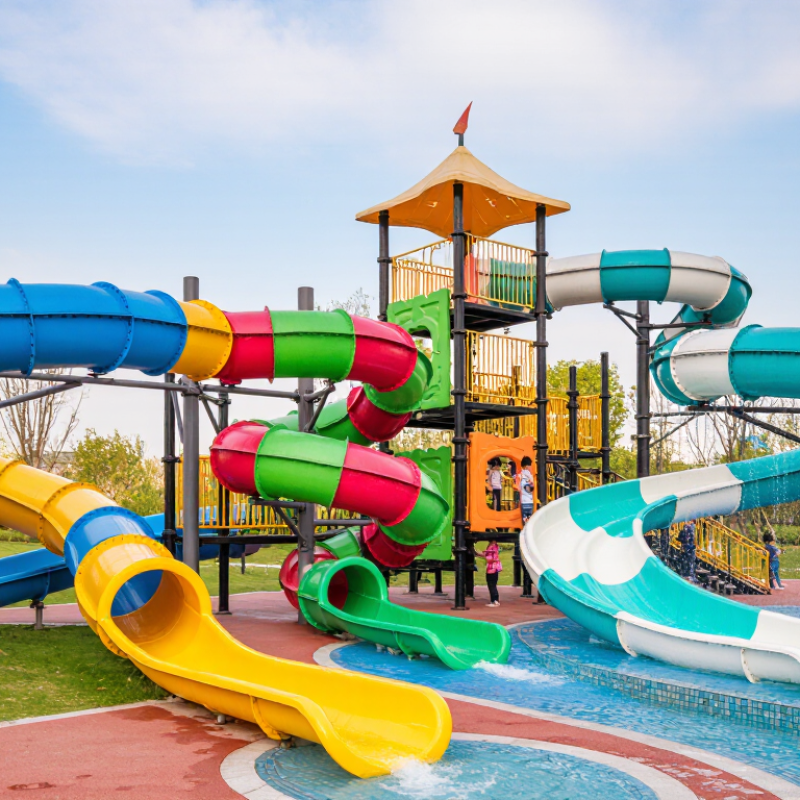
Open Spiral Slides
Open spiral slides curve around a central support while leaving the rider’s path visible from the outside. Their open design can feel less enclosed than a tube slide, and caregivers can often see riders as they descend. Sidewalls guide the ride, but children still need to sit facing forward and follow the posted instructions.
A quick ride. A few practical checks matter.
Look at the slide’s height, curve, and landing area before use. The exit should be clear, with enough space for one rider to move away before the next arrives.
On sunny days, touch the surface carefully; exposed materials can become hot, even when the air feels mild. Check for loose parts, sharp edges, or debris, and report damage to the site operator.
Follow age and height guidance, since a slide that suits one child may feel too fast or steep for another. I’ve seen adults focus on the climb and miss the busy landing zone. It is an easy detail to overlook.
Open slides also expose riders to weather, so rain can make the chute slick and change how quickly someone travels.
Enclosed Tube Spiral Slides
Enclosed tube spiral slides wrap a curved chute inside a continuous shell, guiding riders through a winding descent. The enclosed path can add a sense of adventure and help shield riders from direct sun or light rain. Inside, the view narrows to brief openings and changing bands of light. That detail feels exciting to some children, but unsettling to others. A transparent section near the exit can help caregivers see riders sooner.
A well-planned slide needs more than a dramatic curve. Designers should consider the platform height, landing area, rider flow, and access for supervision. The chute should feel smooth, with no sharp transitions or exposed edges. Regular inspections matter: look for cracks, loose connections, rough seams, and water or debris inside the tube. Even a small defect can affect comfort or safe use. One limitation is visibility; enclosed sections make it harder to observe a rider throughout the descent.
Tips: Keep the entrance and exit clear. Follow the equipment maker’s age and height guidance, and supervise young riders. Check the slide after storms or heavy use. If children hesitate, offer a view of the exit and let them decide. Safety checks are never a substitute for attentive supervision.
Partially Enclosed Spiral Slides
Partially enclosed spiral slides combine a curved route with a roof or side panels around part of the chute. The enclosure can make the ride feel more sheltered and add visual excitement, especially when children disappear briefly around a bend. Some designs use clear panels, while others rely on solid sections. Check that the opening feels wide enough for the intended age group, and look for smooth joins where sections meet. Small edges matter. A snug-looking tunnel is not automatically a better slide; children should have enough room to sit naturally and keep their arms inside.
Tips: Match the slide’s height and curve to the users’ age and confidence. Inspect the entrance, exit, and panel edges for gaps, sharp points, or trapped debris. Ask how the structure is anchored and what routine checks are recommended. Shade and airflow matter, too, since enclosed sections can become hot in direct sun. Follow the manufacturer’s installation and supervision guidance.
One trade-off is visibility. A partially covered section may hide a rider from an adult standing beside the slide, so place the exit where supervision stays easy. I used to think more enclosure always meant more thrill; that is too simple. The turn radius, surface, and approach platform all affect the experience. Before choosing, consider the available space and leave clear room around the exit. A little extra planning can prevent an awkward layout.
What Are the Top Types of Spiral Slides? - Partially Enclosed Spiral Slides
| Configuration | Enclosure Pattern | Visibility and Feel | Common Setting | Key Design Considerations |
| Covered upper section, open lower section | A roof or tube covers the upper part of the spiral; the lower run is open-sided. | Provides a more enclosed start, followed by a brighter, more open finish. | Outdoor playgrounds where a varied ride experience is desired. | Keep the transition between covered and open sections smooth, and provide suitable side protection on exposed portions. |
| Open upper section, covered lower section | The entrance and upper turns are open; an enclosed section covers part of the lower descent. | The rider can see the initial turns before entering a more enclosed section. | Play areas using a partial enclosure to add visual variety without enclosing the entire slide. | Ensure the covered section has appropriate openings and that its interior can be inspected and maintained. |
| Alternating open and covered turns | Enclosed and open portions alternate along the spiral route. | Changes in light and visibility make the ride feel varied. | Custom playground layouts with enough space for a multi-section slide. | Avoid abrupt transitions, and check that seams and openings do not create snag or pinch hazards. |
| Partially hooded spiral | A hood covers the rider from above while the sides remain substantially open. | Retains a more open view than a tube-style section while adding overhead coverage. | Outdoor sites where partial shade or a distinct visual profile is preferred. | Consider drainage, sun exposure, material temperature, and the slide's required guard and side-containment features. |
| Partially enclosed tower slide | A spiral slide descends from a play tower, with only selected sections enclosed. | The tower platform remains visible and accessible, while the slide route includes some covered turns. | Multi-level playground structures and play towers. | Confirm that the entrance platform, access route, fall zones, and slide exit are designed as one coordinated system. |
These descriptions are practical configuration categories, not a universal classification system. Actual dimensions, enclosure details, and safety requirements depend on the equipment design and applicable local standards.
Compact Spiral Slides for Lower Platforms
For lower platforms, compact spiral slides can add a lively route down without needing a long runout. A single-turn design usually curves once around a central support, while tighter models make a more continuous turn. That difference matters. A wider curve may feel less abrupt, but it can take up more ground space. Check the slide’s full footprint, including the exit area, rather than measuring only the platform opening.
Measure the platform height and available clearance before choosing a slide. The entry should meet the deck cleanly, with no awkward step or gap. Keep the exit area open, and check that nearby posts, borders, or play equipment do not obstruct it. Short slides still need suitable guardrails and secure installation. Follow the installation instructions and applicable playground guidance, and have the layout reviewed by a qualified installer when needed. Children should be able to reach the entry safely and sit comfortably before sliding. A compact shape saves room, but it does not make every small site suitable. That trade-off is easy to miss.
What Are the Top Types of Spiral Slides?
Example platform heights for comparing compact spiral slide configurations with taller options.
Compact open and enclosed spirals can be planned for lower platforms. Heights shown are illustrative design examples, not universal product specifications; check the selected slide’s requirements and applicable playground safety standards.
How Spiral Slide Designs Differ in Use and Safety
Spiral slides differ in how they guide riders and fit a play space. Open slides let adults see a child throughout the descent, while enclosed tube designs shield riders from sun and wind. That extra enclosure can make supervision less direct, so clear sightlines at the entrance and exit matter. A compact spiral suits limited space, but its turns should not feel abrupt for the intended age group.
Wider slides may allow more room for varied movement, yet they need a larger landing area. Check the slide’s recommended age, height, and user limits against the children who will use it. The entry platform should feel stable, and the exit should lead to a clear, impact-absorbing surface. No design removes the need for supervision. Keep the slide free of standing water, loose objects, and visible damage.
It is easy to choose by appearance alone. That can be a mistake. A bright, dramatic spiral may not suit a small yard or younger riders. Compare the available space, visibility, access steps, and maintenance needs before choosing. Follow the maker’s installation and inspection instructions, and ask a qualified installer when the setup is uncertain. A careful fit often matters more than a striking shape.
