How to Choose Bird Control Spikes in 2026?
Choosing Bird Control Spikes in 2026 is less about finding the sharpest-looking product and more about matching the system to the site. A narrow ledge above a bakery entrance has different needs from a broad warehouse beam exposed to wind and dust. Before comparing models, look closely at the landing surface, bird species, cleaning access, and likely weather. Small details matter. A loose base, a blocked drain, or a badly placed section can undermine an otherwise suitable installation.
This guide will compare spike materials, base designs, coverage, durability, and installation requirements. It will also explain how to assess product claims without treating every advertised feature as proof. Stainless steel may suit demanding outdoor exposure, while flexible polycarbonate can fit some less exposed locations; neither is automatically right for every ledge. Measure the area, check the mounting surface, and consider how maintenance crews will reach it. That last point is easy to overlook.
A verified specialist quotation was not supplied with the source material, so I will not invent an expert’s name or words. That restraint is important: practical guidance should be traceable, not dressed up as authority. Bird Control Spikes can help discourage perching when selected and installed for the actual conditions, but they are not a universal fix. This guide offers a careful starting point, with room to reconsider the choice when site conditions change.
Identify the Bird Species and Areas Requiring Deterrence
Before choosing bird control spikes, identify the species using size, bill shape, calls, flocking habits, and droppings. A pigeon and a starling may use the same ledge, but their landing patterns and preferred roosting spots can differ. Cornell Lab’s eBird Status and Trends maps seasonal abundance for more than 2,000 species, offering a useful reference for checking which birds are likely in your area. Start with observation. Watch at dawn and dusk for several days, and note whether birds perch on a roof edge, sign, beam, or narrow sill. A quick glance can miss the pattern.
Then assess the exact surface and the reason birds gather there. Look for nesting material, food scraps, standing water, and sheltered corners. The 2022 State of the Birds report documented a loss of nearly 3 billion birds in North America since 1970, a reminder to deter only where needed and avoid blocking access to useful habitat. Not just feathers. Droppings beneath one beam may point to a regular roost, while scattered marks can indicate brief visits. The distinction matters, though it is not always obvious.
Tips: Photograph the site from a distance, record bird activity for a week, and measure the usable ledge before selecting spike width and coverage. Check for nests before installation, and reassess after placement; birds may shift to a nearby perch. A tidy plan can still miss that second ledge.
Compare Spike Materials, Profiles, and Coverage
How to Choose Bird Control Spikes in 2026?
Compare Spike Materials, Profiles, and Coverage
Start with the surface, not the product photo. Stainless steel spikes generally suit exposed ledges where weather and long service life matter. UV-stable plastic can be lighter and easier to trim, but check its stated outdoor suitability. Neither material is automatically right for every site. Match the base and fixing method to the ledge, parapet, or sign, and avoid blocking drainage or access for maintenance.
Profile affects both fit and appearance. Narrow rows may work on slim rails, while wider bases can cover broad ledges with fewer gaps. Spike height and spacing should discourage landing without creating sharp hazards for people handling or servicing the area. Check the manufacturer’s measurements against the actual perch width; small gaps at corners can undermine an otherwise tidy installation. Measure twice.
Coverage is easy to underestimate. Map corners, joints, pipes, and sheltered pockets, then calculate the length needed for each section. Spikes should form a continuous barrier across likely landing zones, not merely the most visible edge. I still find irregular masonry tricky to assess from measurements alone, so a close site inspection is worthwhile. Recheck fixings after installation, especially where wind, rain, or cleaning may loosen them.
How to Choose Bird Control Spikes in 2026?
Compare spike materials, profiles, and coverage. Material density is an objective comparison point; actual spike weight also depends on strip design and dimensions.
Choosing a profile: Match the strip’s stated coverage width to the ledge or surface, allowing for edges and gaps. Narrow profiles suit small ledges; wider profiles cover broader surfaces. Stainless steel is a durable option for exposed locations, while UV-stabilized plastic spikes are lightweight. Check the product specification for material grade, UV resistance, and coverage. Density values are approximate and vary by grade.
Measure the Site and Check Surface Compatibility
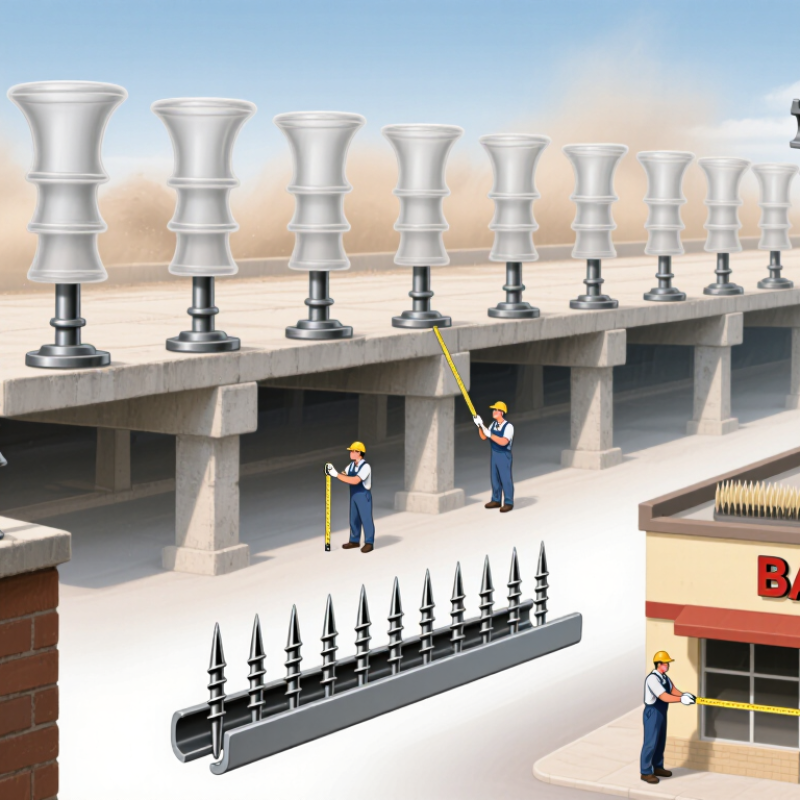
Choosing bird control spikes in 2026 starts with careful site measurements. Record the full ledge length and its usable width, not just the visible edge. Include corners, joints, drain openings, and narrow sections around signs or pipes. A tape measure and a quick site sketch can prevent short runs and awkward gaps. Small gaps matter. Note where birds regularly perch, and check whether wind, rain, or maintenance access affects those spots.
Next, identify the surface before choosing a mounting method. Brick, painted metal, stone, and plastic panels may need different fasteners or adhesives. Look for loose mortar, peeling paint, dust, and standing water; these can weaken attachment. Check the product instructions for suitable surfaces and preparation steps. Test a small, inconspicuous area when the finish is delicate. Check it dry. I have found that a surface that looks solid can still shed dust, so a second inspection is worthwhile.
Tips: Measure each section twice, then compare the totals with your sketch. Photograph corners and surface changes for reference. If the substrate is damaged or uncertain, ask a qualified installer to assess it before fitting spikes. Don’t force a standard strip into a curved or unusually narrow space.
Assess Safety, Local Rules, Durability, and Maintenance
How to Choose Bird Control Spikes in 2026?
Bird control spikes should suit the surface and the birds’ behavior, not just the package description. Watch the ledge or sign for a few days. Note where birds land, whether nests are present, and how rain drains across the area. Spikes are not a substitute for addressing food or shelter nearby. Small details matter.
Safety comes first. Look for smooth, blunt-ended components and spacing that discourages perching without trapping birds or snagging people. Keep strips away from walkways, accessible windows, and places where maintenance staff regularly reach. Before installing anything, check building policies and local rules, especially for protected species or nesting seasons. Requirements can vary by location. When uncertain, ask a qualified local wildlife professional.
Durability depends on exposure. Stainless steel can resist corrosion, while UV-stable materials may suit sunny ledges; compare specifications for your climate. Check that the mounting method fits the surface, since loose adhesive can fail on dusty or damp masonry. Then inspect the spikes every few months. Clear leaves, twigs, and debris, and replace bent or detached sections. Even a suitable setup can become a nuisance if nobody checks it. I might overlook that during a busy season, so a recurring calendar reminder is useful.
Choose a Spike System for the Site’s Conditions
How to Choose Bird Control Spikes in 2026?
Choose a Spike System for the Site’s Conditions
Choose spikes to suit the surface, weather, and birds using the site. A narrow window ledge needs a different layout from a broad roof beam. Measure the landing area, including corners and gaps, before comparing systems. Small details matter. Check whether the mounting surface is smooth metal, rough masonry, or painted wood; each may need a different fixing method.
Match the spike spacing and height to the birds’ size and landing habits. Pigeons often use wide ledges, while smaller birds may settle in tighter spaces. A system that leaves open ends or gaps can simply shift the landing spot. A neat plan can fail. Consider rain, frost, wind, and salt exposure, especially near the coast. Materials and fixings should tolerate the conditions without damaging the surface.
Inspect the area for nests, droppings, drainage paths, and maintenance access before installation. Keep spikes clear of gutters and places where staff need to work. Follow the product’s fitting guidance, and use a qualified installer when access is difficult or the surface is fragile. After fitting, check the coverage from ground level and again after bad weather. Small adjustments may be needed. A system that looks right on paper may not suit the real site.
How to Choose Bird Control Spikes in 2026? — Choose a Spike System for the Site’s Conditions
| Site Condition | Bird Spike System to Consider | Selection Factors | Installation Considerations | Maintenance Needs |
|---|---|---|---|---|
| Wide building ledges or parapets | Modular spike strips sized to cover the full usable landing area | Measure the ledge and compare its width with the system’s stated coverage. Wider surfaces may need multiple adjoining rows. | Fit strips close together and secure them to a clean, suitable surface. Avoid leaving gaps at corners or between sections. | Check for gaps, loose sections, and accumulated nesting material, especially after severe weather. |
| Narrow window sills, signs, or architectural details | Narrow-base spike strips or a low-profile system | Check the available mounting width, clearance, and appearance requirements. Confirm that the selected strip will sit securely on the surface. | Use a compatible fixing method for the substrate. Keep spikes clear of moving windows, access panels, and drainage paths. | Inspect fixings and exposed ends during routine building maintenance. |
| Coastal locations or areas exposed to de-icing salts | Corrosion-resistant metal spikes with a base and fixings suitable for the exposure | Review the material specification for the spikes, base, and fasteners; dissimilar metals can corrode when used together in wet conditions. | Use compatible materials and follow the manufacturer’s installation guidance for the specific substrate. | Periodically check for corrosion, damaged fixings, and salt or debris build-up. |
| Strong sun, high temperatures, or exposed rooftops | UV-stabilized, weather-rated system; metal may be appropriate where specified for the exposure | Check stated UV and temperature suitability, along with resistance to wind and weather. Do not assume all plastic bases have the same durability. | Secure the full strip length using the recommended adhesive or mechanical fixing method for the surface and conditions. | Inspect after storms and during seasonal roof checks for lifting, brittleness, or displaced sections. |
| Curved, uneven, or irregular surfaces | Flexible-base or sectional spike system designed to follow the surface profile | Confirm the product can bend or be cut as required without compromising its coverage or attachment. | Prepare the surface and fit sections to maintain continuous coverage without sharp, exposed edges or unsupported spans. | Check joins and attachment points, which may be more vulnerable on uneven surfaces. |
| Areas used by larger birds | Spike configuration specifically rated for the target bird size and landing pressure | Identify the bird species and review the system’s stated coverage and intended use. Spike spacing and height should follow product specifications. | Cover the actual preferred perching area and nearby access points. Spikes should deter landing, not trap or injure birds. | Look for signs that birds are still landing or nesting around the treated area and reassess coverage if needed. |
| Historic masonry or surfaces that should not be drilled | System compatible with a non-drill fixing method, where permitted and suitable | Check surface condition, adhesive compatibility, temperature range, and whether the installation can be reversed without damage. | Obtain approval where required and follow the fixing instructions. Do not apply adhesive to loose, dusty, or deteriorating material. | Inspect bond strength and surface condition regularly, particularly after temperature changes or heavy rain. |
| Locations near people, pets, or routine maintenance access | Low-profile system installed only on appropriate perching surfaces | Consider visibility, safe access, cleaning needs, and the risk of contact. Select a humane design intended to deter perching. | Keep spikes away from walkways, handholds, and work routes. Use suitable access equipment and follow site safety procedures. | Include the installation in routine safety and building-maintenance inspections. |
Selection note: Bird spike systems are intended to discourage perching, not to injure or trap birds. Confirm the target species, surface condition, local wildlife requirements, and product installation instructions before choosing a system.