How to Choose the Right Boom Sprayer Nozzles for Your Agricultural Needs?
Choosing the right boom sprayer nozzles is crucial for effective agricultural operations. As expert John Thompson, a renowned agronomy specialist, stated, "The right nozzles can make or break your crop yield." This highlights the importance of making informed decisions when selecting boom sprayer nozzles.
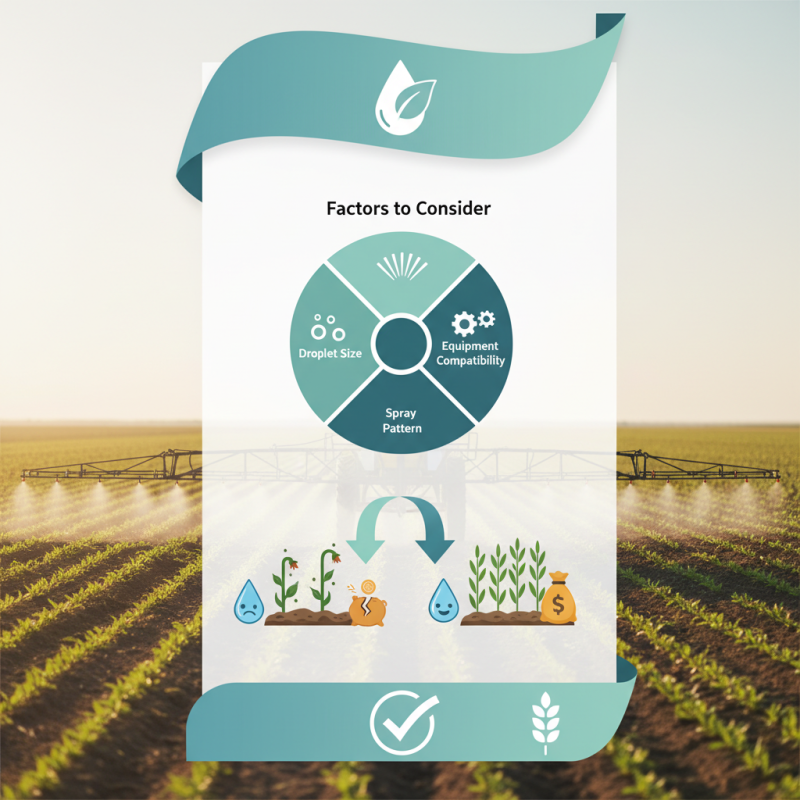
Farmers face various challenges while choosing the appropriate nozzles. The options can be overwhelming, and incorrect choices could lead to inefficient spraying. Factors to consider include droplet size, spray pattern, and compatibility with the equipment. These details significantly affect the overall performance of the sprayer.
It's essential to evaluate each nozzle's specifications carefully. Overlooking these aspects can result in wasted resources and poor crop health. Reflecting on previous choices may reveal patterns of mistakes in decision-making. Ultimately, the right boom sprayer nozzles ensure a healthier harvest and more productive farming practices.
Understanding Different Types of Boom Sprayer Nozzles
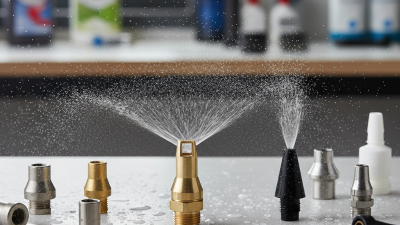
Choosing the right boom sprayer nozzles is essential for effective agricultural spraying. Different nozzle types have unique functions and characteristics. For instance, flat fan nozzles offer a wide spray pattern, perfect for covering large fields. These nozzles work well for herbicides and fungicides but may not be suitable for pesticides due to drift concerns.
Consider the operating pressure when selecting a nozzle. Higher pressure can create smaller droplets, which may drift more easily. Conversely, lower pressure leads to larger droplets that may not cover the target area adequately. Air induction nozzles mix air with the liquid to create larger droplets, reducing drift and ensuring more accurate application.
Farmers often find themselves torn between efficiency and precision. Some nozzles may clog easily, requiring frequent cleaning during use. This can disrupt spraying schedules and increase labor costs. Testing different types on a smaller scale can provide insights into what works best for specific crops and conditions. Finally, always reflect on past experiences to improve future choices. Adjusting the nozzle selection based on weather and crop type can lead to better outcomes.
How to Choose the Right Boom Sprayer Nozzles for Your Agricultural Needs?
| Nozzle Type |
Application Rate (L/ha) |
Spray Pattern |
Droplet Size |
Best Use Cases |
| Flat Fan Nozzle |
100-250 |
Flat |
Medium |
Herbicides, Pesticides |
| Cone Nozzle |
50-150 |
Cone |
Fine to Coarse |
Fungicides, Insecticides |
| Air Induction Nozzle |
150-300 |
Flat |
Coarse |
Windy Conditions, Drift Reduction |
| Twin Fan Nozzle |
100-220 |
Twin Fan |
Medium |
Row Crop Spraying |
| X-nozzle |
80-200 |
X-Shaped |
Fine to Coarse |
General Purpose |
Factors to Consider When Selecting Boom Sprayer Nozzles
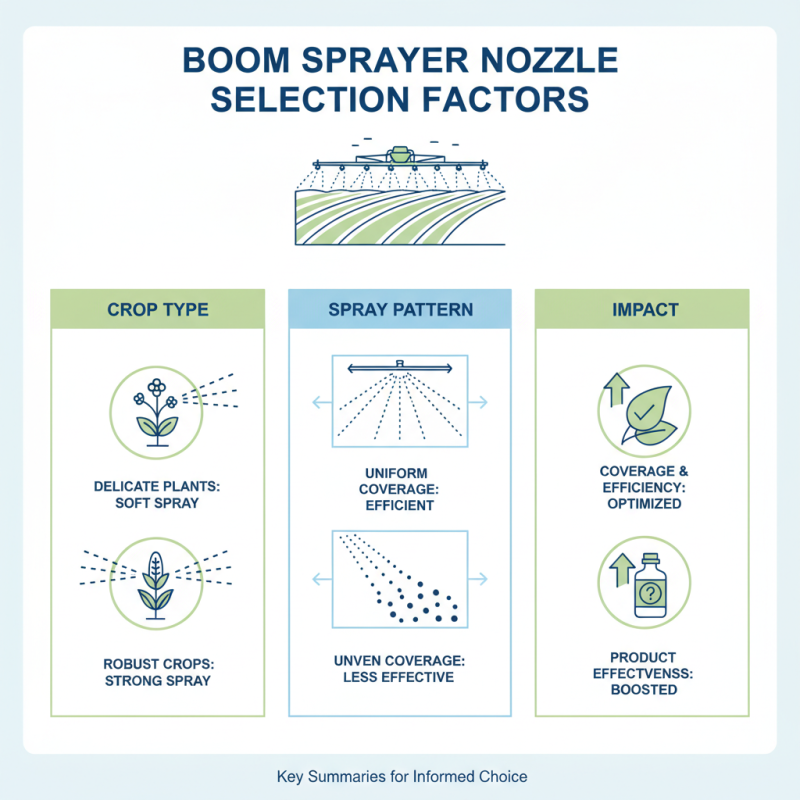
When selecting boom sprayer nozzles, several key factors come into play. The type of crop is a significant consideration. For instance, delicate plants require softer sprays, while more robust crops can handle stronger applications. It's crucial to evaluate the nozzle's spray pattern as well. Different patterns distribute liquids in unique ways. This can impact coverage and efficiency, influencing the effectiveness of your spraying.
Another factor is droplet size. Finer droplets can drift away, especially in windy conditions. Larger droplets are less prone to drift but may not provide adequate coverage. Test the nozzles under different conditions to see how they perform. Don't hesitate to make adjustments based on your field's requirements. Be mindful of your local environment and weather conditions when choosing the nozzle type.
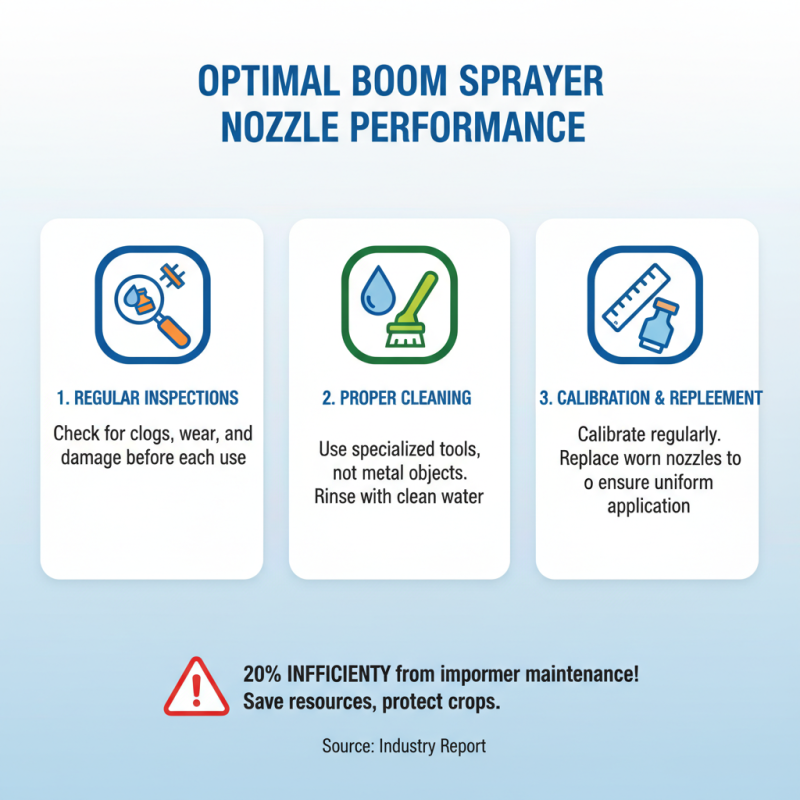
Finally, consider maintenance needs. Some nozzles are easier to clean and maintain than others. Complexity can lead to oversight, causing issues during spraying seasons. It's a balancing act between efficiency and convenience. Keeping track of wear and tear is vital for ongoing performance. Each decision impacts your overall success in pest control and crop management.
Evaluating Spray Patterns and Coverage for Agricultural Applications
When evaluating spray patterns for boom sprayers, precision is key. Different crops have unique requirements. For instance, fruit trees may need a fine mist. Row crops often benefit from a wider spray pattern. A study from the Agricultural Research Service indicates that a spray angle of 80 degrees can optimize coverage for taller crops. However, this angle may not suit all situations.
Coverage is also influenced by droplet size. Smaller droplets can enhance coverage but may drift easily. Conversely, larger droplets stay on target but can create uneven application. Research shows that a droplet size of 300 microns is often ideal for herbicide application. It minimizes drift while ensuring good coverage. However, adjustments might be necessary depending on wind conditions or crop type.
Reflecting on these factors is essential. Farmers must consider terrain and wind speed. Skipping thorough evaluations could lead to poor crop yields. It's vital to recalibrate and test different nozzles regularly. This iterative process ensures efficient use of resources. Ultimately, the best choice of nozzle balances efficiency and environmental impact.
Matching Nozzle Size and Flow Rate to Crop Needs
Selecting the right boom sprayer nozzles is crucial for optimizing agricultural productivity. Matching nozzle size and flow rate with crop needs can significantly impact effectiveness. According to industry reports, proper nozzle selection can improve application efficiency by up to 40%. This is particularly relevant when considering the specific growth stages of crops. For example, during the early growth phase, smaller droplets may be more beneficial for uniform coverage.
Nozzle size directly affects the flow rate and spray pattern. Larger nozzles may provide quicker coverage but can also lead to uneven distribution. Studies suggest that using a nozzle size too large can cause drift, wasting resources and risking nearby crops. Conversely, nozzles that are too small can create excessive pressure, resulting in premature wear. The challenge often lies in identifying the right balance.
Farmers should also consider the type of liquid being applied. Some chemicals require finer droplets for better adhesion to leaves. Data indicates that certain pest control products perform better when using specific nozzle types. It's vital to stay informed about advancements in nozzle technology as new options frequently emerge. Evaluating current practices regularly can lead to better decisions in nozzle selection.