Why You Should Choose an Angle Head Holder for Your Projects?
Choosing the right tools is crucial for any project. One essential tool to consider is the Angle Head Holder. This tool may seem simple, yet it offers significant advantages. It enhances precision, providing better angles for various tasks. The design of an Angle Head Holder allows for flexibility in tight spaces.
Many craftsmen have experienced the frustration of awkward angles. Often, traditional tools fall short in such situations. The Angle Head Holder addresses these challenges effectively. It empowers users to undertake complex projects with ease. However, not everyone sees the potential. Some may overlook its benefits, focusing on familiar tools instead.
Yet, those who utilize the Angle Head Holder often see a noticeable improvement. The ability to manage difficult angles can transform results. Imagine achieving tasks that once felt impossible. Embracing this tool may lead to unexpected creativity and solutions. It's a small change that can lead to profound results.
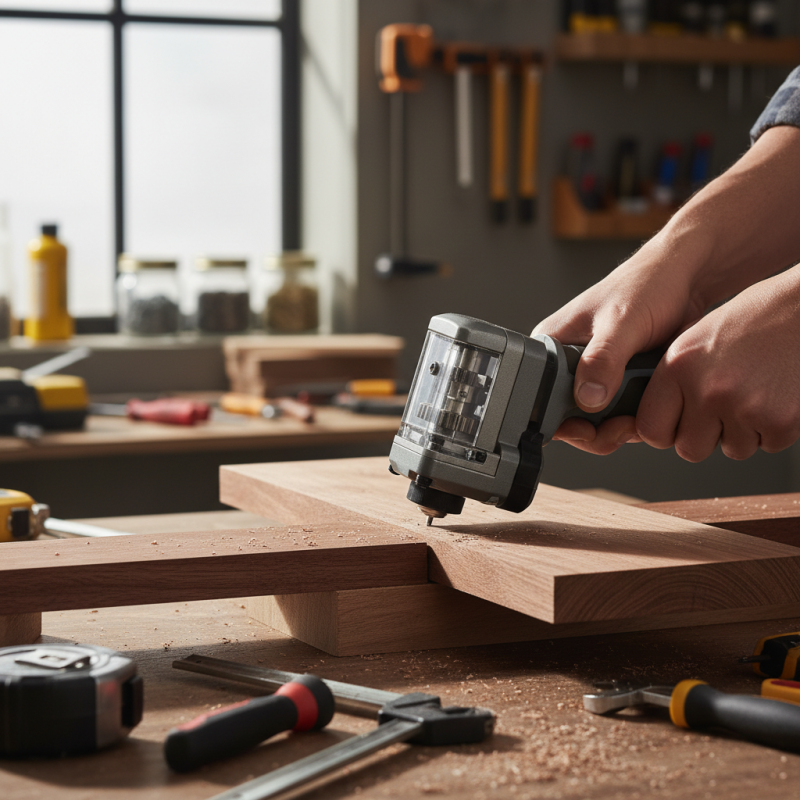
Why Angle Head Holders Are Essential in Precision Machining
Angle head holders play a crucial role in precision machining. They enable various cutting angles, improving versatility. By allowing tools to operate at different orientations, these holders maximize efficiency. Projects often require intricate designs that standard holders cannot accommodate. With an angle head holder, you can reach difficult spots with ease.
Machining parts with tight tolerances is challenging. Angle head holders address this by offering precise control. They help in creating complex geometries that traditional setups can’t achieve. However, using them effectively demands skill. Improper setup may lead to inaccuracies or tool wear. Careful consideration is essential when selecting the right angle for your work.
The ability to pivot and change angles can save time. Still, it's important to regularly assess your technique. Many machinists overlook the importance of regular calibrations. Over time, slight misalignments can affect the end product. Reflecting on your process can unveil areas for improvement. Embracing this technology can elevate your projects to new levels.
Key Advantages of Using Angle Head Holders in Manufacturing
Angle head holders are increasingly popular in manufacturing for several reasons. Their design allows for intricate machining tasks in tighter spaces. This feature improves efficiency by enabling operators to work with limited setups. The flexibility they offer can be a game-changer when accessing difficult angles during production.
Moreover, angle head holders enhance precision in various applications. This improved accuracy can lead to a significant reduction in errors. Operators often find that the added control makes a noticeable difference. However, not every project may benefit equally from this tool. Each scenario requires careful consideration of its suitability, which is where some reflection might be needed.
Adopting angle head holders can also mean a learning curve. Some workers may initially struggle with new techniques. There may be mistakes when training on this tool. These challenges are part of the process but are essential for long-term improvement. Embracing this technology could ultimately streamline workflows and boost overall productivity.
Industry Statistics on Productivity Improvements with Angle Head Holders
Angle head holders are becoming vital in various industries. Recent statistics reveal that using angle head holders can boost productivity by up to 30%. This improvement is significant for companies looking to enhance their operational efficiency.
Their versatility is one reason for this increase. Angle head holders allow for various machining angles, reducing the need for multiple setups. This capability minimizes downtime, allowing teams to focus on production. However, not everyone realizes they can maximize these benefits.
Some may resist change due to the initial investment. Others might underestimate the learning curve involved in adopting new equipment. Yet, improved productivity can outweigh these concerns. In the long term, businesses that embrace angle head holders often see not just higher output, but also better quality in their projects. A thoughtful approach to integration can yield remarkable outcomes.
Productivity Improvements with Angle Head Holders
Types of Angle Head Holders and Their Applications in Engineering
Angle head holders are essential tools in engineering, enhancing precision and versatility across various projects. There are several types of angle head holders, each serving specific applications. For instance, adjustable angle head holders allow for customized angles, making them ideal for complex machining tasks. According to industry reports, these tools can improve workflow efficiency by up to 30% in horizontal milling operations.
Fixed angle head holders, on the other hand, are designed for repetitious tasks. They provide consistency, ensuring that every part produced meets exact specifications. In automotive manufacturing, using fixed angle head holders can reduce cycle times significantly, contributing to lean manufacturing practices. Research shows that companies utilizing these tools experience up to a 25% reduction in material waste.
However, choosing the right angle head holder isn't always straightforward. Some engineers might overlook the importance of compatibility with existing machinery. This oversight can lead to inefficiencies and unnecessary costs. Continuous learning and assessment of tool performance are crucial for optimal results. Engineers need to reflect on their tool choices regularly. Professional development and training can help them understand the nuances of each type and application.
Why You Should Choose an Angle Head Holder for Your Projects? - Types of Angle Head Holders and Their Applications in Engineering
| Type of Angle Head Holder | Description | Applications | Advantages |
| Fixed Angle Head Holder | Holds tools at a fixed angle for consistent operations. | Milling, drilling, and other machining tasks. | High precision and repeatability. |
| Adjustable Angle Head Holder | Allows adjustment of the angle for various operations. | Complex machining, angled cuts, and diverse tasks. | Versatility in multiple applications. |
| Multi-Axis Angle Head Holder | Holds tools in multiple axes for intricate designs. | 3D machining, complex geometries, and molds. | Enhances creativity and design flexibility. |
| Tool Holder with Angle Head | Integrates tool holding and angled functionality. | Combining operations to reduce tool changes. | Increases efficiency and reduces time in setup. |
Factors to Consider When Selecting an Angle Head Holder for Your Needs
When selecting an angle head holder, consider several factors. Size is crucial. The holder should fit your tool requirements precisely. A holder that is too large may be unwieldy. Conversely, a tiny holder may not provide adequate support. Evaluate the range of angles available too. Some tasks may require more versatility than others. A flexible holder can make your work easier in tight spaces.
Material quality is also important. A sturdy construction can withstand stress during operation. However, it can add weight. Balance this against the need for durability. Lightweight materials might be easier to handle, but they could compromise strength. Check user reviews to gauge reliability. Personal experiences often highlight performance issues that specifications do not capture.
Lastly, think about practicality in your workflow. How often will you use this tool? A more durable option may cost more upfront but save you money in the long run. Consider how easy it is to switch out heads. Efficiency can impact productivity significantly. Reflect on your needs and the potential learning curve. Choosing the right angle head holder is about finding the balance that works for you.
