
China Best Food Inspection Metal Detector Supplier?
Choosing a China Best Food Inspection Metal Detector Supplier requires more than comparing prices and product photos. A reliable supplier should demonstrate engineering experience, stable manufacturing, documented testing, and responsive technical support. The right Food Inspection Metal Detector must suit the product, packaging, production speed, and factory environment.
Mark Green, a product inspection specialist, has stated, “Detection performance depends on the complete inspection process, not the detector alone.” This practical view matters on a busy production line. A detector may inspect wrapped bread, frozen meat, biscuits, or powdered foods, but each product creates different signals. Moisture, salt, temperature, foil packaging, and product size can affect sensitivity. Small details matter.
Look for clear test-piece procedures, stainless-steel construction, hygienic design, reject confirmation, and data records. Ask the supplier to explain detection limits under real operating conditions. A trustworthy manufacturer should welcome factory trials instead of promising perfect results from a catalogue. That is important.
Experience also includes what goes wrong. False rejects can waste cartons. Poor installation can create unstable readings. Operators may skip testing during a rushed shift. These weaknesses deserve honest discussion, not polished marketing language. A capable Chinese supplier should provide installation guidance, operator training, calibration support, and accessible spare parts.
This guide examines supplier qualifications, machine performance, compliance documentation, after-sales service, and total ownership cost. It also considers an uncomfortable question: is the cheapest detector actually economical when production interruptions begin? Reliable inspection is not a single purchase. It is a controlled, repeatable process.
What Is a Food Inspection Metal Detector?
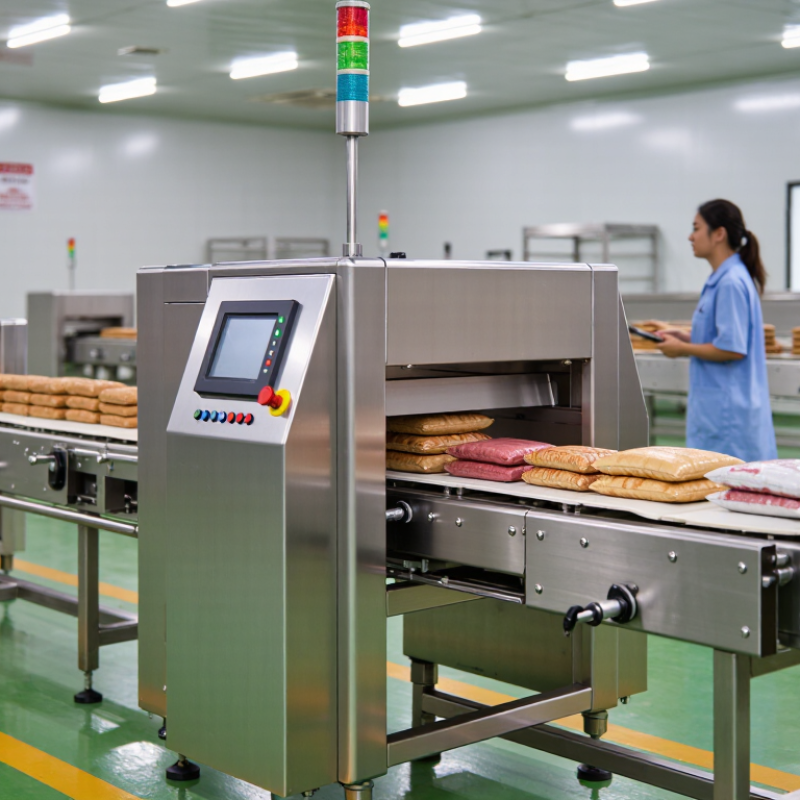
A food inspection metal detector is an inline safety device that identifies unwanted metallic particles in food products. It creates a controlled electromagnetic field inside an inspection aperture. When a metal contaminant passes through, the field changes and triggers a rejection signal. The detector may identify ferrous steel, non-ferrous metals, and stainless steel, depending on its design and settings.
In production practice, installation matters as much as detector sensitivity. A unit should match the conveyor speed, product size, packaging material, and expected moisture level. Wet or salty foods can create a product effect, causing false alarms. Regular testing with certified test pieces helps verify detection performance during each production shift. Operators should record results, rejected items, and corrective actions for traceability.
Small details matter.
A reliable supplier should explain aperture dimensions, detection limits, cleaning procedures, and service support clearly. The strongest specifications can still fail when the belt vibrates or the sensor is poorly aligned. This is an easy point to overlook. Product trials are therefore essential before purchase, especially for frozen, fresh, or foil-wrapped foods. No detector is perfect, and settings may need adjustment as recipes, temperatures, and packaging change. That practical limitation deserves honest discussion, not polished promises.
China Best Food Inspection Metal Detector Supplier? - What Is a Food Inspection Metal Detector?
| Inspection Dimension | Typical Data or Specification | Why It Matters in Food Inspection |
|---|---|---|
| Equipment Definition | An inline inspection system that detects metallic contaminants in food products as they pass through an electromagnetic field. | It helps prevent physical contamination from reaching consumers and supports documented food-safety controls. |
| Common Contaminants Detected | Ferrous metals, non-ferrous metals such as aluminum and copper, and many grades of stainless steel. | Different metals produce different signal strengths, so the detector must be tested with suitable reference pieces. |
| Detection Principle | A transmitter coil generates an electromagnetic field; a contaminant changes the field balance, and the receiver triggers an alarm or reject action. | The principle allows non-contact inspection without cutting or damaging the product. |
| Typical Operating Frequencies | Approximately 30–900 kHz, depending on the product, detector design, aperture size, and required sensitivity. | Lower frequencies can be useful for conductive or wet products, while higher frequencies may improve sensitivity for many dry products. |
| Typical Sensitivity Range | Common production systems may detect approximately 0.8–2.5 mm ferrous test pieces; non-ferrous and stainless-steel performance is product- and aperture-dependent. | Sensitivity is not a universal fixed value. Smaller apertures and stable products generally allow better performance. |
| Aperture Size | Selected according to product dimensions; typical openings range from about 200 × 100 mm to more than 600 × 300 mm. | The smallest practical aperture usually provides better detection capability, while oversized openings can reduce sensitivity. |
| Product Forms | Packaged foods, bakery products, meat, seafood, frozen foods, snacks, grains, powders, liquids, and products in trays or cartons. | The conveyor, pipeline, or gravity-feed configuration should match the product form and production process. |
| Typical Conveyor Speed | Approximately 20–60 m/min for many conveyor applications, with the actual limit determined by product spacing and reject timing. | Inspection reliability depends on maintaining stable product flow and ensuring that the reject device can respond accurately. |
| Construction Materials | Food-contact and exposed structural areas commonly use stainless steel, often grade 304; grade 316 may be selected for more corrosive environments. | Smooth, corrosion-resistant surfaces are easier to clean and help reduce hygiene risks. |
| Washdown Protection | Food-processing models may use sealed enclosures with IP65, IP66, or IP69K protection, depending on the cleaning method. | The protection level should match water pressure, temperature, cleaning chemicals, and sanitation frequency. |
| Reject Mechanisms | Air blast, push-off arm, swing gate, drop-down belt, diverter, or stop-and-alarm systems. | The mechanism should remove only the affected product and prevent contaminated items from re-entering the accepted product stream. |
| Product Effect | Non-ionizing electromagnetic inspection; it does not use X-rays and does not make food radioactive. | It is suitable for routine inspection of packaged and unpackaged food when installed and operated correctly. |
| Product Effect Factors | Moisture, salt, temperature, product orientation, packaging foil, vibration, and product consistency can influence the signal. | Wet or salty foods may create a product effect that requires frequency selection, learning, and stable operating conditions. |
| Testing and Verification | Use certified or traceable ferrous, non-ferrous, and stainless-steel test pieces at defined intervals and locations. | Routine performance checks demonstrate that the critical control or preventive control remains effective. |
| Data and Traceability | Useful functions include event logs, password protection, user access levels, product recipes, alarm records, and test-result storage. | Electronic records support audits, corrective actions, trend analysis, and production accountability. |
| Hygienic Design Considerations | Open-frame construction, rounded corners, limited crevices, removable conveyor parts, and tool-free access are commonly preferred. | A hygienic design improves cleaning effectiveness and reduces the risk of microbial buildup. |
| Selection Criteria | Product type, maximum product size, packaging material, line speed, target contaminant, cleaning method, available space, and required records. | A correctly specified detector provides more reliable inspection than choosing equipment based only on nominal sensitivity. |
Note: Actual sensitivity, speed, aperture dimensions, and washdown capability must be confirmed through product trials and on-site validation because performance varies with product characteristics and installation conditions.