What Are the Best Types of Silver Ink for Screen Printing?
Silver ink can give a printed design a bright, dimensional finish, but “silver” does not describe one uniform product. Silver Ink For Screen Printing may rely on metallic flakes, reflective pigments, or specialty blends, and each behaves differently on press. The right choice depends on the fabric or paper, the design, and the level of shine you want. Small details matter. A sharp, reflective logo on dark cotton may need a different ink and setup from a subtle sheen on light-colored paper.
When comparing options, consider particle size, opacity, mesh count, and the ink’s recommended curing conditions. Larger metallic particles can create stronger sparkle, but they may limit detail or require a more open mesh. A white underbase can improve contrast on dark fabric, though it may change the final feel. Test before committing. Print a small swatch on the actual substrate, then assess coverage, hand feel, and appearance under different lighting. Follow the ink maker’s technical data sheet for printing and curing guidance; product formulas vary. It is easy to focus only on shine and overlook wash durability or fine-line detail. That trade-off deserves a closer look. A practical comparison starts with the finish you need, then checks whether the ink and process can deliver it consistently.
What Silver Ink Does in Screen Printing
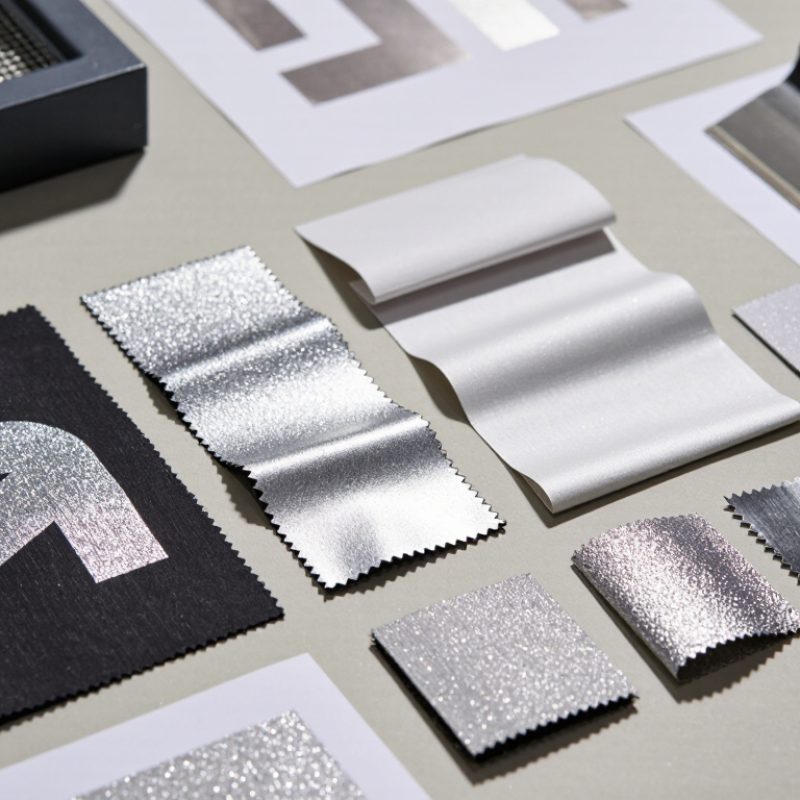
Silver ink gives a screen print a metallic accent that ordinary gray ink cannot reproduce. Its reflective particles catch light as the viewing angle changes. The result may look bright on a folded label, yet softer on a flat cotton shirt. Not quite a mirror. Most silver prints have a textured, slightly grainy shine rather than a chrome-like finish.
The ink can help lettering, borders, and small illustrations stand out without adding color. On dark fabric, a suitable opaque formula can create a clear silver mark. On pale or absorbent material, the same ink may look muted. The surface matters. A smooth, coated substrate often shows sharper reflections than rough fabric, where fibers can break up the metallic layer. Printers should check the ink’s recommended mesh, deposit, and curing conditions, then test on the actual material. A sample viewed under shop lights may look different outdoors.
Silver ink also changes the feel of a design. A thin layer can preserve fine details, while a heavier deposit may appear brighter but feel stiffer. That trade-off is easy to underestimate. Metallic particles can settle, so gentle, consistent mixing helps keep prints even. Still, expectations need adjusting: silver ink does not fix weak contrast or poor artwork. A small test print can reveal dull patches, clogged details, or a finish that feels too rough before a full run.
What Are the Best Types of Silver Ink for Screen Printing?
Metallic inks are typically chosen for a reflective appearance, while conductive silver inks are formulated to carry electrical current. The 1–5 scores show typical application emphasis, not standardized test results; actual performance varies by formulation, substrate, and curing conditions.
How Silver Ink Types Differ in Finish and Performance
Silver inks can look similar on the screen, yet curing changes their finish and function. Decorative formulations use reflective flakes or pigments to create bright, satin, or brushed effects. Flake alignment matters. A thicker deposit may look richer, but can soften fine details or crack when the fabric bends. Test the ink on the actual garment or substrate, not just a smooth sample card.
Conductive silver inks are designed around electrical pathways, not mirror-like shine. Their silver particles connect as the binder cures, so particle shape, film thickness, and curing conditions affect resistance. NIST reference data places pure silver’s resistivity at about 1.59 × 10⁻⁸ Ω·m at 20°C; a printed film typically measures higher because particles and binder interrupt current flow. That gap matters. Compare samples by sheet resistance after the specified cure, rather than judging conductivity by appearance.
Adhesion and flexibility also separate ink types. ASTM D3359 uses 0–5 classifications for tape-test adhesion, while a simple bend test can reveal cracking that a glossy finish hides. For soft fabrics, a conductive ink may feel stiff; for a decorative print, conductivity may be irrelevant. One imperfect point: mesh, squeegee pressure, and curing can shift results, so published values may not transfer directly to a production run. Test both finish and performance on the intended material.
How to Choose Silver Ink for a Specific Material
Choosing silver ink starts with the surface, not the shine. Cotton absorbs ink, so a flexible textile formula can help preserve a soft hand. On dark fabric, an opaque underbase may make silver look brighter. Check whether the ink needs heat curing, and test the fabric after washing. Small details matter.
Paper and card usually need less flexibility but can buckle if the ink deposits too much moisture. A quick-drying formula may suit coated stock, while uncoated paper can absorb binder and dull the metallic finish. Plastics, glass, and metal are less forgiving. Their smooth surfaces often need an ink formulated for that material, plus careful cleaning and an adhesion test. Let it cure fully before judging the result.
Metallic flakes can clog fine mesh, so match the mesh opening to the ink maker’s particle-size guidance. Print a small swatch using the actual screen, squeegee, and curing setup. Rub it, bend it, or wash it as the finished item will be used. I still treat one successful test as a starting point, not a guarantee. A slightly imperfect sample can reveal more than a perfect-looking print on the wrong material.
How to Print and Cure Silver Ink Successfully
Silver ink can look brilliant in the container and dull on fabric. The result depends on the ink system, substrate, and deposited film, so test the full combination before a production run. Stir gently until the metallic particles are evenly suspended; avoid whipping in air. A suitable mesh should let enough ink pass while keeping edges clean. Too fine, and the print may look thin. Too coarse, and detail can soften.
Use steady squeegee pressure and a consistent angle. Make a small test print, then inspect it under the lighting where customers will see it. Metallic finishes change with viewing angle. Keep the screen flooded between strokes, but do not leave a heavy deposit that bridges fine details. I have found that a print that looks bright while wet can dry flatter than expected. That first impression can mislead.
Curing needs careful verification. Follow the ink maker’s technical data for the substrate, time, and temperature, then measure the ink film itself with an appropriate probe; dryer settings alone do not confirm a full cure. Let the print cool before checking stretch, wash durability, and adhesion. Check again after laundering. If the finish cracks or rubs off, adjust the deposit or cure conditions and retest. Small changes matter. Metallic inks can be less forgiving than standard colors.
