How to Choose the Best Towel Display Rack for Your Store
Choosing a Towel Display Rack is not just a matter of picking an attractive frame. The right rack helps shoppers see colors and textures, reach products comfortably, and compare sizes without disturbing neatly folded stacks. It also needs to suit the store’s floor space, sales volume, and daily restocking routine. A display that looks elegant in a product photo may feel cramped beside a busy aisle.
Consider the details. Will the shelves support thick bath towels without sagging? Can staff replenish stock quickly? Do the rack’s height and layout keep towels visible from across the shop? Metal can offer a crisp, durable look; wood may bring warmth, but its finish and upkeep deserve a closer look. No rack is perfect. A compact design can save floor space yet leave less room for browsing—a trade-off worth testing in your actual store.
A trustworthy expert quotation should come with a verifiable source. None was provided here, so I won’t invent a name or attribute a sentence to a supposed Towel Display Rack specialist. Instead, this guide focuses on practical checks retailers can make: measure the footprint, inspect the joints, test access with a full stack, and consider how the display will look after a busy afternoon. Small details matter. The best choice is the one that supports both the towels and the way your customers shop.
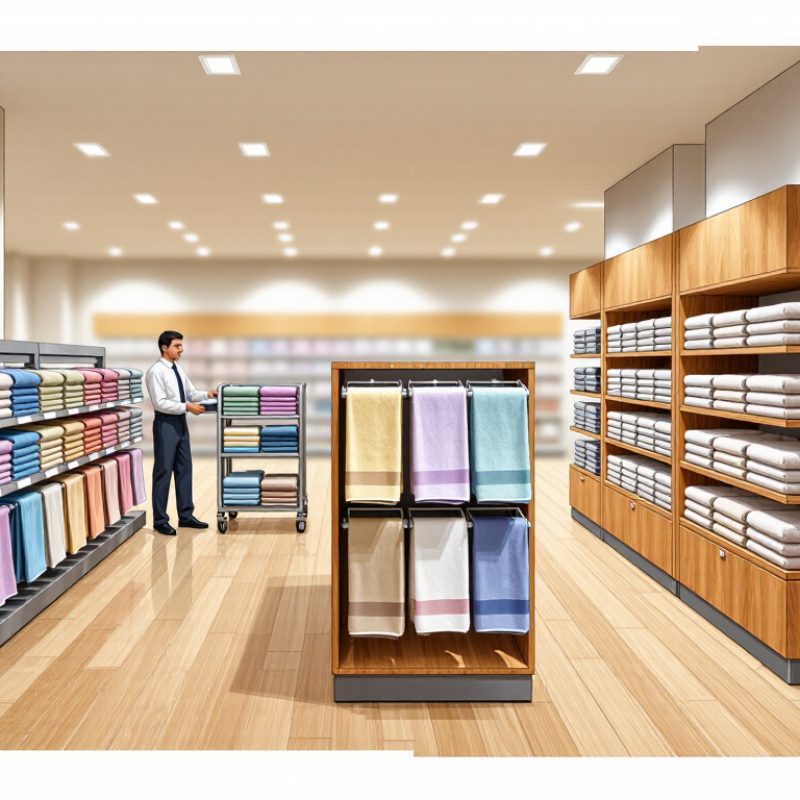
Define Your Towel Assortment by SKU, Folded Size, and GSM
Define your towel assortment before choosing a rack. List each SKU by color, size, and intended use, then record its folded width and height. A bath sheet may need a wider shelf than a hand towel, even when both are folded neatly. GSM matters, too: a 450 GSM towel usually feels lighter and dries faster than a dense 650 GSM option. These are useful buying distinctions, not universal rules; fabric and construction affect feel.
Grand View Research’s Bath Towels Market Size, Share & Trends Analysis Report estimates the global market at USD 11.3 billion in 2022, with projected growth through 2030. That broad market signal supports offering distinct price and comfort tiers, but it does not tell you how many SKUs your store needs. Start with a focused range, then track sell-through by size and weight. A tidy display can still hide weak choices.
Tips: Measure folded samples, not catalog dimensions. Test one shelf with your heaviest towel stack; it may sag or look cramped. Label GSM clearly, and group similar sizes together so shoppers can compare quickly. Start small. Recheck the plan after a few weeks—your preferred layout may not match what customers actually pick up.
Calculate Rack Capacity Using Rated Loads and Packaged Towel Weight
Choosing a towel display rack starts with the load figures, not its appearance. Check the rated capacity for the entire rack and for each shelf or bar. These limits may differ. A rack rated for 30 kilograms overall could still have shelves limited to 8 kilograms each.
Weigh a packaged towel, including its plastic wrap or paper band. If one pack weighs 0.8 kilograms, a shelf rated for 8 kilograms holds 10 packs by calculation. That is a ceiling, not always a practical target. Leave some margin. Shoppers pull towels forward, and uneven stacks can concentrate weight near one edge. Keep heavier bundles low and spread them across the shelf.
For a simple estimate, divide the rack’s rated load by the weight of one packaged towel, then check each shelf separately. Use the lower result. For example, a 30-kilogram rack may appear to hold 37 packs at 0.8 kilograms each, but shelf limits could reduce that number. Weigh several packs if towel sizes or packaging vary; one sample may mislead you. Recheck the arrangement after restocking. A neat display can still be overloaded.
Compare Rack Styles by Footprint, Material, Mobility, and Refill Access
A towel rack should fit the way customers move through your store, not just the space available. Measure the display area and nearby aisles before comparing styles. A slim floor rack may suit a narrow aisle, while a countertop unit can work near a checkout. Wall-mounted racks save floor space, but they need a suitable wall and a reachable refill position. Measure twice.
Material affects both appearance and upkeep. Coated metal can suit busy sales floors, while wood may bring a warmer look but show scuffs more easily. Check joints, edges, and the finish where damp towels might rest. I would not assume the largest rack is automatically best; that is an easy mistake when planning for full stock.
Tips: Choose a rack you can restock without moving other fixtures. If staff must lift or turn it, check its weight and mobility before buying. Lockable wheels can help keep a rack steady during browsing. Test one refill with a full towel bundle; awkward access is easy to miss on a floor plan.
How to Choose the Best Towel Display Rack for Your Store — Compare Rack Styles by Footprint, Material, Mobility, and Refill Access
| Rack Style | Typical Footprint | Common Materials | Mobility | Refill Access | Best Suited For |
|---|---|---|---|---|---|
| Freestanding ladder rack | About 18–30 in. wide × 12–20 in. deep; uses vertical space. | Steel or aluminum frame; wood or metal bars. | Usually stationary; some models have wheels. | Open sides make it easy to add folded towels to each bar. Check that stacked towels cannot slide off. | Small floor areas, folded towel stacks, and displays where a vertical presentation is preferred. |
| Tiered floor display | About 18–36 in. wide × 18–30 in. deep; footprint varies with shelf count. | Powder-coated steel, chrome-plated metal, or wire shelving. | Generally fixed; caster-equipped versions can be repositioned. | Front-facing shelves allow quick restocking. Confirm shelf spacing accommodates the folded towel size. | Stores that need several clearly separated towel styles, colors, or sizes. |
| Rolling utility or garment rack | About 24–48 in. wide × 18–24 in. deep; allow extra clearance for turning. | Steel or aluminum tubing, often with plastic or metal casters. | High when fitted with locking casters; locks help prevent unintended movement. | Typically open from multiple sides, so staff can replenish towels from the aisle or back of the display. | Promotions, seasonal displays, and stores that regularly change floor layouts. |
| Wall-mounted rack or shelf | Commonly 24–48 in. wide, projecting about 8–16 in. from the wall; no floor footprint. | Steel, aluminum, wood, or a combination of materials. | Fixed in place after installation. | Usually replenished from the front. Leave enough space above or beside the unit to handle towel stacks. | Stores with limited floor space and an available wall area. Select suitable wall fixings and follow the rack’s load rating. |
| Countertop or tabletop stand | About 10–20 in. wide × 8–16 in. deep; verify the available counter area. | Wire or sheet metal, acrylic, wood, or mixed materials. | Easy to move by hand; normally has no wheels. | Open-top or front-access designs are simple to refill, but capacity is limited by the counter space and stand height. | Small towels, folded hand towels, add-on merchandise, or compact point-of-sale displays. |
Check Accessibility Against ADA Reach Ranges of 15–48 Inches
Place the towels customers reach for most between 15 and 48 inches above the finished floor. The 2010 ADA Standards for Accessible Design, Section 308, gives this range for unobstructed forward reach. Measure to the usable towel or hook, not just the rack’s frame. Small detail. It matters.
The U.S. Access Board’s technical guide explains that a deep counter or shelf can reduce the maximum reach. Where an obstruction is more than 20 inches deep, the forward reach limit drops to 44 inches. A bulky display shelf can therefore turn a compliant-looking rack into a hard-to-use one. Check the actual approach, with towels loaded and nearby fixtures in place.
Keep popular sizes on reachable hooks, and avoid placing every sample on the highest rail. Leave a clear path to the display so customers using mobility devices can approach it. These measurements are a useful design benchmark, but they do not answer every layout question. I’d test the rack in the real aisle; a plan drawing can miss an awkward turn or a towel that hangs too low.
Plan Aisles Around the ADA 36-Inch Minimum Clear-Width Benchmark
Plan the towel display around a clear path, not just the rack’s footprint. For many accessible routes, the ADA Standards set 36 inches as a minimum clear width, subject to defined exceptions. Treat that as a starting benchmark, and confirm the requirements that apply to your store and location. Measure the narrowest usable space between obstacles, including shelves, checkout fixtures, and nearby displays. A rack that fits on a floor plan may still leave too little room once towels hang over its edges.
Keep the aisle open when shoppers browse. Folded towels can slide outward; display arms and price signs can also reduce clearance. Place the rack where customers can reach products without standing in the main travel path. Small details matter. Measure again after stocking, then check the route with a cart or mobility device if practical. Aisle width alone does not address every accessibility need; turns, doorways, and changes in level may matter too. It is tempting to leave exactly 36 inches, but that leaves no cushion for shifted merchandise or daily clutter. A little extra space is often more dependable.
How to Choose the Best Towel Display Rack for Your Store
Plan aisles around the ADA 36-inch minimum clear-width benchmark.
These illustrative calculations start with a 48-inch aisle and subtract the display’s projection from one side. The ADA minimum clear width is 36 inches; measure the unobstructed passage between the display and the opposite obstruction. A 12-inch projection leaves exactly 36 inches, while an 18-inch projection leaves only 30 inches.