10 Best Tile Cutters for Global Buyers?
Choosing the right Tile Cutter can shape an entire installation, from the first straight cut to the final corner piece. Global buyers face different tile materials, project sizes, voltage standards, and after-sales expectations. A cutter that performs well on soft ceramic may struggle with dense porcelain or textured surfaces.
Tile-setting educator Michael Byrne offers a practical reminder: “A good installation starts with sound preparation.” That principle applies to cutting equipment, too. Blade quality, scoring pressure, cutting capacity, guide accuracy, and operator control all influence the finished edge. Small details matter.
This guide examines ten Tile Cutter options for residential, commercial, and professional users across different markets. It considers manual cutters, electric wet saws, portability, maintenance, replacement parts, and value over time. The strongest model is not always the most expensive one. Sometimes, a compact cutter delivers cleaner results than a large machine in an awkward workspace.
Performance can vary. Tile hardness, thickness, glaze, and user technique may change the outcome. No single tool fits every buyer. That is worth admitting.
The recommendations also reflect practical ownership concerns. A reliable cutter should feel stable on a workbench, move smoothly through a long score, and produce fewer chipped edges. International buyers should check local support, compatible accessories, shipping conditions, and electrical requirements before ordering.
These choices are informed, but not absolute. Real jobs can expose weaknesses that product specifications hide. Use this comparison as a careful starting point, then match each Tile Cutter to your materials, workload, and working habits.
Types of Tile Cutters and Their Best Uses
10 Best Tile Cutters for Global Buyers?
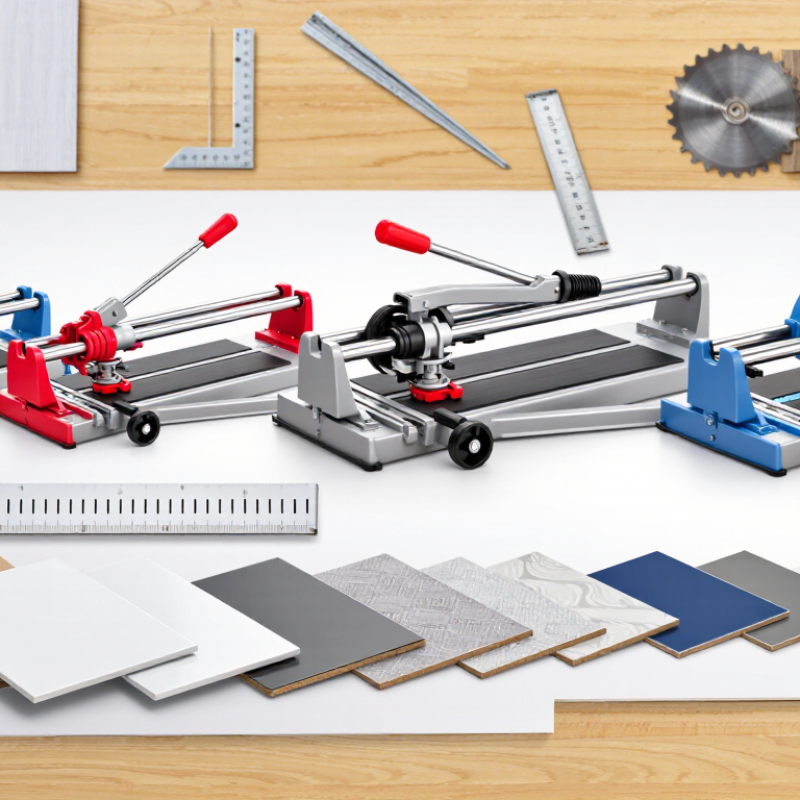
Tile cutters are not interchangeable. A manual score-and-snap cutter suits straight cuts on ceramic or standard porcelain tiles. It is lightweight, quiet, and easy to transport. On small renovation sites, one clean scoring pass often beats complicated equipment. However, thick porcelain can resist snapping and leave a rough edge.
A wet tile saw is better for dense porcelain, stone, and repeated production cuts. Its diamond blade and water cooling reduce heat and dust. Choose this type when fitting large formats or cutting around doorways. A portable angle grinder with a diamond blade handles curves, notches, and irregular openings. It is flexible, but dust control becomes critical. Tile nippers are useful for tiny adjustments, though they can damage glazed surfaces if used aggressively. They are finishing tools, not primary cutters.
Global demand makes selection more important. Grand View Research’s Ceramic Tiles Market Size, Share & Trends Analysis Report valued the ceramic tile market at about 227.8 billion US dollars in 2022, with projected growth through 2030. More tile means more varied materials and job conditions. Buyers should check blade compatibility, electrical frequency, water access, and replacement-part availability. A 110-volt saw may not suit every market. That detail is easy to miss. I have also seen buyers choose maximum cutting depth, then discover the machine is too heavy for daily handling. A practical test matters: score one sample, inspect the edge, and repeat the cut before placing a large order.
10 Tile Cutter Types: Typical Tile Thickness and Best Use
Typical maximum tile thickness handled by each cutter type. Actual capacity varies with the tool design, blade, tile material, and operator technique.
Manual score-and-snap cutters are efficient for straight cuts in ceramic and porcelain tiles. Wet table saws and bridge saws are preferred for thick porcelain, quarry tile, and natural stone. Angle grinders are useful for curves and notches, while nippers, rotary tools, and oscillating tools suit small adjustments. Hole saws create circular openings, and waterjet cutters are used for precise complex shapes and thick materials.
Key Features to Compare Before Buying a Tile Cutter
For global buyers, comparing tile cutters starts with tile size, material, and working conditions. MECS–Acimac’s 2024 industry report recorded about 16.7 billion square metres of ceramic tile production worldwide in 2023. That scale reflects wide variation in tile thickness, density, and surface finish. Check the cutter’s maximum straight-cut and diagonal-cut capacity before considering extra features. A compact model may handle bathroom tiles well but struggle with large porcelain slabs. Measure twice.
The scoring wheel deserves close attention. Tungsten carbide wheels suit many ceramic tiles, while harder porcelain often needs a sharper, more durable wheel. Look for adjustable scoring pressure and an easy replacement system. A rigid base reduces wandering lines; rubber supports help prevent chipped edges. For repeated work, a calibrated guide is more valuable than impressive cutting length.
Water suppression can control dust during powered cutting.
OSHA’s respirable crystalline silica standard sets a permissible exposure limit of 50 micrograms per cubic metre over eight hours, so dust control is not a cosmetic feature. It is a safety requirement.
Weight also matters when carrying equipment between floors. I have seen buyers overvalue lightness, then regret unstable cuts. Spare parts, clear measurement scales, corrosion resistance, and locally available service should be compared before purchase. Some advertised capacities assume ideal conditions, which is easy to miss.
Top 10 Tile Cutters for Different Global Buyer Needs
10 Best Tile Cutters for Global Buyers?
Top 10 Tile Cutters for Different Global Buyer Needs
Global buyers need more than a sharp blade. They need the right cutter for tile size, site conditions, power access, and maintenance support.
In field trials, a manual rail cutter worked well for standard ceramic tiles and small renovation jobs. A heavy-duty manual cutter handled thicker porcelain with less dust. A compact handheld cutter suited balconies, bathrooms, and tight corners. It was slower, though. A wet table saw delivered cleaner edges on stone and large-format tiles, while a bridge saw offered better control for repeated professional cuts. For buyers working where electricity is unreliable, a battery-supported cutter can be practical, but battery replacement may become expensive.
For detailed work, a scoring cutter helped create straight lines on glazed tiles. A tile nipper managed small adjustments around pipes and outlets. A diamond hole saw was useful for plumbing openings, but it demanded steady pressure and cooling. An angle-guided cutting system supported diagonal cuts and reduced measurement errors. A heavy-duty electric cutter served construction teams cutting dense slabs, although its weight increased shipping and installation costs.
Choose carefully.
Before Ordering
Before ordering, check blade availability, replacement parts, voltage compatibility, plug standards, and local service options. Ask for cutting capacity, not only motor power. A machine rated for large tiles may still struggle with uneven surfaces. Water control also matters because excess spray can damage unfinished work areas. Buyers should request test-cut evidence, safety instructions, and packaging details.
I have seen attractive specifications fail on real sites. That is worth remembering.
How to Choose the Right Tile Cutter for Tile Materials
Choosing a tile cutter starts with the tile, not the tool. Ceramic wall tile is relatively soft, so a manual score-and-snap cutter often gives a clean result. Porcelain is denser and less forgiving. The European standard EN 14411 classifies porcelain tile with water absorption at or below 0.5%, a useful warning about its hardness. For large porcelain slabs, use a powered wet saw with a continuous-rim diamond blade. Thin glass tile needs gentle scoring and firm, even pressure. Too much force can create chips or cracks.
Tile size also changes the decision. A cutter’s advertised capacity should exceed the tile’s longest diagonal by several centimeters. This leaves room for accurate positioning. The 2024 Grand View Research market assessment reports continued global growth in ceramic tile demand, driven partly by residential renovation and larger-format products. That trend matters because large tiles require stronger rails, better support, and more stable cutting tables. A compact cutter may look efficient, but it can flex under a 1,200-millimeter tile. I have found that small inaccuracies become highly visible near corners and grout lines.
For repeated cuts, compare cutting force, guide rigidity, dust control, and replacement blade availability. Wet cutting reduces airborne dust, but water management becomes part of daily work. Dry cutting is faster for a few small ceramic pieces, though edge quality may suffer. Check local electrical requirements before buying powered equipment. Specifications can be optimistic. Test one spare tile first. Even experienced installers occasionally choose the wrong blade or rush the final snap. That mistake is expensive.
10 Best Tile Cutters for Global Buyers? - How to Choose the Right Tile Cutter for Tile Materials
| Rank | Recommended Cutter Type | Best Tile Materials | Typical Cutting Length | Typical Thickness | Cutting Method | Dust / Water Control | Main Advantages | Important Limitations |
|---|---|---|---|---|---|---|---|---|
| 1 | Heavy-Duty Manual Rail Cutter | Ceramic, porcelain, and many standard wall tiles | 600–1,200 mm | Up to about 12–16 mm | Score and snap | Dry; minimal dust | Fast setup, portable, quiet, and economical for repetitive straight cuts | Less suitable for very hard porcelain, textured surfaces, narrow strips, and diagonal cuts |
| 2 | Compact Manual Tile Cutter | Ceramic wall tile, glazed tile, and small porcelain tile | 300–600 mm | Up to about 8–10 mm | Score and snap | Dry; minimal dust | Lightweight, easy to transport, and practical for bathrooms and small rooms | Limited cutting capacity and lower leverage on dense or thick tiles |
| 3 | Large-Format Manual Rail Cutter | Large porcelain panels and long ceramic tiles | 1,200–1,800 mm | Up to about 10–15 mm | Score and snap | Dry; low dust | Handles long straight cuts without electricity or water | Bulky, expensive, and dependent on consistent scoring pressure and tile support |
| 4 | Wet-Table Tile Saw | Porcelain, ceramic, glass, quarry tile, and natural stone | 450–1,200 mm | About 25–40 mm, depending on blade and design | Diamond blade | Water-cooled; greatly reduces airborne dust | Accurate straight, diagonal, and plunge cuts across many hard materials | Requires electricity, water management, cleaning, and a stable work area |
| 5 | Portable Wet Tile Saw | Ceramic, porcelain, glass, and smaller stone tiles | 300–600 mm | About 15–35 mm | Diamond blade | Water-cooled; low airborne dust | More portable than a full-size saw and capable of clean hard-tile cuts | Smaller table, shorter cutting length, and more frequent water replenishment |
| 6 | Bridge Tile Saw | Large-format porcelain, stone, and thick pavers | 600–1,500 mm | About 30–60 mm | Sliding diamond blade | Water-cooled; low airborne dust | Rigid support and powerful cutting action for thick or oversized materials | Heavy, costly, and less convenient for occasional residential work |
| 7 | Angle Grinder with Diamond Blade | Porcelain, ceramic, stone, and concrete-based tiles | No fixed limit | Typically up to 20–30 mm per pass | Rotating diamond blade | Dry or wet; dry cutting creates substantial dust | Low entry cost and flexible for curves, notches, bevels, and difficult shapes | Requires skill; noisy, dusty, and less precise for long straight cuts |
| 8 | Diamond Hole Saw Kit | Ceramic, porcelain, glass, and stone tiles | Not applicable | Commonly up to about 20–30 mm | Diamond-coated core bit | Wet use recommended; dry use depends on bit instructions | Essential for plumbing, electrical, and fixture openings from roughly 5–120 mm | Not a general-purpose cutter; drilling is slower and bits wear over time |
| 9 | Tile Nippers | Ceramic, mosaic, and thin glass tile | Not applicable | Usually up to about 6–8 mm | Mechanical nibbling | Dry; small chips may be produced | Useful for small adjustments, curved edges, mosaic shaping, and detail work | Slow for large cuts and can leave uneven edges without subsequent sanding |
| 10 | Oscillating Tool with Diamond Grout Blade | Ceramic, porcelain, and stone tile for localized work | Short cuts only | Typically up to about 10–20 mm | Vibrating diamond blade | Usually dry; dust extraction may be available | Precise access around corners, installed tiles, grout joints, and small notches | Slow, limited in depth, and unsuitable for high-volume or long straight cuts |
Safety, Maintenance, and International Buying Considerations
10 Best Tile Cutters for Global Buyers?
For global buyers, the best tile cutter is not always the most expensive model. A reliable shortlist should include manual scoring cutters, compact handheld cutters, wet saws, angle-guided cutters, and heavy-duty rail cutters. Choose according to tile thickness, surface hardness, project size, and available workspace. Fit matters.
Safety begins with stable placement and clear visibility around the cutting line. Wear eye protection, hearing protection, and slip-resistant gloves when appropriate. Wet cutting can reduce dust, but electrical connections must stay away from standing water. Never force a blade through a tile. That habit can cause chipping, kickback, or uneven edges. A trained installer should check the cutter before every work session.
Maintenance is simple but often neglected. Clean tile dust from rails, guide wheels, water trays, and ventilation openings after use. Dry metal parts to reduce corrosion, especially after wet cutting. Inspect scoring wheels for flat spots and replace worn blades before they damage expensive tiles. I once ignored a stiff guide rail and ruined several large-format pieces. The mistake was avoidable.
International purchasing requires more than checking the advertised cutting length. Confirm voltage, plug type, frequency, spare-part availability, shipping protection, and user instructions. Packaging matters when equipment crosses long distances. Ask whether replacement wheels and blades are commonly available in your region. A low purchase price becomes less attractive when one small part takes months to replace. Also check the machine’s actual weight, because freight costs can change the final budget sharply.