Best Rubber Air Hose Types for Every DIY Project?
When it comes to DIY projects, choosing the right rubber air hose is essential. A quality hose can make your tasks easier and more efficient. Rubber air hoses are versatile and durable, making them ideal for various applications. Whether you're inflating tires or operating air tools, the right rubber air hose matters.
Not all rubber air hoses are created equal. Some are designed for heavy-duty use, while others offer lightweight flexibility. It's crucial to understand your project's needs before selecting a hose. Size, length, and pressure rating are vital factors to consider. A good hose should withstand wear and tear over time.
Many DIY enthusiasts face challenges when selecting a rubber air hose. Some may choose based solely on price, compromising quality. Others might underestimate the importance of hose compatibility with tools. These missteps can lead to frustration during projects. Reflecting on these choices can improve future DIY experiences. Investing time in research can yield better results.
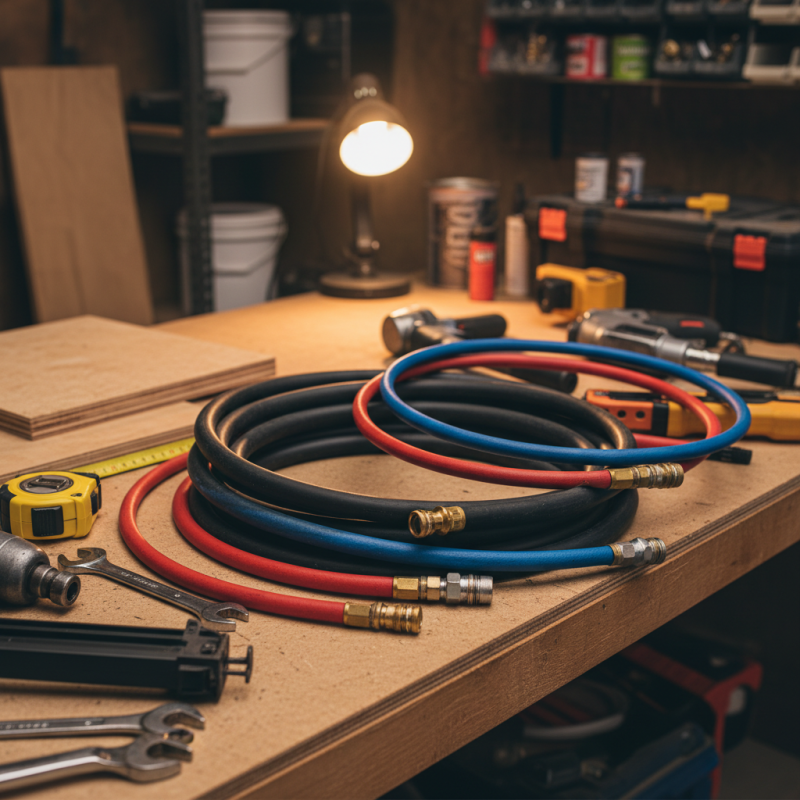
Types of Rubber Air Hoses for DIY Projects
When it comes to DIY projects, the type of rubber air hose you choose can make a significant impact. There are several types available, each with unique features. For light-duty tasks, a 1/4-inch hose is often sufficient. It's flexible and easy to handle. However, you might find it struggles with high-pressure applications. A thicker hose can handle more pressure but may be cumbersome for small projects.
For medium-duty work, a 3/8-inch hose strikes a balance. It’s sturdy enough for various tasks, from inflating tires to running pneumatic tools. Keep in mind, though, this size may limit your portability. A longer hose can be tempting, but its weight can be a hassle. If you're doing more stationary work, a 1/2-inch hose might be your best option, especially for high-flow applications. Just remember, it can be quite heavy and harder to maneuver.
Each type of hose has advantages and disadvantages. The right choice depends on your specific projects and personal preferences. Ensure you consider factors like hose length, diameter, and pressure rating. Sometimes, what seems perfect in theory turns out to be less practical in real-life situations. Think about how often you'll use it, too. You might invest in a more heavy-duty hose only to realize you rarely need that level of durability. Always reflect on how your choices fit into your DIY lifestyle.
Key Features to Consider When Selecting a Rubber Air Hose
When selecting a rubber air hose for your DIY project, several key features should be evaluated. One crucial factor is the hose length. According to industry reports, a hose length of 25 to 50 feet is ideal for most home projects. It provides enough reach without causing clutter. Additionally, the inside diameter affects airflow. A diameter of 1/4 inch is often sufficient for light tasks, while larger jobs may require a 3/8 inch or 1/2 inch diameter.
Another consideration is the hose’s temperature rating. A rubber air hose should withstand temperature variations, ideally between 0°F to 150°F. This range ensures suitability for both indoor and outdoor use. Durability is essential, too. A reinforced rubber air hose can withstand abrasion. Reports indicate that hoses with a reinforcement layer last 30% longer than those without.
Lastly, flexibility should not be overlooked. A stiff hose can be challenging to maneuver, impacting efficiency. Choosing a hose that remains flexible at low temperatures is vital for user comfort. The right specifications can enhance your project experience. Evaluate these features to make an informed choice. Failure to do so could lead to setbacks or additional costs.
Comparative Analysis of Different Rubber Air Hose Types
When choosing a rubber air hose for DIY projects, several types stand out. Each has unique features that cater to different needs. For instance, some hoses are designed for high-pressure applications. Others work better in extreme temperatures. Understanding these differences is vital for any DIY enthusiast.
Another important factor is flexibility. Some hoses remain flexible even in cold weather. This characteristic can be beneficial in various conditions. Users often report struggles with kinking and tangling. Selecting a more robust design can mitigate these issues. Reinforced materials generally provide better durability. However, they may also add weight, which can be a downside.
Cost is another consideration. A cheaper hose may seem appealing but often lacks longevity. Investing in quality can save money in the long run. Users should reflect on their project demands. Fast-paced tasks require reliable tools. Poor choices can lead to frustration and wasted effort. Evaluating these factors ensures the right fit for any DIY project.
Guidelines for Proper Maintenance of Rubber Air Hoses
Rubber air hoses are crucial for many DIY projects. However, maintenance is often overlooked. Proper care can extend their lifespan. Studies show that routine maintenance can improve performance by up to 40%. Neglecting to inspect hoses can lead to cracks, leaks, and eventual failure.
To maintain your rubber air hose, check for wear and tear regularly. Look for any signs of damage, especially at the ends. Keeping hoses clean also matters. Dirt and debris can cause internal damage. Use a soft cloth and mild detergent when cleaning. Storing hoses properly is essential too. Avoid bending or twisting them, as this can lead to kinks and damaging stress points.
Temperature extremes can affect rubber. Try to store hoses in a climate-controlled environment. Prolonged exposure to sunlight can degrade the material, reducing flexibility. A study from the Rubber Manufacturers Association indicates that proper storage can enhance durability by nearly 50%. Keep these considerations in mind. Regular checks and mindful storage practices can greatly improve your DIY experience.
| Best Rubber Air Hose Types for Every DIY Project |
| Hose Type | Inner Diameter (inches) | Max Pressure (psi) | Recommended Use |
| Rubber Air Hose | 1/4 | 300 | General DIY Projects |
| Heavy-Duty Rubber Hose | 3/8 | 400 | Industrial Use |
| Flexzilla Rubber Hose | 1/2 | 300 | Air Tools |
| Lightweight Rubber Hose | 3/8 | 250 | Home Use |
| Reinforced Rubber Hose | 1/4 | 600 | High Pressure Applications |
Safety Tips for Using Rubber Air Hoses in DIY Tasks
When using rubber air hoses, safety should be a top priority. The flexibility and lightweight nature of these hoses make them popular for DIY tasks. However, neglecting safety measures can lead to accidents. According to a report by the National Institute for Occupational Safety and Health, improper handling of air hoses accounts for 30% of workplace injuries related to pneumatic tools.
One important tip is to inspect the hose regularly. Look for cracks or wear that may compromise its integrity. Using a damaged hose increases the risk of sudden bursts. This could lead to not just accidents but also injuries. Always ensure connections are secure to prevent disconnection during use. A loose fitting can cause a hose to whip, posing a serious risk.
Another critical factor is the right pressure. Always adhere to the hose’s pressure rating. Many DIY enthusiasts may not know that exceeding this can lead to failure. For example, rubber hoses typically handle pressures up to 300 PSI. Operating above this threshold can be dangerous and ineffective. Always wear safety glasses to protect your eyes from any debris that may be dislodged during operation. Taking these precautions can significantly improve safety when using rubber air hoses for DIY projects.
Best Rubber Air Hose Types for Every DIY Project
This bar chart illustrates the popularity ratings of various rubber air hose types used in DIY projects. The ratings, ranging from 1 to 10, reflect user preferences based on factors like flexibility, durability, and ease of use.
