2026 Best Single High-Performance API Options Available?
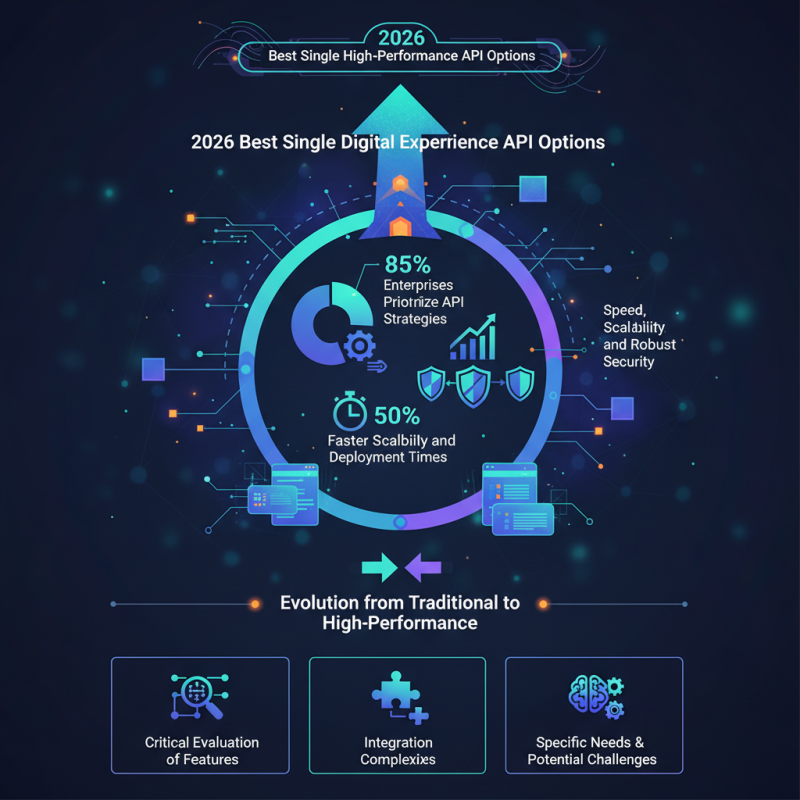
As the demand for seamless digital experiences continues to rise, the significance of Single High-Performance API is increasingly recognized. According to a recent report by Gartner, 85% of enterprises will prioritize API strategies to enhance business agility by 2026. The evolution from traditional APIs to high-performance options sets the stage for transformative business capabilities. Organizations are now seeking APIs that provide speed, scalability, and robust security.
The current landscape reflects a shift towards real-time data processing and integration. A study by Forrester highlights that businesses employing high-performance APIs can achieve up to 50% faster deployment times. This acceleration can be vital for companies facing fierce competition. However, selecting the right API is not without its challenges. Many organizations still struggle with integration complexities and varying performance metrics.
Choosing the best Single High-Performance API in 2026 requires a critical evaluation of features and capabilities. Some available options may not deliver the expected performance, leading to inefficiencies. Businesses must reflect on their specific needs and potential challenges when adopting new technology. By doing so, they can position themselves for success in an increasingly API-driven market.
Overview of High-Performance APIs in 2026
In 2026, the landscape of high-performance APIs is rapidly evolving. Developers seek faster, more efficient solutions to meet rising demands. With increased data volumes, the need for robust APIs has never been clearer. Many options are designed to maximize speed and minimize latency. However, achieving the perfect balance between performance and functionality remains challenging.
APIs now adopt advanced architectures that enhance their capabilities. Microservices and serverless designs improve scalability. Yet, these innovations can introduce complexity. It may not always lead to better performance. Developers frequently face tough choices when selecting the right API. Testing and benchmarking are essential to identify the best fit. Frequent updates can also disrupt stability.
The future of API development promises exciting possibilities. As new technologies emerge, performance may enhance significantly. But we must acknowledge that not all solutions suit every scenario. Tailoring an API to specific needs is vital. It’s crucial to stay adaptable, ready to pivot as challenges arise. Embracing imperfection can lead to innovative breakthroughs in API design.
Key Features to Consider in Single High-Performance APIs
When choosing a high-performance API, various features need consideration. Speed is crucial. APIs should handle requests quickly, especially under heavy loads. Response times significantly affect user experience. Look for APIs that feature asynchronous processing. This ensures tasks run smoothly without blocking.
Scalability is another key aspect. The chosen API should easily adapt to increasing data and user demands. It must support large volumes of transactions without a hiccup. Flexibility also matters. The API should integrate seamlessly with existing systems and accommodate changes. A rigid API can hinder progress.
Documentation and support are often overlooked but vital. Comprehensive guides allow for easier implementation and troubleshooting. Also, community engagement can reflect the API's reliability. A vibrant community can offer support and shared insights. These elements provide a good context for assessing an API's performance. However, reliance on community support might lead to gaps in official documentation.
Top Contenders: Best Single High-Performance API Solutions
When exploring high-performance API solutions, selecting the right contenders is crucial. In 2026, several key factors emerge. Speed remains a priority. Research shows that APIs with minimal latency can boost application performance significantly. Users expect seamless interactions, and a mere 100ms delay can lead to a 7% decrease in conversions.
A well-designed API facilitates better communication between clients and servers. According to industry reports, APIs that utilize optimized data protocols can handle up to 50% more requests per second. This efficiency is critical in scenarios involving real-time data processing. However, not all providers achieve this. Continuous testing and adjustments are necessary. Performance can vary based on usage patterns and traffic spikes.
Lastly, security has become a major concern. APIs must encrypt sensitive data and adhere to industry standards. Inadequate security protocols can lead to devastating breaches. Companies often overlook this area in their quest for speed. Balancing performance with robust security and usability requires ongoing evaluation and refinement. This combination will help ensure that chosen solutions meet business needs effectively.
2026 Best Single High-Performance API Options
Comparative Analysis of Leading APIs for Performance and Usability
In 2026, selecting the best high-performance APIs is crucial. Performance and usability greatly influence user experience. A good API should be fast, responsive, and easy to integrate. Many APIs excel in speed but may lack robust documentation. This can confuse developers, leading to longer implementation times.
Tips: When choosing an API, test its speed. Run multiple queries and check response times. Look for APIs with clear, concise documentation. This saves time and reduces frustration for your team.
Another key factor is usability. A user-friendly API enhances efficiency but may trade-off some advanced features. Complexity in setup can deter developers. Evaluate if the learning curve outweighs the benefits offered by advanced capabilities.
Tips: Engage with the community around the API. Learn from others’ experiences and avoid pitfalls. This insight can save resources and enhance project outcomes. Be open to feedback to adapt your approach as needed.
Future Trends and Developments in API Performance Technology
The landscape of API performance technology is rapidly evolving. By 2026, the demand for high-performance APIs is projected to increase dramatically. A recent industry report indicated that 75% of developers prioritize API performance. This reflects a growing reliance on APIs in various sectors, from finance to healthcare.
Emerging trends highlight the importance of optimization. Developers are focusing on enhancing response times and reducing latency. A study revealed that even a 100-millisecond delay can decrease user engagement by 7%. Simultaneously, security remains a top concern. As performance improves, safeguarding data must not be overlooked. Balancing speed and security is challenging.
Innovation is crucial in this space. Technologies like GraphQL and gRPC are reshaping API interactions. However, many organizations struggle to implement these effectively. Continuous testing and monitoring are essential, yet often neglected. Adopting best practices can significantly enhance API performance. This commitment to improvement may lead to breakthroughs in how APIs function in the future.
2026 Best Single High-Performance API Options Available
| API Option | Performance Rating | Response Time (ms) | Scalability | Support for Modern Protocols |
| API A | 4.8/5 | 50 | High | REST, GraphQL |
| API B | 4.6/5 | 70 | Medium | SOAP, gRPC |
| API C | 4.9/5 | 30 | Very High | REST, WebSockets |
| API D | 4.5/5 | 90 | High | GraphQL, JSON-RPC |
| API E | 4.7/5 | 40 | Medium | REST, WebSockets |
