10 Best Common Preservatives for Food Manufacturers
Choosing the right preservative can determine whether a food product stays fresh, safe, and commercially successful. This guide, “10 Best Common Preservatives for Food Manufacturers,” examines practical options used across bakery, beverage, dairy, sauce, and ready-to-eat food production. Each ingredient serves a different purpose. Some control mold. Others slow oxidation or inhibit bacterial growth.
Dr. Susan Mayne, a respected food safety scientist and former FDA CFSAN director, has emphasized, “There is no such thing as zero risk in food safety.” That principle matters when evaluating Common Preservatives. A preservative should never replace sanitation, validated processing, hygienic packaging, or temperature control. It should support those safeguards. The ingredient list alone cannot guarantee product safety.
Manufacturers must consider pH, water activity, packaging conditions, storage temperature, and expected shelf life. A preservative that performs well in acidic pickles may fail in a low-acid soup. Sodium benzoate, potassium sorbate, calcium propionate, and tocopherols each behave differently. Their effectiveness depends on the complete formulation.
Small details matter.
This overview also recognizes an uncomfortable reality: “best” is not universal. Consumer expectations, clean-label goals, flavor effects, cost, and regional regulations can change the decision. Some choices look efficient during trials but create bitterness, sediment, or weaker protection later. Careful testing is essential. Manufacturers should confirm performance through qualified laboratory analysis and documented challenge studies. The right decision is rarely the cheapest one. It is the choice that balances safety, quality, stability, transparency, and responsible regulatory compliance.
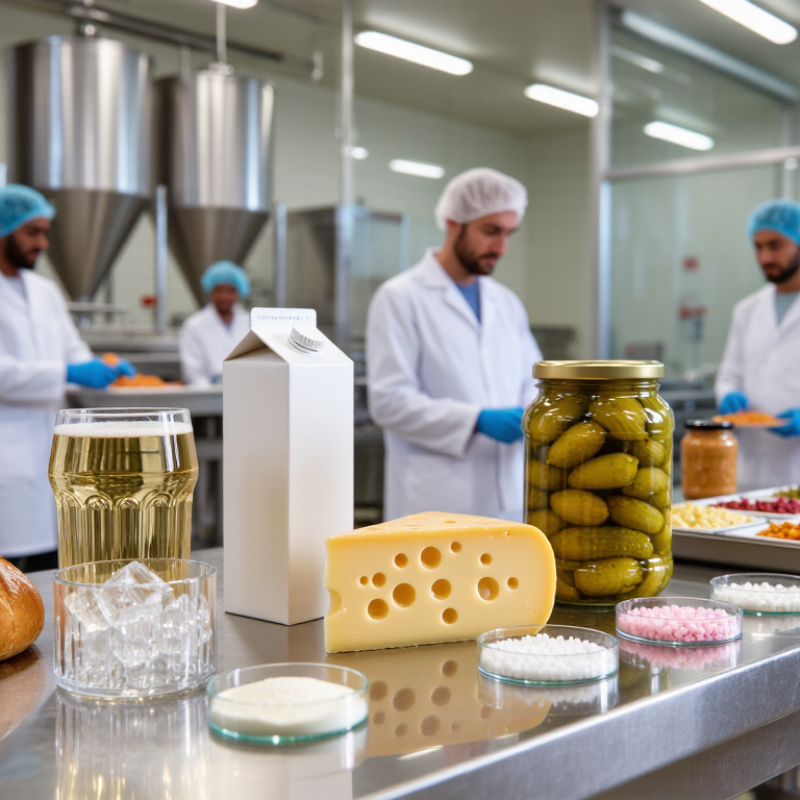
What Food Preservatives Are and Why Manufacturers Use Them
Food preservatives are controlled ingredients that slow microbial growth, oxidation, or unwanted chemical changes. They help food remain safe and appealing during processing, transport, and storage. Common examples include sorbates, benzoates, propionates, sulfites, nitrates, nitrites, ascorbates, and tocopherols. Each serves a different purpose. Some inhibit mold, while others protect oils from rancid flavors. A preservative does not keep food fresh forever. That distinction matters.
Manufacturers use preservatives to extend shelf life and reduce quality losses across complex supply chains. The FAO’s State of Food and Agriculture 2019 reported that about 14% of food is lost between harvest and retail. The UNEP Food Waste Index Report 2024 estimated 1.05 billion tonnes of food waste in 2022. Carefully selected preservation can help, especially in humid warehouses or long-distance distribution. Yet preservatives cannot replace sanitation, validated processing, suitable packaging, or temperature control.
Professional decisions begin with product pH, water activity, target organisms, and realistic shelf-life testing. JECFA evaluates additives through safety assessments and acceptable daily intake values. The Codex General Standard for Food Additives also defines functions and permitted conditions. The difficult part is often overlooked: a technically legal level may still affect taste, consumer acceptance, or nutrition. The approach is imperfect. “Natural” does not automatically mean safer, and “more” does not automatically mean better. Manufacturers should document each choice, test it, and revisit it when formulas or distribution conditions change.
How Preservatives Protect Food Quality and Extend Shelf Life
10 Best Common Preservatives for Food Manufacturers
How Preservatives Protect Food Quality and Extend Shelf Life
Preservatives help control bacteria, yeasts, molds, oxidation, and unwanted color changes. Common options include sorbates, benzoates, propionates, acetates, sulfites, and organic acids. Their value depends on the food’s acidity, moisture, packaging, and storage temperature. A preservative cannot rescue poor sanitation. It only supports a controlled process.
The Food and Agriculture Organization reported that 13.2% of food was lost between harvest and retail globally.
The United Nations Environment Programme also estimated 1.05 billion tonnes of food waste in 2022.
Better shelf-life control can reduce avoidable spoilage, especially in sauces, bakery products, beverages, and prepared foods. Small changes matter. A few extra safe days can improve distribution and reduce discarded inventory.
Manufacturers should validate performance through challenge testing, shelf-life studies, and routine microbiological checks. Codex food-additive standards and national regulations define permitted substances and use levels. Limits can differ by product category and market. That detail is often overlooked. A lower additive level may improve consumer acceptance, but it can shorten stability. A higher level is not automatically safer or better. Formulators should review pH, water activity, processing conditions, and label requirements together. The weak point is sometimes the package, not the preservative. Clear records and independent laboratory verification strengthen reliability, although no formula is perfect.
Ten Common Preservatives Used in Commercial Food Production
Commercial food production relies on preservatives to control spoilage, protect quality, and extend usable shelf life. Salt draws water from foods, while sugar performs a similar role in jams, fillings, and fruit preparations. Vinegar, or acetic acid, creates an acidic environment for pickled vegetables and sauces. Citric acid adds tartness and slows oxidation in beverages, canned foods, and cut produce.
Sodium benzoate is common in acidic drinks, dressings, and condiments. Potassium sorbate helps limit mold in cheese, bakery fillings, and fruit products. Calcium propionate is widely used in bread to delay mold growth without strongly changing flavor. Sodium nitrite supports color and flavor in cured meats while helping control certain bacteria. It requires careful measurement. Sulfur dioxide and sulfites protect dried fruit, wine, and some processed vegetables from browning and microbial growth. Tocopherols, forms of vitamin E, help slow oxidation in oils, cereals, and snack foods.
Selection depends on food acidity, moisture, packaging, processing temperature, and expected storage time. A preservative that works well in bread may fail in a high-moisture sauce. Manufacturers should verify performance through challenge testing, shelf-life studies, and accurate batch records. Local regulations also define permitted substances and maximum levels. Labels matter. Some consumers react sensitively to sulfites, while excessive processing can affect taste or texture. Longer shelf life is useful, but it is not automatically better. Small dosage errors can become large quality problems.
Safety Standards, Usage Limits, and Labeling Requirements
Food manufacturers often select preservatives such as sorbates, benzoates, propionates, acetates, lactates, sulfites, nitrites, ascorbates, nisin, and natamycin. Each option suits different products. Sorbates can protect acidic foods, while propionates help control mold in bakery products. Nitrites require especially careful control in cured foods.
Safety begins with approved use. Manufacturers should check the permitted food category, maximum level, and applicable acceptable daily intake. These limits can differ between countries and product types. A preservative is not automatically safe at every concentration. Processing records, calibrated scales, supplier specifications, and finished-product testing support reliable control. Small errors matter.
Labels must identify preservatives clearly and accurately. Depending on the market, the label may require the additive’s functional class, specific name, or identification number. Allergen-related declarations also need review when certain sulfite levels are present. Claims such as “preservative-free” can create risk if another preservation agent is used. That wording deserves careful scrutiny. Regulatory lists change, and older internal documents may be incomplete. A practical review should confirm the current rule, the product formula, and the actual measured amount before release.
How Manufacturers Choose the Right Preservative for Each Food Product
Choosing a preservative begins with the food’s behavior, not the ingredient list. A watery sauce, soft bread, and chilled meat face different spoilage risks. Manufacturers examine pH, water activity, oxygen exposure, processing temperature, and expected shelf life. Small details matter. A sliced product exposes more surface area to air.
The Codex General Standard for Food Additives classifies preservatives by function and sets permitted uses by food category. Manufacturers also review national regulations, consumer exposure, and labeling requirements. FAO reports that 13.2% of food is lost between harvest and retail. Better preservation can reduce waste, but excessive treatment is not a responsible shortcut. The selected substance must work at the lowest effective level. It must also fit the product’s flavor, texture, and packaging.
Testing usually combines laboratory challenge studies, shelf-life trials, and production-line observations. A preservative may perform well in a glass jar, then weaken inside a flexible package. That gap deserves attention. Industry teams often compare organic acids, sulfites, nitrites, sorbates, benzoates, and antioxidant systems, depending on the food matrix and legal limits. They measure microbial growth, rancidity, color changes, and sensory quality over time. “Safe” is not the same as “suitable.” A formula can pass one test and still disappoint consumers. Manufacturers should document every decision, repeat trials under realistic storage abuse, and reassess the formula when suppliers, packaging, or processing conditions change.
